












Thermally cleavable imine base/isocyanate adducts and oligomers suitable as initiators for radical homo- and copolymerization
Literature Information
Publication Date
2014-09-02
DOI
10.1039/C4PY01002G
Impact Factor
5.582
Authors
A. Laue, T. Uhrin, T. Rüffer, H. Lang, F. G. Schmidt, S. Spange
View Original
Abstract
The addition of isocyanates to CN double bonds of imines gave triazinedione heterocycle structures; their thermal properties are reported. Mono-isocyanates were used to form 2 : 1 adducts with the imine bases 1,8-diazabicyclo[5.4.0]undec-7-ene (DBU), 1,5-diazabicyclo[4.3.0]non-5-ene (DBN) and 2-tert-butyl-1,1,3,3-tetramethylguanidine (tBuTMG). A 2 : 1 stoichiometry of the adducts was proven by NMR and IR spectroscopy and single crystal X-ray diffraction; certain cleavage temperatures (70 and 160 °C) were measured. Thermal analysis (TG-MS) of adducts indicated the release of free isocyanate during adduct cleavage. Furthermore, a new class of step-growth oligomers (MN = 750–7000 g mol−1) composed of multi-functional isocyanates and these imine bases was introduced. Their systematic spectroscopic and thermal analysis was shown, revealing the similarity in their chemical properties to the 2 : 1 adducts. Radical homo- and copolymerization of acrylates was initiated by the meta-stable adducts and oligomers of this work; the generation of novel telomeric block-copolymer architectures composed of polyacrylate and oligourea building blocks was demonstrated.
Related Literature
Rheo-optical study of colloidal crystals
Tsuneo Okubo, Hiroshi Kimura, Tohru Hatta, Takaharu Kawai
2002-04-22
Paper
DOI: 10.1039/B109963A
NO reduction with CO in the presence of O2 over Al2O3-supported and Cu-based catalysts
Takashi Yamamoto, Tsunehiro Tanaka, Ryoji Kuma, Sosuke Suzuki, Fumiaki Amano, Yutaka Shimooka, Yoshiumi Kohno, Takuzo Funabiki, Satohiro Yoshida
2002-04-29
Paper
DOI: 10.1039/B201120B
Site selective hydroxylation of the MgO surface
O. Diwald, M. Sterrer, E. Knözinger
2002-05-14
Paper
DOI: 10.1039/B110334B
Electropolymerization of 2-methoxyaniline. Polymerization kinetics and phenazine insertion at low monomer concentration
F. A. Viva, E. M. Andrade, M. I. Florit, F. V. Molina
2002-04-26
Paper
DOI: 10.1039/B110705D
Scanning plasmon near-field microscopy: signal–noise ratio of different registration schemes and prospects for single molecule detection
V. N. Konopsky, S. A. Saunin, V. A. Bykov, E. A. Vinogradov
2002-05-13
Paper
DOI: 10.1039/B109955H
Laser powered homogeneous pyrolysis of ethyne, propyne, and propadiene initiated by methyl radicals: formation and degradation of hydrocarbons at 800–950 K
Karlheinz Hoyermann, Bettina Jürges
2002-05-01
Paper
DOI: 10.1039/B111643F
Photocatalytic reduction of nitrate ions over tantalate photocatalysts
Hideki Kato, Akihiko Kudo
2002-05-10
Paper
DOI: 10.1039/B110511F
Thermal decomposition of a hydrotalcite-containing Cu–Zn–Al precursor: thermal methods combined with an in situDRIFT study
I. Melián-Cabrera, M. López Granados, J. L. G. Fierro
2002-05-28
Paper
DOI: 10.1039/B201996E
Theoretical analysis of the oxocarbons: The role played by the solvent and counter-ions in the electronic spectrum of the deltate ion
Willian R. Rocha, Wagner B. De Almeida, Hélio F. Dos Santos
2002-05-09
Paper
DOI: 10.1039/B109738E
Formation and degradation of hydrocarbons in high-temperature reactions
Editorial
DOI: 10.1039/B204334N
You might also like
Compound Q&A
How should waste containing (6-Bromo-2-naphthyl)oxy](dimethyl)(2-methyl-2-propanyl)silane be handled?
Waste containing (6-Bromo-2-naphthyl)oxy](dimethyl)(2-methyl-2-propanyl)silane (...
100751-65-3[(6-Bromo-2-naphthyl...
Compound Q&A
How is 7-Fluoro-4-isoquinolinecarboxylic acid (CAS: 1841081-40-0) typically synthesized?
7-Fluoro-4-isoquinolinecarboxylic acid can be synthesized via a multi-step proce...
1841081-40-07-Fluoro-4-isoquinol...
Compound Q&A
What are the physical and chemical properties of 2,3,5,6-Tetrabromothieno[3,2-b]thiophene (CAS: 124638-53-5)?
2,3,5,6-Tetrabromothieno[3,2-b]thiophene is a crystalline compound with a high m...
124638-53-52,3,5,6-Tetrabromoth...
Compound Q&A
Is 1-[4-(Benzylamino)-7,8-dihydro-5H-pyrano[4,3-d]pyrimidin-2-yl]-2-methyl-1H-indole-4-carboxamide (CAS: 1542705-92-9) safe?
1-[4-(Benzylamino)-7,8-dihydro-5H-pyrano[4,3-d]pyrimidin-2-yl]-2-methyl-1H-indol...
1542705-92-91-[4-(Benzylamino)-7...
Compound Q&A
What is the market or research trend for imidazo[5,1-d]-1,2,3,5-tetrazine-8-carboxylic acid, 3,4-dihydro-3-methyl-4-oxo- (CAS: 113942-30-6)?
The market for imidazo[5,1-d]-1,2,3,5-tetrazine-8-carboxylic acid, 3,4-dihydro-3...
113942-30-6Imidazo[5,1-d]-1,2,3...
Compound Q&A
What is 3-(Triisopropylsilyl)propiolaldehyde (CAS: 163271-80-5)?
3-(Triisopropylsilyl)propiolaldehyde is a synthetic organic compound with the CA...
163271-80-53-(Triisopropylsilyl...
Compound Q&A
What regulatory guidelines apply to 6-Nitro-2H-1,4-benzoxazin-3(4H)-one (CAS: 81721-87-1)?
6-Nitro-2H-1,4-benzoxazin-3(4H)-one (CAS: 81721-87-1) is subject to various regu...
81721-87-16-Nitro-2H-1,4-benzo...
Compound Q&A
How should waste containing (3-Fluorophenyl)(4-{[(2-methyl-2-propanyl)oxy]carbonyl}-1-piperazinyl)acetic acid (CAS: 885272-91-3) be handled?
Waste containing (3-Fluorophenyl)(4-{[(2-methyl-2-propanyl)oxy]carbonyl}-1-piper...
885272-91-3(3-Fluorophenyl)(4-{...
Compound Q&A
What are the physical and chemical properties of N,N'-4,4'-Biphenyldiyldiisonicotinamide (CAS: 55119-40-9)?
N,N'-4,4'-Biphenyldiyldiisonicotinamide is a white crystalline solid with a mole...
55119-40-9N,N'-4,4'-Biphenyldi...
Compound Q&A
What industries use 6-Bromo-8-fluoro-2-quinazolinol (CAS: 1036756-15-6)?
6-Bromo-8-fluoro-2-quinazolinol is primarily used in the pharmaceutical industry...
1036756-15-66-Bromo-8-fluoro-2-q...
Source Journal
Polymer Chemistry

CiteScore:
8.6
Self-citation Rate:
7.3%
Articles per Year:
457
Polymer Chemistry welcomes submissions in all areas of polymer science that have a strong focus on macromolecular chemistry. Manuscripts may cover a broad range of fields, yet no direct application focus is required.
Recommended Compounds
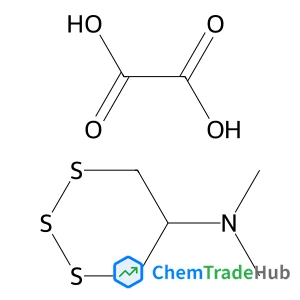
Oxalic acid compound with cyclohexylsulfamothioic O-acid (11)
CAS Number:
31895-22-4
Molecular Formula:
C7H13NO4S3
![10-(1-Azabicyclo[2.2.2]oct-3-ylmethyl)-10H-phenothiazine structure](https://static.chemtradehub.com/structs/292/29216-28-2-1d81.webp "10-(1-Azabicyclo[2.2.2]oct-3-ylmethyl)-10H-phenothiazine structure")
10-(1-Azabicyclo[2.2.2]oct-3-ylmethyl)-10H-phenothiazine
CAS Number:
29216-28-2
Molecular Formula:
C20H22N2S
Recommended Suppliers




Disclaimer
This page provides academic journal information for reference and research purposes only. We are not affiliated with any journal publishers and do not handle publication submissions. For publication-related inquiries, please contact the respective journal publishers directly.
If you notice any inaccuracies in the information displayed, please contact us at support@chemtradehub.com. We will promptly review and address your concerns.