












Laser powered homogeneous pyrolysis of ethyne, propyne, and propadiene initiated by methyl radicals: formation and degradation of hydrocarbons at 800–950 K
Literature Information
Publication Date
2002-05-01
DOI
10.1039/B111643F
Impact Factor
3.676
Authors
Karlheinz Hoyermann, Bettina Jürges
View Original
Abstract
Applying laser heating by fast vibrational–translational energy transfer in a quasi-wall-free reactor the pyrolysis of ethyne (C2H2), propyne (p-C3H4), and propadiene (a-C3H4) was studied experimentally at 0.13 bar in the medium temperature range of 800–950 K with respect to the degradation and formation of hydrocarbons. The radical/hydrocarbon chemistry was chemically induced via CH3 radicals produced by the fast thermal dissociation of di-tert-butyl-peroxide DTBP ((tert-C4H9O)2 → 2 CH3 + 2 CH3COCH3). Complete analysis of the product yields was achieved by means of GC-MS with special attention to isomeric product and benzene formation. The product distribution, the temperature dependence and the underlying reaction schemes were analyzed by kinetic models developed for high temperature alkane oxidation/pyrolysis and aromatic formation in premixed ethene and ethyne flames. The primary attack of the unsaturated hydrocarbons by CH3 radicals in the studied temperature range occurs via the addition to the double/triple bond and via hydrogen atom abstraction, leading to different classes of radicals. For the reaction system C2H2 + CH3 high yields of C6H6 with a marked negative temperature dependence were observed. A semi-quantitative description of the C6H6 yield was obtained by a reaction sequence of successive addition of C2H2 to the radicals C2H3 (from C2H2 + H) and C4H5, being consistent with recent discussed reaction networks. For the reaction systems p-C3H4 + CH3 and a-C3H4 + CH3 only qualitative agreement between measured and modelled product yields was found, pointing to a lack of reliable data of the reactions of p-C3H4/a-C3H4/C3H3/H. Modified mechanisms are presented for the radical rich reaction systems C2H2 + CH3, p-C3H4 + CH3, and a-C3H4 + CH3 experimentally studied.
Related Literature
Spectroscopic and computational study of β-ethynylphenylene substituted zinc and free-base porphyrins
John C. Earles, Keith C. Gordon, Adam W. I. Stephenson, Ashton C. Partridge, David L. Officer
2010-12-02
Paper
DOI: 10.1039/C0CP01113D
Photoelectron spectroscopy of homogeneous nucleic acid base dimer anions
Yeon Jae Ko, Haopeng Wang, Rui Cao, Dunja Radisic, Soren N. Eustis, Sarah T. Stokes, Svetlana Lyapustina, Shan Xi Tian, Kit H. Bowen
2010-02-11
Paper
DOI: 10.1039/B924950H
Solvatochromic shifts of single-walled carbon nanotubes in nonpolar microenvironments
Carlos A. Silvera-Batista, Randy K. Wang, Philip Weinberg
2010-05-12
Paper
DOI: 10.1039/B927053A
2D IRphoton echo of azido-probes for biomolecular dynamics
Matthew J. Tucker, Xin Sonia Gai, Edward E. Fenlon, Scott H. Brewer, Robin M. Hochstrasser
2010-12-02
Paper
DOI: 10.1039/C0CP01625J
Molecular dynamics calculation of activation volumes
Elna Deglint, Heather Martens, Essex Edwards, Nicholas Boon, Paul Dance
2010-11-12
Communication
DOI: 10.1039/C0CP01570A
In vitro hydrogen production—using energy from the sun
Henning Krassen, Sascha Ott, Joachim Heberle
2010-11-23
Perspective
DOI: 10.1039/C0CP01163K
Regenerable Fe–Mn–ZnO/SiO2 sorbents for room temperature removal of H2S from fuel reformates: performance, active sites, Operando studies
Priyanka Dhage, Divya Repala, Evert C. Duin, Bruce J. Tatarchuk
2010-12-06
Paper
DOI: 10.1039/C0CP01355B
Monodisperse Pt3Conanoparticles as electrocatalyst: the effects of particle size and pretreatment on electrocatalytic reduction of oxygen
Chao Wang, Guofeng Wang, Dennis van der Vliet, Kee-Chul Chang, Nenad M. Markovic, Vojislav R. Stamenkovic
2010-06-04
Paper
DOI: 10.1039/C000822B
You might also like
Compound Q&A
How should waste containing (6-Bromo-2-naphthyl)oxy](dimethyl)(2-methyl-2-propanyl)silane be handled?
Waste containing (6-Bromo-2-naphthyl)oxy](dimethyl)(2-methyl-2-propanyl)silane (...
100751-65-3[(6-Bromo-2-naphthyl...
Compound Q&A
How is 7-Fluoro-4-isoquinolinecarboxylic acid (CAS: 1841081-40-0) typically synthesized?
7-Fluoro-4-isoquinolinecarboxylic acid can be synthesized via a multi-step proce...
1841081-40-07-Fluoro-4-isoquinol...
Compound Q&A
What are the physical and chemical properties of 2,3,5,6-Tetrabromothieno[3,2-b]thiophene (CAS: 124638-53-5)?
2,3,5,6-Tetrabromothieno[3,2-b]thiophene is a crystalline compound with a high m...
124638-53-52,3,5,6-Tetrabromoth...
Compound Q&A
Is 1-[4-(Benzylamino)-7,8-dihydro-5H-pyrano[4,3-d]pyrimidin-2-yl]-2-methyl-1H-indole-4-carboxamide (CAS: 1542705-92-9) safe?
1-[4-(Benzylamino)-7,8-dihydro-5H-pyrano[4,3-d]pyrimidin-2-yl]-2-methyl-1H-indol...
1542705-92-91-[4-(Benzylamino)-7...
Compound Q&A
What is the market or research trend for imidazo[5,1-d]-1,2,3,5-tetrazine-8-carboxylic acid, 3,4-dihydro-3-methyl-4-oxo- (CAS: 113942-30-6)?
The market for imidazo[5,1-d]-1,2,3,5-tetrazine-8-carboxylic acid, 3,4-dihydro-3...
113942-30-6Imidazo[5,1-d]-1,2,3...
Compound Q&A
What is 3-(Triisopropylsilyl)propiolaldehyde (CAS: 163271-80-5)?
3-(Triisopropylsilyl)propiolaldehyde is a synthetic organic compound with the CA...
163271-80-53-(Triisopropylsilyl...
Compound Q&A
What regulatory guidelines apply to 6-Nitro-2H-1,4-benzoxazin-3(4H)-one (CAS: 81721-87-1)?
6-Nitro-2H-1,4-benzoxazin-3(4H)-one (CAS: 81721-87-1) is subject to various regu...
81721-87-16-Nitro-2H-1,4-benzo...
Compound Q&A
How should waste containing (3-Fluorophenyl)(4-{[(2-methyl-2-propanyl)oxy]carbonyl}-1-piperazinyl)acetic acid (CAS: 885272-91-3) be handled?
Waste containing (3-Fluorophenyl)(4-{[(2-methyl-2-propanyl)oxy]carbonyl}-1-piper...
885272-91-3(3-Fluorophenyl)(4-{...
Compound Q&A
What are the physical and chemical properties of N,N'-4,4'-Biphenyldiyldiisonicotinamide (CAS: 55119-40-9)?
N,N'-4,4'-Biphenyldiyldiisonicotinamide is a white crystalline solid with a mole...
55119-40-9N,N'-4,4'-Biphenyldi...
Compound Q&A
What industries use 6-Bromo-8-fluoro-2-quinazolinol (CAS: 1036756-15-6)?
6-Bromo-8-fluoro-2-quinazolinol is primarily used in the pharmaceutical industry...
1036756-15-66-Bromo-8-fluoro-2-q...
Source Journal
Physical Chemistry Chemical Physics

CiteScore:
5.5
Self-citation Rate:
10.3%
Articles per Year:
3036
Physical Chemistry Chemical Physics (PCCP) is an international journal co-owned by 19 physical chemistry and physics societies from around the world. This journal publishes original, cutting-edge research in physical chemistry, chemical physics and biophysical chemistry. To be suitable for publication in PCCP, articles must include significant innovation and/or insight into physical chemistry; this is the most important criterion that reviewers and Editors will judge against when evaluating submissions. The journal has a broad scope and welcomes contributions spanning experiment, theory, computation and data science. Topical coverage includes spectroscopy, dynamics, kinetics, statistical mechanics, thermodynamics, electrochemistry, catalysis, surface science, quantum mechanics, quantum computing and machine learning. Interdisciplinary research areas such as polymers and soft matter, materials, nanoscience, energy, surfaces/interfaces, and biophysical chemistry are welcomed if they demonstrate significant innovation and/or insight into physical chemistry. Joined experimental/theoretical studies are particularly appreciated when complementary and based on up-to-date approaches.
Recommended Compounds
![N-[(E)-Phenylmethylene]benzenesulfonamide structure](https://static.chemtradehub.com/structs/139/13909-34-7-8167.webp "N-[(E)-Phenylmethylene]benzenesulfonamide structure")
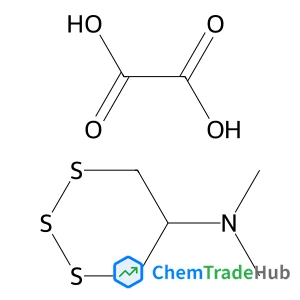
Oxalic acid compound with cyclohexylsulfamothioic O-acid (11)
CAS Number:
31895-22-4
Molecular Formula:
C7H13NO4S3

![2,2'-{2,2-Propanediylbis[(2,6-dibromo-4,1-phenylene)oxy]}diethanol structure](https://static.chemtradehub.com/structs/416/4162-45-2-b3d6.webp "2,2'-{2,2-Propanediylbis[(2,6-dibromo-4,1-phenylene)oxy]}diethanol structure")
2,2'-{2,2-Propanediylbis[(2,6-dibromo-4,1-phenylene)oxy]}diethanol
CAS Number:
4162-45-2
Molecular Formula:
C19H20Br4O4
Recommended Suppliers




Disclaimer
This page provides academic journal information for reference and research purposes only. We are not affiliated with any journal publishers and do not handle publication submissions. For publication-related inquiries, please contact the respective journal publishers directly.
If you notice any inaccuracies in the information displayed, please contact us at support@chemtradehub.com. We will promptly review and address your concerns.