


![Ethyl thieno[3,2-f]quinoline-2-carboxylate structure](https://static.chemtradehub.com/structs/299/29948-26-3-f62b.webp "Ethyl thieno[3,2-f]quinoline-2-carboxylate structure")
Mechanism of visible light photocatalytic NOx oxidation with plasmonic Bi cocatalyst-enhanced (BiO)2CO3 hierarchical microspheres
Literature Information
Publication Date
2015-02-27
DOI
10.1039/C4CP06045H
Impact Factor
3.676
Authors
Yanjuan Sun, Zaiwang Zhao, Fan Dong, Wei Zhang
View Original
Abstract
Semimetal bismuth (Bi), as an emerging non-noble metal-based cocatalyst and plasmonic photocatalyst, has attracted significant attention. In this work, a one-pot solvent-controlled synthesis strategy was utilized for the in situ-deposition of plasmonic Bi nanoparticles onto the surfaces of (BiO)2CO3 microspheres (BOC-WE) using bismuth citrate, sodium carbonate, and ethylene glycol as precursors. The introduction of the Bi nanoparticles has a pivotal effect on the morphology, optical and photocatalytic performance of the pristine (BiO)2CO3. The results indicated that the Bi nanoparticles were generated on the surface of (BiO)2CO3 microspheres via the in situ reduction of Bi3+ by ethylene glycol. The Bi-deposited (BiO)2CO3 microspheres were used for the photocatalytic purification of NOx in air under visible light irradiation. Significantly, the BOC-WE samples exhibited a drastically promoted photocatalytic performance with a NOx removal ratio (η) of 37.2%, superior to pristine (BiO)2CO3 (η = 19.1%), outperforming other well-known visible light photocatalysts, such as C-doped TiO2 (η = 21.8%), BiOBr (η = 21.3%), BiOI (η = 14.9%) and C3N4 (η = 25.5%). The conspicuously enhanced photocatalytic capability can be attributed to the synergistic effects of the surface plasmon resonance (SPR) effect, increased visible light absorption and the efficient separation of electron–hole pairs induced by the Bi nanoparticles. The Bi nanoparticles can act as a non-noble metal-based cocatalyst for strengthening photocatalytic performance, which is similar to the behavior of noble metals (Au, Ag) in enhancing photocatalysis. The mechanism of visible light photocatalytic NOx oxidation was investigated. DMPO-ESR spin-trapping results demonstrated that hydroxyl radicals were confirmed to be the main active species for NOx photo-oxidation. Due to the SPR effect of Bi, the BOC-WE could produce more hydroxyl radicals than BOC, which was responsible for the enhanced NO photo-oxidation ability. Moreover, the BOC-WE photocatalysts showed high photochemical stability under repeated irradiation. This work demonstrates the feasibility of utilizing low cost Bi cocatalysts as a substitute for noble metals to enhance the performance of other photocatalysts. This work could not only provide new insights into the in situ fabrication of Bi/semiconductor nanocomposites, but also pave a new way for the modification of photocatalysts with non-noble metals as cocatalysts to achieve an enhanced performance for environmental and energetic applications.
Recommended Journals

Journal of Natural Medicines

Russian Chemical Bulletin

Nature Medicine

Chemistry Education Research and Practice

Russian Journal of Organic Chemistry

Saudi Pharmaceutical Journal

Organic Process Research & Development

Current Opinion in Solid State & Materials Science

Russian Journal of Applied Chemistry

Russian Journal of Bioorganic Chemistry
Related Literature
Insight into the pseudo π-hole interactions in the M3H6⋯(NCF)n (M = C, Si, Ge, Sn, Pb; n = 1, 2, 3) complexes
Yanli Zeng, Xiaoyan Li, Zheng Sun, Lingpeng Meng
2016-08-08
Paper
DOI: 10.1039/C6CP03713E
Tautomerization lowers the activation barriers for N-glycosidic bond cleavage of protonated uridine and 2′-deoxyuridine
R. R. Wu, M. T. Rodgers
2016-08-04
Paper
DOI: 10.1039/C6CP03620A
Utilization of the Donnan potential induced by reverse salt flux in pressure retarded osmosis systems
Chul Ho Park, Sung Jo Kwak, Joo-Youn Nam, Moon Seok Jang, Jung-Hyun Lee
2016-08-15
Communication
DOI: 10.1039/C6CP03939A
Correction: Chiral sensing of amino acids and proteins chelating with EuIII complexes by Raman optical activity spectroscopy
Tao Wu, Jiří Kessler, Petr Bouř
2016-08-23
Correction
DOI: 10.1039/C6CP90213H
The photochemistry of sodium ion pump rhodopsin observed by watermarked femto- to submillisecond stimulated Raman spectroscopy
Yusaku Hontani, Miroslav Kloz, Yoshitaka Kato, John T. M. Kennis
2016-08-17
Paper
DOI: 10.1039/C6CP05240A
Solvent H-bond accepting ability induced conformational change and its influence towards fluorescence enhancement and dual fluorescence of hydroxy meta-GFP chromophore analogue
Tanmay Chatterjee, Mrinal Mandal, Prasun K. Mandal
2016-08-05
Paper
DOI: 10.1039/C6CP04219H
Effects of water molecules on the chemical stability of MAGeI3 perovskite explored from a theoretical viewpoint
Ping-Ping Sun, Wei-Jie Chi, Ze-Sheng Li
2016-08-01
Paper
DOI: 10.1039/C6CP04344E
High-performance colossal permittivity materials of (Nb + Er) co-doped TiO2 for large capacitors and high-energy-density storage devices
Mei-Yan Tse, Jianhua Hao
2016-08-02
Paper
DOI: 10.1039/C6CP02236G
Elucidating dominant pathways of the nano-particle self-assembly process
Xiangze Zeng, Bin Li, Qin Qiao, Lizhe Zhu, Zhong-Yuan Lu
2016-05-13
Paper
DOI: 10.1039/C6CP01808D
Rotational dynamics of water molecules near biological surfaces with implications for nuclear quadrupole relaxation
Daniel Braun, Michael Schmollngruber, Othmar Steinhauser
2016-08-18
Paper
DOI: 10.1039/C6CP04000D
You might also like
Compound Q&A
Is 2-(2-chloroacetamido)-3-phenylpropanoic acid (CAS: 7765-11-9) safe?
2-(2-Chloroacetamido)-3-phenylpropanoic acid (CAS: 7765-11-9) is generally consi...
7765-11-92-(2-chloroacetamido...
Compound Q&A
Is 2-(Benzyloxy)-5-bromobenzoic acid (CAS: 62176-31-2) safe?
2-(Benzyloxy)-5-bromobenzoic acid can be handled safely if appropriate precautio...
62176-31-22-(Benzyloxy)-5-brom...
Compound Q&A
What is (4-Methyl-1,2,5-oxadiazol-3-yl)methanamine hydrochloride (CAS: 1159825-48-5)?
(4-Methyl-1,2,5-oxadiazol-3-yl)methanamine hydrochloride is a chemical compound ...
1159825-48-5(4-Methyl-1,2,5-oxad...
Compound Q&A
What is 2-(5-Hexylthiophen-2-yl)-4,4,5,5-tetramethyl-1,3,2-dioxaborolane (CAS: 917985-54-7)?
2-(5-Hexylthiophen-2-yl)-4,4,5,5-tetramethyl-1,3,2-dioxaborolane (CAS: 917985-54...
917985-54-72-(5-Hexylthiophen-2...
Compound Q&A
Are there alternatives to 4-(8-Methyl-9H-1,3-dioxolo[4,5-h][2,3]benzodiazepin-5-yl)benzenamine (CAS: 102771-26-6) in synthesis?
While 4-(8-Methyl-9H-1,3-dioxolo[4,5-h][2,3]benzodiazepin-5-yl)benzenamine (CAS:...
102771-26-64-(8-Methyl-9H-1,3-d...
Compound Q&A
What is the market or research trend for tert-butyl 3-hydroxy-4,5,7,8-tetrahydro-2H-pyrazolo[3,4-d]azepine-6-carboxylate (CAS: 851376-80-2)?
The market for tert-butyl 3-hydroxy-4,5,7,8-tetrahydro-2H-pyrazolo[3,4-d]azepine...
851376-80-2tert-butyl 3-hydroxy...
Compound Q&A
How should waste containing 3,5-Diamino-1H-pyrazole-4-carbonitrile (CAS: 6844-58-2) be handled?
Waste containing 3,5-Diamino-1H-pyrazole-4-carbonitrile (CAS: 6844-58-2) should ...
6844-58-23,5-Diamino-1H-pyraz...
Compound Q&A
How is (6-Fluoro-3-pyridinyl)boronic acid (CAS: 351019-18-6) typically synthesized?
(6-Fluoro-3-pyridinyl)boronic acid can be synthesized through the reaction of 6-...
351019-18-6(6-Fluoro-3-pyridiny...
Compound Q&A
What industries use Dibenzyl carbonimidoylbiscarbamate (CAS: 10065-79-9)?
Dibenzyl carbonimidoylbiscarbamate (CAS: 10065-79-9) finds applications in vario...
10065-79-9Dibenzyl carbonimido...
Compound Q&A
What is the market or research trend for (beta,beta,2,3,4,5,6-~2~H_7_)Phenylalanine (CAS: 74228-83-4)?
The market for (beta,beta,2,3,4,5,6-~2~H_7_)Phenylalanine (CAS: 74228-83-4) is g...
74228-83-4(beta,beta,2,3,4,5,6...
Source Journal
Physical Chemistry Chemical Physics

CiteScore:
5.5
Self-citation Rate:
10.3%
Articles per Year:
3036
Physical Chemistry Chemical Physics (PCCP) is an international journal co-owned by 19 physical chemistry and physics societies from around the world. This journal publishes original, cutting-edge research in physical chemistry, chemical physics and biophysical chemistry. To be suitable for publication in PCCP, articles must include significant innovation and/or insight into physical chemistry; this is the most important criterion that reviewers and Editors will judge against when evaluating submissions. The journal has a broad scope and welcomes contributions spanning experiment, theory, computation and data science. Topical coverage includes spectroscopy, dynamics, kinetics, statistical mechanics, thermodynamics, electrochemistry, catalysis, surface science, quantum mechanics, quantum computing and machine learning. Interdisciplinary research areas such as polymers and soft matter, materials, nanoscience, energy, surfaces/interfaces, and biophysical chemistry are welcomed if they demonstrate significant innovation and/or insight into physical chemistry. Joined experimental/theoretical studies are particularly appreciated when complementary and based on up-to-date approaches.
Recommended Compounds
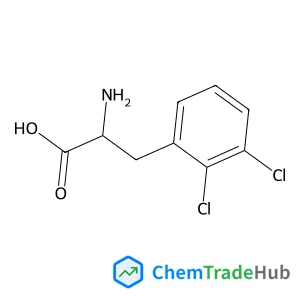

1-(5-Bromo-2-fluorophenyl)-2,2,2-trifluoroethanol
CAS Number:
1039827-16-1
Molecular Formula:
C8H5BrF4O

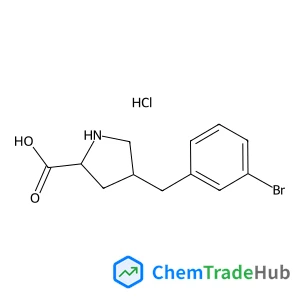
(2S,4R)-4-(3-Bromobenzyl)pyrrolidine-2-carboxylic acid hydrochloride
CAS Number:
1049734-10-2
Molecular Formula:
C12H15BrClNO2
Recommended Suppliers






Disclaimer
This page provides academic journal information for reference and research purposes only. We are not affiliated with any journal publishers and do not handle publication submissions. For publication-related inquiries, please contact the respective journal publishers directly.
If you notice any inaccuracies in the information displayed, please contact us at support@chemtradehub.com. We will promptly review and address your concerns.