



Tunable upconversion luminescence in self-crystallized Er3+:K(Y1−xYbx)3F10 nano-glass-ceramics
Literature Information
Publication Date
2015-02-12
DOI
10.1039/C4CP05706F
Impact Factor
3.676
Authors
Yang Zhou, Zhongyi Wan, Hua Yu, Hongwei Lu, Zhenguo Ji, Ping Huang
View Original
Abstract
K(Y1−xYbx)3F10 (x = 0–1) solid-solution nanocrystals embedded glass ceramics were fabricated via glass self-crystallization. Using Eu3+ as a structural probe, the partition of lanthanide activators into the K(Y1−xYbx)3F10 lattice was evidenced. As a consequence, color-tunable upconversion luminescence from green to red was easily realized by modifying Yb3+ content in the Er3+-doped nano-glass-ceramics.
Recommended Journals

Lab on a Chip

Mini-Reviews in Medicinal Chemistry

Journal of Enzyme inhibition and Medicinal Chemistry

Environmental Toxicology and Pharmacology

Photochemical & Photobiological Sciences

European Journal of Organic Chemistry

Contact Lens & Anterior Eye

Advanced Engineering Materials

Angewandte Chemie International Edition

Foundations of Chemistry
Related Literature
Rotational quantum dynamics in a non-activated adsorption system
Arezoo Dianat, Axel Groß
2002-07-25
Paper
DOI: 10.1039/B203310K
Reaction and dissociation mechanism control: the H2 + H2 system
Ernesto Garcia, Antonio Laganà
2002-08-30
Paper
DOI: 10.1039/B205377B
Alternating stacks of neutral and ion-radical hydrocarbons. A feasible path to ferromagnetic materials?
Anela Ivanova, Martin Baumgarten, Stoyan Karabunarliev, Nikolai Tyutyulkov
2002-08-28
Paper
DOI: 10.1039/B204763B
Global view of classical clusters: the hyperspherical approach to structure and dynamics
Ersin Yurtsever
2002-09-05
Paper
DOI: 10.1039/B206197J
High pressure solid–liquid phase equilibria in synthetic waxes
2002-08-08
Paper
DOI: 10.1039/B205017J
Second harmonic generation study of myoglobin and hemoglobin and their protoporphyrin IX chromophore at the water/1,2-dichloroethane interface
Juliette Perrenoud-Rinuy, Pierre-François Brevet, Hubert H. Girault
2002-09-02
Paper
DOI: 10.1039/B202338E
High pressure studies on molten zinc chloride
Gerhard Heusel, Helmut Bertagnolli, Markus Kreitmeir, Jörg Neuefeind, Andre Lemke
2002-07-22
Paper
DOI: 10.1039/B202377F
ATEM-EELS study of new diamond-like phases in the B–C–N system
Vladimir L. Solozhenko
2002-09-17
Paper
DOI: 10.1039/B206691B
Gallium(iii) hydration in aqueous solution of perchlorate, nitrate and sulfate. Raman and 71-Ga NMR spectroscopic studies and ab initio molecular orbital calculations of gallium(iii) water clusters
Wolfram W. Rudolph, Cory C. Pye
2002-08-12
Paper
DOI: 10.1039/B202567C
Computational studies of gas–carbon nanotube collision dynamics
Kim Bolton, Arne Rosén
2002-08-07
Paper
DOI: 10.1039/B200581F
You might also like
Compound Q&A
How should waste containing 2-Ethyl-4-Methyl-1H-Imidazole-5-Carbaldehyde (CAS: 88634-80-4) be handled?
Waste containing 2-Ethyl-4-Methyl-1H-Imidazole-5-Carbaldehyde (CAS: 88634-80-4) ...
88634-80-42-Ethyl-4-Methyl-1H-...
Compound Q&A
What industries use Triethoxy(octyl)silane (CAS: 1385031-14-0)?
Triethoxy(octyl)silane (CAS: 1385031-14-0) is widely used in the pharmaceuticals...
1385031-14-0Triethoxy(octyl)sila...
Compound Q&A
Are there alternatives to 3-iodo-7-nitro-1H-indazole (CAS: 864724-64-1) in synthesis?
Several alternatives to 3-iodo-7-nitro-1H-indazole (CAS: 864724-64-1) exist in t...
864724-64-13-iodo-7-nitro-1H-in...
Compound Q&A
Are there alternatives to Benzene, bis[(trimethoxysilyl)ethyl] (CAS: 266317-71-9) in synthesis?
Yes, there are alternatives to Benzene, bis[(trimethoxysilyl)ethyl] (CAS: 266317...
266317-71-9Benzene, bis[(trimet...
Compound Q&A
Is Isothiazole-3-carbonitrile (CAS: 1452-17-1) safe?
Isothiazole-3-carbonitrile (CAS: 1452-17-1) is generally considered safe when us...
1452-17-1Isothiazole-3-carbon...
Compound Q&A
Is (3-Chlorophenyl)methanol (CAS: 873-63-2) safe?
(3-Chlorophenyl)methanol (CAS: 873-63-2) is considered low to moderately toxic. ...
873-63-2(3-Chlorophenyl)meth...
Compound Q&A
How is (2S,3S)-2-Hydroxy-3-({[(2-methyl-2-propanyl)oxy]carbonyl}amino)-3-(2-naphthyl)propanoic acid (CAS: 959583-98-3) typically synthesized?
(2S,3S)-2-Hydroxy-3-({[(2-methyl-2-propanyl)oxy]carbonyl}amino)-3-(2-naphthyl)pr...
959583-98-3(2S,3S)-2-Hydroxy-3-...
Compound Q&A
What precautions should be taken when handling Methyl 2-(bromomethyl)-5-methoxybenzoate (CAS: 788081-99-2)?
Proper handling of methyl 2-(bromomethyl)-5-methoxybenzoate requires the use of ...
788081-99-2Methyl 2-(bromomethy...
Compound Q&A
What is 6,8-Dibromoimidazo[1,2-a]pyridine-2-carboxylic acid (CAS: 904805-36-3)?
6,8-Dibromoimidazo[1,2-a]pyridine-2-carboxylic acid (CAS: 904805-36-3) is an aro...
904805-36-36,8-Dibromoimidazo[1...
Compound Q&A
Is 3-Amino-5-bromo-2-pyridinecarbonitrile (CAS: 573675-27-1) safe?
3-Amino-5-bromo-2-pyridinecarbonitrile is considered safe when handled under pro...
573675-27-13-Amino-5-bromo-2-py...
Source Journal
Physical Chemistry Chemical Physics

CiteScore:
5.5
Self-citation Rate:
10.3%
Articles per Year:
3036
Physical Chemistry Chemical Physics (PCCP) is an international journal co-owned by 19 physical chemistry and physics societies from around the world. This journal publishes original, cutting-edge research in physical chemistry, chemical physics and biophysical chemistry. To be suitable for publication in PCCP, articles must include significant innovation and/or insight into physical chemistry; this is the most important criterion that reviewers and Editors will judge against when evaluating submissions. The journal has a broad scope and welcomes contributions spanning experiment, theory, computation and data science. Topical coverage includes spectroscopy, dynamics, kinetics, statistical mechanics, thermodynamics, electrochemistry, catalysis, surface science, quantum mechanics, quantum computing and machine learning. Interdisciplinary research areas such as polymers and soft matter, materials, nanoscience, energy, surfaces/interfaces, and biophysical chemistry are welcomed if they demonstrate significant innovation and/or insight into physical chemistry. Joined experimental/theoretical studies are particularly appreciated when complementary and based on up-to-date approaches.
Recommended Compounds
![4-Nitrophenyl N-{[(2-methyl-2-propanyl)oxy]carbonyl}-L-isoleucinate structure](https://static.chemtradehub.com/structs/169/16948-38-2-c88f.webp "4-Nitrophenyl N-{[(2-methyl-2-propanyl)oxy]carbonyl}-L-isoleucinate structure")
4-Nitrophenyl N-{[(2-methyl-2-propanyl)oxy]carbonyl}-L-isoleucinate
CAS Number:
16948-38-2
Molecular Formula:
C17H24N2O6
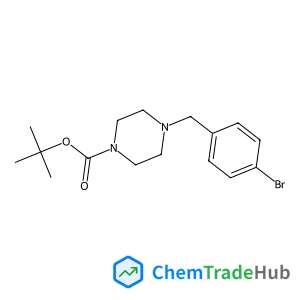
2-Methyl-2-propanyl 4-(4-bromobenzyl)-1-piperazinecarboxylate
CAS Number:
844891-10-7
Molecular Formula:
C16H23BrN2O2
![4-chloro-N-[5-methyl-2-(7H-pyrrolo[2,3-d]pyrimidine-4-carbonyl)-3-pyridyl]-3-(trifluoromethyl)benzenesulfonamide structure](https://static.chemtradehub.com/structs/110/1100318-47-5-127d.webp "4-chloro-N-[5-methyl-2-(7H-pyrrolo[2,3-d]pyrimidine-4-carbonyl)-3-pyridyl]-3-(trifluoromethyl)benzenesulfonamide structure")
4-chloro-N-[5-methyl-2-(7H-pyrrolo[2,3-d]pyrimidine-4-carbonyl)-3-pyridyl]-3-(trifluoromethyl)benzenesulfonamide
CAS Number:
1100318-47-5
Molecular Formula:
C20H13ClF3N5O3S
Recommended Suppliers





Disclaimer
This page provides academic journal information for reference and research purposes only. We are not affiliated with any journal publishers and do not handle publication submissions. For publication-related inquiries, please contact the respective journal publishers directly.
If you notice any inaccuracies in the information displayed, please contact us at support@chemtradehub.com. We will promptly review and address your concerns.