












High pressure studies on molten zinc chloride
Literature Information
Publication Date
2002-07-22
DOI
10.1039/B202377F
Impact Factor
3.676
Authors
Gerhard Heusel, Helmut Bertagnolli, Markus Kreitmeir, Jörg Neuefeind, Andre Lemke
View Original
Abstract
The structure of molten zinc chloride was investigated at pressures up to 3000 bar and temperatures up to 500 °C with a new high pressure cell. The distinct terms and the total atom pair correlation functions were determined with high energy photons. The distinct terms show systematic change in the low κ-range between 0 and 3 Å−1 as a function of the applied pressure. A reduction of the first sharp diffraction peak (prepeak) intensity of the distinct part is observed with increasing pressure. It is concluded, that this behaviour indicates a network breaking tendency of the corner shared [ZnCl4]2− tetrahedra with increasing pressure, while the tetrahedra themselves remain unchanged over the whole applied pressure and temperature range.
Related Literature
Amine elimination synthesis of a titanium(IV) N-heterocyclic carbene complex with short intramolecular Cl⋯Ccarbene contacts
Colin D. Abernethy
2004-01-15
Communication
DOI: 10.1039/B314558A
Facile synthesis of a chiral polymeric helix; folding by intramolecular hydrogen bonding
Judith J. van Gorp, Jef A. J. M. Vekemans, E. W. Meijer
2003-11-25
Communication
DOI: 10.1039/B312407J
Dichloro(dodeca-2,6,10-triene-1,12-diyl)ruthenium(iv): a highly efficient catalyst for the isomerization of allylic alcohols into carbonyl compounds in organic and aqueous media
Victorio Cadierno, Sergio E. García-Garrido, José Gimeno
2003-12-05
Communication
DOI: 10.1039/B313069J
Construction of porphyrin–cyclodextrinself-assembly with molecular wedge
Ken Sasaki, Hiroki Nakagawa, Xiaoyong Zhang, Shinichi Sakurai, Koji Kano, Yasuhisa Kuroda
2004-01-19
Communication
DOI: 10.1039/B311079F
Paired cell for the preparation of AgI nanowires using nanoporous alumina membrane templates
Yuanzhe Piao, Hasuck Kim
2003-10-17
Communication
DOI: 10.1039/B310212B
High quality CdSeS nanocrystals synthesized by facile single injection process and their electroluminescence
Eunjoo Jang, Shinae Jun, Lyongsun Pu
2003-11-07
Communication
DOI: 10.1039/B310853H
Multiple active oxidants in competitive epoxidations catalyzed by porphyrins and corroles
James P. Collman, Li Zeng, Richard A. Decréau
2003-11-03
Communication
DOI: 10.1039/B310763A
Room-temperature one-step immobilization of rod-like helical polymer onto hydrophilic substrates
Guangqing Guo, Masanobu Naito, Michiya Fujiki, Anubhav Saxena, Kento Okoshi, Yonggang Yang, Masaaki Ishikawa, Takahiro Hagihara
2004-01-07
Communication
DOI: 10.1039/B310985B
Synthesis of poly(para-phenylenevinylene) rotaxanes by aqueous Suzuki coupling
Jun Terao, Andrew Tang, Jasper J. Michels, Alexander Krivokapic, Harry L. Anderson
2003-11-27
Communication
DOI: 10.1039/B311762F
Relative importance of hydrogen bonding and coordinating groups in modulating the zinc–water acidity
Juan C. Mareque-Rivas, Ravi Prabaharan, Rafael Torres Martín de Rosales
2003-11-04
Communication
DOI: 10.1039/B310956A
You might also like
Compound Q&A
How should waste containing 2-Ethyl-4-Methyl-1H-Imidazole-5-Carbaldehyde (CAS: 88634-80-4) be handled?
Waste containing 2-Ethyl-4-Methyl-1H-Imidazole-5-Carbaldehyde (CAS: 88634-80-4) ...
88634-80-42-Ethyl-4-Methyl-1H-...
Compound Q&A
What industries use Triethoxy(octyl)silane (CAS: 1385031-14-0)?
Triethoxy(octyl)silane (CAS: 1385031-14-0) is widely used in the pharmaceuticals...
1385031-14-0Triethoxy(octyl)sila...
Compound Q&A
Are there alternatives to 3-iodo-7-nitro-1H-indazole (CAS: 864724-64-1) in synthesis?
Several alternatives to 3-iodo-7-nitro-1H-indazole (CAS: 864724-64-1) exist in t...
864724-64-13-iodo-7-nitro-1H-in...
Compound Q&A
Are there alternatives to Benzene, bis[(trimethoxysilyl)ethyl] (CAS: 266317-71-9) in synthesis?
Yes, there are alternatives to Benzene, bis[(trimethoxysilyl)ethyl] (CAS: 266317...
266317-71-9Benzene, bis[(trimet...
Compound Q&A
Is Isothiazole-3-carbonitrile (CAS: 1452-17-1) safe?
Isothiazole-3-carbonitrile (CAS: 1452-17-1) is generally considered safe when us...
1452-17-1Isothiazole-3-carbon...
Compound Q&A
Is (3-Chlorophenyl)methanol (CAS: 873-63-2) safe?
(3-Chlorophenyl)methanol (CAS: 873-63-2) is considered low to moderately toxic. ...
873-63-2(3-Chlorophenyl)meth...
Compound Q&A
How is (2S,3S)-2-Hydroxy-3-({[(2-methyl-2-propanyl)oxy]carbonyl}amino)-3-(2-naphthyl)propanoic acid (CAS: 959583-98-3) typically synthesized?
(2S,3S)-2-Hydroxy-3-({[(2-methyl-2-propanyl)oxy]carbonyl}amino)-3-(2-naphthyl)pr...
959583-98-3(2S,3S)-2-Hydroxy-3-...
Compound Q&A
What precautions should be taken when handling Methyl 2-(bromomethyl)-5-methoxybenzoate (CAS: 788081-99-2)?
Proper handling of methyl 2-(bromomethyl)-5-methoxybenzoate requires the use of ...
788081-99-2Methyl 2-(bromomethy...
Compound Q&A
What is 6,8-Dibromoimidazo[1,2-a]pyridine-2-carboxylic acid (CAS: 904805-36-3)?
6,8-Dibromoimidazo[1,2-a]pyridine-2-carboxylic acid (CAS: 904805-36-3) is an aro...
904805-36-36,8-Dibromoimidazo[1...
Compound Q&A
Is 3-Amino-5-bromo-2-pyridinecarbonitrile (CAS: 573675-27-1) safe?
3-Amino-5-bromo-2-pyridinecarbonitrile is considered safe when handled under pro...
573675-27-13-Amino-5-bromo-2-py...
Source Journal
Physical Chemistry Chemical Physics

CiteScore:
5.5
Self-citation Rate:
10.3%
Articles per Year:
3036
Physical Chemistry Chemical Physics (PCCP) is an international journal co-owned by 19 physical chemistry and physics societies from around the world. This journal publishes original, cutting-edge research in physical chemistry, chemical physics and biophysical chemistry. To be suitable for publication in PCCP, articles must include significant innovation and/or insight into physical chemistry; this is the most important criterion that reviewers and Editors will judge against when evaluating submissions. The journal has a broad scope and welcomes contributions spanning experiment, theory, computation and data science. Topical coverage includes spectroscopy, dynamics, kinetics, statistical mechanics, thermodynamics, electrochemistry, catalysis, surface science, quantum mechanics, quantum computing and machine learning. Interdisciplinary research areas such as polymers and soft matter, materials, nanoscience, energy, surfaces/interfaces, and biophysical chemistry are welcomed if they demonstrate significant innovation and/or insight into physical chemistry. Joined experimental/theoretical studies are particularly appreciated when complementary and based on up-to-date approaches.
Recommended Compounds
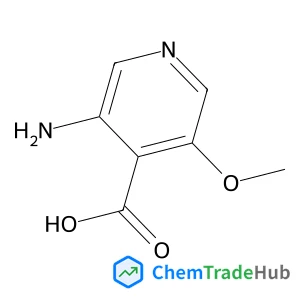
![Methyl 8-azabicyclo[3.2.1]octane-3-carboxylate hydrochloride structure](https://static.chemtradehub.com/structs/179/179022-43-6-77f5.webp "Methyl 8-azabicyclo[3.2.1]octane-3-carboxylate hydrochloride structure")
Methyl 8-azabicyclo[3.2.1]octane-3-carboxylate hydrochloride
CAS Number:
179022-43-6
Molecular Formula:
C9H16ClNO2
Recommended Suppliers






Disclaimer
This page provides academic journal information for reference and research purposes only. We are not affiliated with any journal publishers and do not handle publication submissions. For publication-related inquiries, please contact the respective journal publishers directly.
If you notice any inaccuracies in the information displayed, please contact us at support@chemtradehub.com. We will promptly review and address your concerns.