![Methyl 8-azabicyclo[3.2.1]octane-3-carboxylate hydrochloride structure](https://static.chemtradehub.com/structs/179/179022-43-6-77f5.webp "Methyl 8-azabicyclo[3.2.1]octane-3-carboxylate hydrochloride structure")
Methyl 8-azabicyclo[3.2.1]octane-3-carboxylate hydrochloride
CAS Number:
179022-43-6
Molecular Formula:
C9H16ClNO2
Johannes G. Vos
The dyes bis[2,2′-bipyridine][4,4′-dicarboxy-2,2′-bipyridine]ruthenium(II) dihexafluorophosphate, [Ru(bpy)2dcb](PF6)2 (Ru1), and tris[4,4′-bis(ethylcarboxy)-2,2′-bipyridine]ruthenium(II) dihexafluorophosphate, [Ru(dceb)3](PF6)2 (Ru2), attached to NiOx nanoparticle films were investigated using transient absorption and luminescence spectroscopy. In acetonitrile solution the dyes reveal very similar physical and chemical properties, i.e. both dyes exhibit comparable ground state and long-lived, broad excited state absorption. However, when immobilized onto a NiOx surface the photophysical properties of the two dyes differ significantly. For Ru1 luminescence is observed, which decays within 18 ns and ultrafast transient absorption measurements do not show qualitative differences from the photophysics of Ru1 in solution. In contrast to this the luminescence of photoexcited Ru2 on NiOx is efficiently quenched and the ultrafast transient absorption spectra reveal the formation of oxidized nickel centres overlaid by the absorption of the reduced dye Ru2 with a characteristic time-constant of 18 ps. These findings are attributed to the different localization of the initially photoexcited state in Ru1 and Ru2. Due to the inductive effect (−I) of the carboxylic groups, the lowest energy excited state in Ru1 is localized on the dicarboxy-bipyridine ligand, which is bound to the NiOx surface. In Ru2, on the other hand, the initially populated excited state is localized on the ester-substituted ligands, which are not bound to the semiconductor surface. Hence, the excess charge density that is abstracted from the Ru-ion in the metal-to-ligand charge-transfer transition is shifted away from the NiOx surface, which ultimately facilitates hole transfer into the semiconductor.
Ch. Kappel, K. Luther, J. Troe
DOI: 10.1039/B204364E
Laurent Joubert, Paul L. A. Popelier
DOI: 10.1039/B204485D
A. Fomenko, H. Pospíšil, Z. Sedláková, J. Pleštil
DOI: 10.1039/B203378J
J.-P. Simonin, O. Bernard, W. Kunz
DOI: 10.1039/B204841H
S. Schenkl, E. Portuondo, G. Zgrablić, M. Chergui, S. Haacke, N. Friedman, M. Sheves
DOI: 10.1039/B205453A
Herwig Döllefeld, Kathrin Hoppe, Joanna Kolny, Kristian Schilling, Horst Weller, Alexander Eychmüller
DOI: 10.1039/B202101C
Arezoo Dianat, Axel Groß
DOI: 10.1039/B203310K
Anela Ivanova, Martin Baumgarten, Stoyan Karabunarliev, Nikolai Tyutyulkov
DOI: 10.1039/B204763B
Bernd Giese, Don McNaughton
DOI: 10.1039/B203829C
R. Stephen Berry
DOI: 10.1039/B203534K
Waste containing 2-Ethyl-4-Methyl-1H-Imidazole-5-Carbaldehyde (CAS: 88634-80-4) ...
Triethoxy(octyl)silane (CAS: 1385031-14-0) is widely used in the pharmaceuticals...
Several alternatives to 3-iodo-7-nitro-1H-indazole (CAS: 864724-64-1) exist in t...
Yes, there are alternatives to Benzene, bis[(trimethoxysilyl)ethyl] (CAS: 266317...
Isothiazole-3-carbonitrile (CAS: 1452-17-1) is generally considered safe when us...
(3-Chlorophenyl)methanol (CAS: 873-63-2) is considered low to moderately toxic. ...
(2S,3S)-2-Hydroxy-3-({[(2-methyl-2-propanyl)oxy]carbonyl}amino)-3-(2-naphthyl)pr...
Proper handling of methyl 2-(bromomethyl)-5-methoxybenzoate requires the use of ...
6,8-Dibromoimidazo[1,2-a]pyridine-2-carboxylic acid (CAS: 904805-36-3) is an aro...
3-Amino-5-bromo-2-pyridinecarbonitrile is considered safe when handled under pro...

Physical Chemistry Chemical Physics (PCCP) is an international journal co-owned by 19 physical chemistry and physics societies from around the world. This journal publishes original, cutting-edge research in physical chemistry, chemical physics and biophysical chemistry. To be suitable for publication in PCCP, articles must include significant innovation and/or insight into physical chemistry; this is the most important criterion that reviewers and Editors will judge against when evaluating submissions. The journal has a broad scope and welcomes contributions spanning experiment, theory, computation and data science. Topical coverage includes spectroscopy, dynamics, kinetics, statistical mechanics, thermodynamics, electrochemistry, catalysis, surface science, quantum mechanics, quantum computing and machine learning. Interdisciplinary research areas such as polymers and soft matter, materials, nanoscience, energy, surfaces/interfaces, and biophysical chemistry are welcomed if they demonstrate significant innovation and/or insight into physical chemistry. Joined experimental/theoretical studies are particularly appreciated when complementary and based on up-to-date approaches.
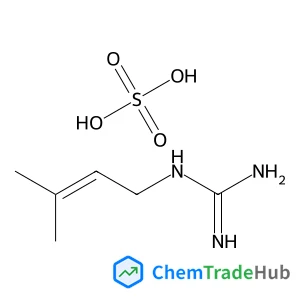
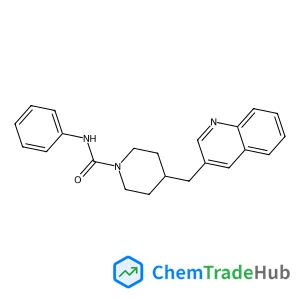
methanone structure](https://static.chemtradehub.com/structs/814/81449-01-6-786d.webp "[4-(Hydroxymethyl)phenyl](phenyl)methanone structure")