













Phase transition in swollen gels Part 32. Temperature transition in charged poly(N-isopropylmethacrylamide) hydrogels in water and aqueous NaCl solutions
Literature Information
Publication Date
2002-08-09
DOI
10.1039/B203378J
Impact Factor
3.676
Authors
A. Fomenko, H. Pospíšil, Z. Sedláková, J. Pleštil
View Original
Abstract
Swelling and mechanical behavior of ionised networks of copolymers of N-isopropylmethacrylamide with an ionic comonomer, sodium methacrylate (mole fractions xS = 0–0.1), and a crosslinker, methylenebisacrylamide, was investigated in water as a function of temperature and in aqueous NaCl solutions (cNaCl = 10−5–1 M) at 23 °C; small-angle neutron scattering (SANS) was used for structure investigation. On heating, a continuous decrease in the swelling degree in water, Q, was observed; increasing xS shifts the temperature of transition from the swollen to collapsed state, Ttr, to higher values. On subsequent cooling, the temperature Ttr was independent of xS. This means that in the collapsed state clusters of ions are formed and these microsegregates remain stable at low temperatures; the presence of clusters is supported by SANS results. The expected decrease in the swelling in aqueous NaCl solutions, Qs, with increasing NaCl concentrations, cNaCl, was observed. The decrease in Q with T and the decrease in Qs with cNaCl are accompanied by an increase in equilibrium shear modulus of gels. The experimental swelling behavior was analyzed using the theory of polyelectrolyte networks in which repulsion of charges on the chain and finite chain extensibility were considered.
Recommended Journals
Related Literature
A novel water-soluble and self-doped conducting polyaniline graft copolymer
Woo Jin Bae, Keon Hyeong Kim, Yun Heum Park, Won Ho Jo
2003-10-09
Communication
DOI: 10.1039/B309346H
Easy access to diastereomerically pure platinacycles
Concepción López, Amparo Caubet, Sonia Pérez, Xavier Solans, Mercè Font-Bardía
2004-01-27
Communication
DOI: 10.1039/B315157C
Free energy of adsorption of water and calcium on the {10 4} calcite surface
Sebastien Kerisit, Stephen C. Parker
2003-12-02
Communication
DOI: 10.1039/B311928A
Structural codons: linearity/helicity interconversion by pyridine/pyrimidine exchange in molecular strands
Ibon Odriozola, Nathalie Kyritsakas, Jean-Marie Lehn
2003-11-12
Communication
DOI: 10.1039/B311045A
A new method of solvent free O- and N-glycosylation using activated carbon fiber (ACF) as a promoter. Application to the synthesis of saponin and nucleoside analogues
Sophie Lautrette, Robert Granet, Pierre Krausz
2004-02-03
Communication
DOI: 10.1039/B315699K
Self-indicating amine scavenger resins
Jin Ku Cho, Peter D. White, Wolfgang Klute, Tony W. Dean, Mark Bradley
2004-01-27
Communication
DOI: 10.1039/B315426B
Mixed halo/hydroxy carborane anions: thermally stable platforms for hydronium ion isolation
Daniel J. Stasko, Kevin J. Perzynski, Mark A. Wasil
2004-02-16
Communication
DOI: 10.1039/B314475E
Significant and differential acceleration of dephosphorylation of the insecticides, paraoxon and parathion, caused by alkali metal ethoxides
Ik-Hwan Um, Sang-Eun Jeon, Mi-Hwa Baek, Hye-Ran Park
2003-11-07
Communication
DOI: 10.1039/B310055C
Synthesis and characterization of novel chiral sulfonato–salen–manganese(iii) complex in a zinc–aluminium LDH host
Samiran Bhattacharjee, James A. Anderson
2004-02-04
Communication
DOI: 10.1039/B315325H
A powerful route to C-functionalised tetraazamacrocycles
Frédéric Boschetti, Franck Denat, Enrique Espinosa, Jean-Marie Lagrange, Roger Guilard
2004-02-03
Communication
DOI: 10.1039/B315285E
You might also like
Compound Q&A
How should waste containing 2-Ethyl-4-Methyl-1H-Imidazole-5-Carbaldehyde (CAS: 88634-80-4) be handled?
Waste containing 2-Ethyl-4-Methyl-1H-Imidazole-5-Carbaldehyde (CAS: 88634-80-4) ...
88634-80-42-Ethyl-4-Methyl-1H-...
Compound Q&A
What industries use Triethoxy(octyl)silane (CAS: 1385031-14-0)?
Triethoxy(octyl)silane (CAS: 1385031-14-0) is widely used in the pharmaceuticals...
1385031-14-0Triethoxy(octyl)sila...
Compound Q&A
Are there alternatives to 3-iodo-7-nitro-1H-indazole (CAS: 864724-64-1) in synthesis?
Several alternatives to 3-iodo-7-nitro-1H-indazole (CAS: 864724-64-1) exist in t...
864724-64-13-iodo-7-nitro-1H-in...
Compound Q&A
Are there alternatives to Benzene, bis[(trimethoxysilyl)ethyl] (CAS: 266317-71-9) in synthesis?
Yes, there are alternatives to Benzene, bis[(trimethoxysilyl)ethyl] (CAS: 266317...
266317-71-9Benzene, bis[(trimet...
Compound Q&A
Is Isothiazole-3-carbonitrile (CAS: 1452-17-1) safe?
Isothiazole-3-carbonitrile (CAS: 1452-17-1) is generally considered safe when us...
1452-17-1Isothiazole-3-carbon...
Compound Q&A
Is (3-Chlorophenyl)methanol (CAS: 873-63-2) safe?
(3-Chlorophenyl)methanol (CAS: 873-63-2) is considered low to moderately toxic. ...
873-63-2(3-Chlorophenyl)meth...
Compound Q&A
How is (2S,3S)-2-Hydroxy-3-({[(2-methyl-2-propanyl)oxy]carbonyl}amino)-3-(2-naphthyl)propanoic acid (CAS: 959583-98-3) typically synthesized?
(2S,3S)-2-Hydroxy-3-({[(2-methyl-2-propanyl)oxy]carbonyl}amino)-3-(2-naphthyl)pr...
959583-98-3(2S,3S)-2-Hydroxy-3-...
Compound Q&A
What precautions should be taken when handling Methyl 2-(bromomethyl)-5-methoxybenzoate (CAS: 788081-99-2)?
Proper handling of methyl 2-(bromomethyl)-5-methoxybenzoate requires the use of ...
788081-99-2Methyl 2-(bromomethy...
Compound Q&A
What is 6,8-Dibromoimidazo[1,2-a]pyridine-2-carboxylic acid (CAS: 904805-36-3)?
6,8-Dibromoimidazo[1,2-a]pyridine-2-carboxylic acid (CAS: 904805-36-3) is an aro...
904805-36-36,8-Dibromoimidazo[1...
Compound Q&A
Is 3-Amino-5-bromo-2-pyridinecarbonitrile (CAS: 573675-27-1) safe?
3-Amino-5-bromo-2-pyridinecarbonitrile is considered safe when handled under pro...
573675-27-13-Amino-5-bromo-2-py...
Source Journal
Physical Chemistry Chemical Physics

CiteScore:
5.5
Self-citation Rate:
10.3%
Articles per Year:
3036
Physical Chemistry Chemical Physics (PCCP) is an international journal co-owned by 19 physical chemistry and physics societies from around the world. This journal publishes original, cutting-edge research in physical chemistry, chemical physics and biophysical chemistry. To be suitable for publication in PCCP, articles must include significant innovation and/or insight into physical chemistry; this is the most important criterion that reviewers and Editors will judge against when evaluating submissions. The journal has a broad scope and welcomes contributions spanning experiment, theory, computation and data science. Topical coverage includes spectroscopy, dynamics, kinetics, statistical mechanics, thermodynamics, electrochemistry, catalysis, surface science, quantum mechanics, quantum computing and machine learning. Interdisciplinary research areas such as polymers and soft matter, materials, nanoscience, energy, surfaces/interfaces, and biophysical chemistry are welcomed if they demonstrate significant innovation and/or insight into physical chemistry. Joined experimental/theoretical studies are particularly appreciated when complementary and based on up-to-date approaches.
Recommended Compounds
![[3-Chloro-5-(diethylcarbamoyl)phenyl]boronic acid structure](https://static.chemtradehub.com/structs/957/957120-59-1-febc.webp "[3-Chloro-5-(diethylcarbamoyl)phenyl]boronic acid structure")
[3-Chloro-5-(diethylcarbamoyl)phenyl]boronic acid
CAS Number:
957120-59-1
Molecular Formula:
C11H15BClNO3

N-phenyl-4-(quinolin-3-ylmethyl)piperidine-1-carboxamide
CAS Number:
959151-50-9
Molecular Formula:
C22H23N3O
![4,4'-[2,5-Biphenyldiylbis(oxy)]dianiline structure](https://static.chemtradehub.com/structs/941/94148-67-1-24c6.webp "4,4'-[2,5-Biphenyldiylbis(oxy)]dianiline structure")
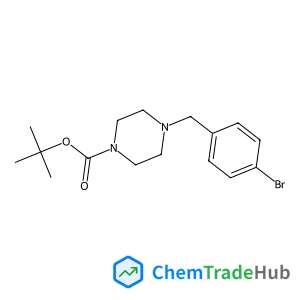
2-Methyl-2-propanyl 4-(4-bromobenzyl)-1-piperazinecarboxylate
CAS Number:
844891-10-7
Molecular Formula:
C16H23BrN2O2
Recommended Suppliers




Disclaimer
This page provides academic journal information for reference and research purposes only. We are not affiliated with any journal publishers and do not handle publication submissions. For publication-related inquiries, please contact the respective journal publishers directly.
If you notice any inaccuracies in the information displayed, please contact us at support@chemtradehub.com. We will promptly review and address your concerns.