


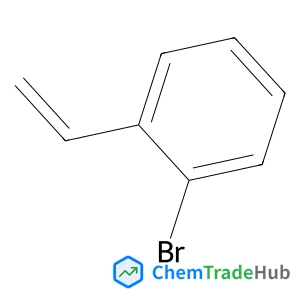
HCN elimination from vinyl cyanide: product energy partitioning, the role of hydrogen–deuterium exchange reactions and a new pathway
Literature Information
Publication Date
2015-02-05
DOI
10.1039/C4CP05626D
Impact Factor
3.676
Authors
Saulo A. Vázquez, Emilio Martínez-Núñez
View Original
Abstract
The different HCN elimination pathways from vinyl cyanide (VCN) are studied in this paper using RRKM, Kinetic Monte Carlo (KMC), and quasi-classical trajectory (QCT) calculations. A new HCN elimination pathway proves to be very competitive with the traditional 3-center and 4-center mechanisms, particularly at low excitation energies. However, low excitation energies have never been experimentally explored, and the high and low excitation regions are dynamically different. The KMC simulations carried out using singly deuterated VCN (CH2CD–CN) at 148 kcal mol−1 show the importance of hydrogen–deuterium exchange reactions: both DCN and HCN will be produced in any of the 1,1 and 1,2 elimination pathways. The QCT simulation results obtained for the 3-center pathway are in agreement with the available experimental results, with the 4-center results showing much more excitation of the products. In general, our results seem to be consistent with a photodissociation mechanism at 193 nm, where the molecule dissociates (at least the HCN elimination pathways) in the ground electronic state. However, our simulations assume that internal conversion is a fully statistical process, i.e., the HCN elimination channels proceed on the ground electronic state according to RRKM theory, which might not be the case. In future studies it would be of interest to include the photo-prepared electronically excited state(s) in the dynamics simulations.
Recommended Journals

Journal of Physics and Chemistry of Solids

Organic Preparations and Procedures International

Kinetics and Catalysis

Proceedings of the National Academy of Sciences of the United States of America

Journal of Catalysis

Pure and Applied Chemistry

Pharmacological Reviews

Journal of Heterocyclic Chemistry

Science

Molecular Pharmacology
Related Literature
From cyclic nanorings to single-walled carbon nanotubes: disclosing the evolution of their electronic structure with the help of theoretical methods
A. Pérez-Guardiola, A. J. Pérez-Jiménez, J. C. Sancho-García
2019-01-08
Paper
DOI: 10.1039/C8CP06615A
Reactions of water with radical cations of guanine, 9-methylguanine, 2′-deoxyguanosine and guanosine: keto–enol isomerization, C8-hydroxylation, and effects of N9-substitution
Wenjing Zhou, May Myat Moe
2018-10-16
Paper
DOI: 10.1039/C8CP05453C
How an electric field can modulate the metal ion selectivity of protein binding sites: insights from DFT/PCM calculations
Todor Dudev, Sonia Ilieva, Lyudmila Doudeva
2018-09-08
Paper
DOI: 10.1039/C8CP04050H
Spin-filtering and tunneling magnetoresistance effects in 6,6,12-graphyne-based molecular magnetic tunnel junctions
Maoyun Di, Li-Chun Xu
2018-12-26
Paper
DOI: 10.1039/C8CP06927A
Binding of the atomic cations hydrogen through argon to water and hydrogen sulfide
Brent R. Westbrook, Katelyn M. Dreux, Gregory S. Tschumper, Joseph S. Francisco, Ryan C. Fortenberry
2018-10-02
Paper
DOI: 10.1039/C8CP05378B
Understanding the temperature effect on transport dynamics and structures in polyamide reverse osmosis system via molecular dynamics simulations
Ke Li, Lifen Liu, Hao Wu, Shanlong Li, Chunyang Yu, Yongfeng Zhou, Wei Huang, Deyue Yan
2018-11-13
Paper
DOI: 10.1039/C8CP05825C
Systematic analysis of electron energy-loss near-edge structures in Li-ion battery materials
Motofumi Saitoh, Xiang Gao, Takafumi Ogawa, Yumi H. Ikuhara, Shunsuke Kobayashi, Craig A. J. Fisher
2018-09-24
Paper
DOI: 10.1039/C8CP03390K
You might also like
Compound Q&A
How should waste containing 4-Bromo-3-methyl-2-thiophenecarboxylic acid (CAS: 265652-39-9) be handled?
Waste containing 4-Bromo-3-methyl-2-thiophenecarboxylic acid (CAS: 265652-39-9) ...
265652-39-94-Bromo-3-methyl-2-t...
Compound Q&A
What industries use (2S,5S,2'S,5'S)-1,1'-(1,2-Ethanediyl)bis(2,5-dimethylphospholane) (CAS: 136779-26-5)?
(2S,5S,2'S,5'S)-1,1'-(1,2-Ethanediyl)bis(2,5-dimethylphospholane) is primarily u...
136779-26-5(2S,5S,2'S,5'S)-1,1'...
Compound Q&A
What industries use Ethyl 2-(2-bromo-5-fluorophenyl)acetate (CAS: 1214910-61-8)?
Ethyl 2-(2-bromo-5-fluorophenyl)acetate (CAS: 1214910-61-8) is used in the pharm...
1214910-61-8Ethyl 2-(2-bromo-5-f...
Compound Q&A
How is 4-Methyl-2-benzofuran-1,3-dione (CAS: 4792-30-7) typically synthesized?
4-Methyl-2-benzofuran-1,3-dione (CAS: 4792-30-7) can be synthesized through seve...
4792-30-74-Methyl-2-benzofura...
Compound Q&A
What industries use 4,6-Dichloroquinoline-3-carbonitrile (CAS: 936498-04-3)?
4,6-Dichloroquinoline-3-carbonitrile (CAS: 936498-04-3) is used in the pharmaceu...
936498-04-34,6-Dichloroquinolin...
Compound Q&A
What are the main uses of Chloro[tris(para-trifluoromethylphenyl)phosphine]gold(I) (CAS: 385815-83-8)?
Chloro[tris(para-trifluoromethylphenyl)phosphine]gold(I) is primarily used in or...
385815-83-8Chloro[tris(para-tri...
Compound Q&A
Is 2-Bromo-5-nitrofuran (CAS: 823-73-4) safe?
2-Bromo-5-nitrofuran (CAS: 823-73-4) is generally considered safe when handled w...
823-73-42-Bromo-5-nitrofuran
Compound Q&A
How should 5-Bromo-2,3,4-trifluorobenzoic acid (CAS: 212631-85-1) be stored?
5-Bromo-2,3,4-trifluorobenzoic acid should be stored in a cool, dry place away f...
212631-85-15-Bromo-2,3,4-triflu...
Compound Q&A
What are the main uses of Zinc bis(aminoacetate) (CAS: 7214-08-6)?
Zinc bis(aminoacetate) (CAS: 7214-08-6) is primarily used in the pharmaceutical ...
7214-08-6Zinc bis(aminoacetat...
Compound Q&A
How should Adamantan-1-ylmethanol (CAS: 770-71-8) be stored?
Adamantan-1-ylmethanol should be stored in a cool, dry, and well-ventilated plac...
770-71-8Adamantan-1-ylmethan...
Source Journal
Physical Chemistry Chemical Physics

CiteScore:
5.5
Self-citation Rate:
10.3%
Articles per Year:
3036
Physical Chemistry Chemical Physics (PCCP) is an international journal co-owned by 19 physical chemistry and physics societies from around the world. This journal publishes original, cutting-edge research in physical chemistry, chemical physics and biophysical chemistry. To be suitable for publication in PCCP, articles must include significant innovation and/or insight into physical chemistry; this is the most important criterion that reviewers and Editors will judge against when evaluating submissions. The journal has a broad scope and welcomes contributions spanning experiment, theory, computation and data science. Topical coverage includes spectroscopy, dynamics, kinetics, statistical mechanics, thermodynamics, electrochemistry, catalysis, surface science, quantum mechanics, quantum computing and machine learning. Interdisciplinary research areas such as polymers and soft matter, materials, nanoscience, energy, surfaces/interfaces, and biophysical chemistry are welcomed if they demonstrate significant innovation and/or insight into physical chemistry. Joined experimental/theoretical studies are particularly appreciated when complementary and based on up-to-date approaches.
Recommended Compounds
![(4R,5S,6S)-3-({(3S,5S)-5-[(3-Carboxyphenyl)carbamoyl]-3-pyrrolidinyl}sulfanyl)-6-[(1R)-1-hydroxyethyl]-4-methyl-7-oxo-1-azabicyclo[3.2.0]hept-2-ene-2-carboxylic acid structure](https://static.chemtradehub.com/structs/153/153832-46-3-b2e0.webp "(4R,5S,6S)-3-({(3S,5S)-5-[(3-Carboxyphenyl)carbamoyl]-3-pyrrolidinyl}sulfanyl)-6-[(1R)-1-hydroxyethyl]-4-methyl-7-oxo-1-azabicyclo[3.2.0]hept-2-ene-2-carboxylic acid structure")
Recommended Suppliers




Disclaimer
This page provides academic journal information for reference and research purposes only. We are not affiliated with any journal publishers and do not handle publication submissions. For publication-related inquiries, please contact the respective journal publishers directly.
If you notice any inaccuracies in the information displayed, please contact us at support@chemtradehub.com. We will promptly review and address your concerns.