












Carrier concentration dependent optical and electrical properties of Ga doped ZnO hexagonal nanocrystals
Literature Information
Publication Date
2015-05-22
DOI
10.1039/C4CP05480F
Impact Factor
3.676
Authors
Manas Saha, Sirshendu Ghosh, Vishal Dev Ashok, S. K. De
View Original
Abstract
Colloidal trivalent gallium (Ga) doped zinc oxide (ZnO) hexagonal nanocrystals have been prepared to introduce more carrier concentration into the wide band gap of ZnO. The dopant (Ga) modifies the morphology and size of ZnO nanocrystals. Low content of Ga enhances the optical band gap of ZnO due to excess carrier concentration in the conduction band of ZnO. The interaction among free carriers arising from higher concentration of Ga gives rise to narrowing of the band gap. Surface plasmon resonance absorption appears in the infrared region due to excessive carrier concentration. A broad emission band consists of blue, yellow and green colors associated with different native defects of ZnO. Intrinsic defects and extrinsic dopant Ga control the defect related emission spectrum in the visible region. Replacement of Zn by Ga induces a room temperature metallic state in a degenerate semiconductor. Cationic disorder leads to metal–semiconductor transition at low temperature strongly dependent on the concentration of Ga. Pure semiconducting behavior up to about 80 K is observed for the highest amount of Ga. Temperature dependent metal–semiconductor transition has been interpreted by localization of charge carriers due to disorder arising from random Ga substitution.
Related Literature
Machine learning for predicting product distributions in catalytic regioselective reactions
Sayan Banerjee, A. Sreenithya, Raghavan B. Sunoj
2018-06-22
Paper
DOI: 10.1039/C8CP03141J
The dependence of the β-to-α phase transition behavior of poly(1,4-butylene adipate) on phase separated morphology in its blends with poly(vinylidene fluoride)
Chunyue Hou, Huihui Li, Xiaoli Sun, Yanfang Wang, Shangtao Chen
2018-06-01
Paper
DOI: 10.1039/C8CP02464B
On the hydrogen evolution reaction activity of graphene–hBN van der Waals heterostructures
Sumit Bawari, Nisheal M. Kaley, Shubhadeep Pal, Thazhe Veettil Vineesh, Shamasree Ghosh, Jagannath Mondal, Tharangattu N. Narayanan
2018-03-13
Paper
DOI: 10.1039/C8CP01020J
Theoretical study on the optical and electronic properties of graphene quantum dots doped with heteroatoms
Jianguang Feng, Hongzhou Dong, Beili Pang, Feifei Shao, ChunKai Zhang, Liyan Yu
2018-05-02
Paper
DOI: 10.1039/C8CP01403E
Magnetic properties of nanoparticles as a function of their spatial distribution on liposomes and cells
Maria Eugenia Fortes Brollo, Patricia Hernández Flores, Lucía Gutiérrez, Christer Johansson, Domingo Francisco Barber, María del Puerto Morales
2018-06-05
Paper
DOI: 10.1039/C8CP03016B
Single entity electrocatalysis: oxygen reduction mediated via methyl viologen doped Nafion nanoparticles
Lifu Chen, Chuhong Lin, Richard G. Compton
2018-05-23
Paper
DOI: 10.1039/C8CP02311E
Ultra-broadband EPR spectroscopy in field and frequency domains
D. Bloos, R. Marx, P. Lutz, M. Kern, O. Laguta, C. Dietrich, J. van Slageren
2018-05-14
Paper
DOI: 10.1039/C7CP07443C
The electronic structure and stability of germanium tubes Ge30H12 and Ge33H12
Long Van Duong, Miquel Solà, Hadi Behzadi, Mohammad Jafar Momeni
2018-08-24
Paper
DOI: 10.1039/C8CP03737J
Theoretical study on photophysical properties of three high water solubility polypyridyl complexes for two-photon photodynamic therapy
Ying-Tao Liu, Xue Yin, Xiao-Yong Lai, Xin Wang
2018-06-18
Paper
DOI: 10.1039/C8CP01069B
Enhancement of field electron emission in topological insulator Bi2Se3 by Ni doping
Kushal Mazumder, Alfa Sharma, Yogendra Kumar, Mahendra A. More, Rupesh Devan
2018-06-08
Paper
DOI: 10.1039/C8CP01982G
You might also like
Compound Q&A
How should 2-Methylbenzene-1,4-diamine dihydrochloride (CAS: 615-45-2) be stored?
2-Methylbenzene-1,4-diamine dihydrochloride (CAS: 615-45-2) should be stored in ...
615-45-22-Methylbenzene-1,4-...
Compound Q&A
Is (1S,4S)-2,5-Diazabicyclo[2.2.1]heptane dihydrobromide (CAS: 132747-20-7) safe?
(1S,4S)-2,5-Diazabicyclo[2.2.1]heptane dihydrobromide is generally considered sa...
132747-20-7(1S,4S)-2,5-Diazabic...
Compound Q&A
What industries use (6-Chloropyridazin-3-YL)methanamine (CAS: 871826-15-2)?
(6-Chloropyridazin-3-YL)methanamine finds applications in the pharmaceutical ind...
871826-15-2(6-Chloropyridazin-3...
Compound Q&A
What are the main uses of 2-Fluoro-3-methylphenol (CAS: 77772-72-6)?
2-Fluoro-3-methylphenol is primarily used in the synthesis of pharmaceuticals, p...
77772-72-62-Fluoro-3-methylphe...
Compound Q&A
What precautions should be taken when handling 3-Methoxy-4-nitrobenzonitrile (CAS: 177476-75-4)?
When handling 3-Methoxy-4-nitrobenzonitrile, it is important to wear appropriate...
177476-75-43-Methoxy-4-nitroben...
Compound Q&A
What precautions should be taken when handling 1,3-Oxazolo[4,5-b]pyridine-2(3H)-thione (CAS: 211949-57-4)?
When handling 1,3-Oxazolo[4,5-b]pyridine-2(3H)-thione (CAS: 211949-57-4), it is ...
211949-57-4[1,3]Oxazolo[4,5-b]p...
Compound Q&A
What regulatory guidelines apply to 4-Ethynylbenzamide (CAS: 90347-86-7)?
4-Ethynylbenzamide (CAS: 90347-86-7) falls under various regulatory guidelines i...
90347-86-74-Ethynylbenzamide
Compound Q&A
What are the main uses of 3-(2-Ethylphenyl)-2-thioxo-4-imidazolidinone (CAS: 186822-57-1)?
3-(2-Ethylphenyl)-2-thioxo-4-imidazolidinone is primarily used as an intermediat...
186822-57-13-(2-Ethylphenyl)-2-...
Compound Q&A
What is (2-Fluoro-6-methoxyphenyl)acetic acid (CAS: 500912-19-6)?
(2-Fluoro-6-methoxyphenyl)acetic acid, also known as 4-fluoro-3-methoxybenzoic a...
500912-19-6(2-Fluoro-6-methoxyp...
Compound Q&A
What is the market or research trend for 2-[4-(Hydroxymethyl)phenoxy]ethanol (CAS: 102196-18-9)?
Market trends for 2-[4-(Hydroxymethyl)phenoxy]ethanol (CAS: 102196-18-9) indicat...
102196-18-92-[4-(Hydroxymethyl)...
Source Journal
Physical Chemistry Chemical Physics

CiteScore:
5.5
Self-citation Rate:
10.3%
Articles per Year:
3036
Physical Chemistry Chemical Physics (PCCP) is an international journal co-owned by 19 physical chemistry and physics societies from around the world. This journal publishes original, cutting-edge research in physical chemistry, chemical physics and biophysical chemistry. To be suitable for publication in PCCP, articles must include significant innovation and/or insight into physical chemistry; this is the most important criterion that reviewers and Editors will judge against when evaluating submissions. The journal has a broad scope and welcomes contributions spanning experiment, theory, computation and data science. Topical coverage includes spectroscopy, dynamics, kinetics, statistical mechanics, thermodynamics, electrochemistry, catalysis, surface science, quantum mechanics, quantum computing and machine learning. Interdisciplinary research areas such as polymers and soft matter, materials, nanoscience, energy, surfaces/interfaces, and biophysical chemistry are welcomed if they demonstrate significant innovation and/or insight into physical chemistry. Joined experimental/theoretical studies are particularly appreciated when complementary and based on up-to-date approaches.
Recommended Compounds
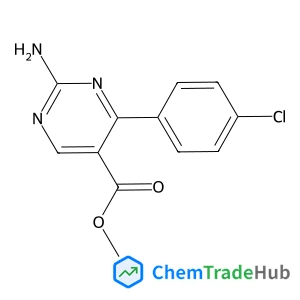
Methyl 2-amino-4-(4-chlorophenyl)-5-pyrimidinecarboxylate
CAS Number:
1133115-56-6
Molecular Formula:
C12H10ClN3O2
![Methyl 2-[5-(3-Phenoxyphenyl)-2H-tetrazol-2-yl]acetate structure](https://static.chemtradehub.com/structs/130/1305320-60-8-84b4.webp "Methyl 2-[5-(3-Phenoxyphenyl)-2H-tetrazol-2-yl]acetate structure")
Methyl 2-[5-(3-Phenoxyphenyl)-2H-tetrazol-2-yl]acetate
CAS Number:
1305320-60-8
Molecular Formula:
C16H14N4O3
Recommended Suppliers




Disclaimer
This page provides academic journal information for reference and research purposes only. We are not affiliated with any journal publishers and do not handle publication submissions. For publication-related inquiries, please contact the respective journal publishers directly.
If you notice any inaccuracies in the information displayed, please contact us at support@chemtradehub.com. We will promptly review and address your concerns.