


![{3-[Bis(4-hydroxyphenyl)methyl]-1-[2-(dimethylamino)ethyl]-1H-indol-2-yl}[4-(2-chlorophenyl)-1-piperazinyl]methanone structure](https://static.chemtradehub.com/structs/170/170365-25-0-e4d7.webp "{3-[Bis(4-hydroxyphenyl)methyl]-1-[2-(dimethylamino)ethyl]-1H-indol-2-yl}[4-(2-chlorophenyl)-1-piperazinyl]methanone structure")
{3-[Bis(4-hydroxyphenyl)methyl]-1-[2-(dimethylamino)ethyl]-1H-indol-2-yl}[4-(2-chlorophenyl)-1-piperazinyl]methanone
CAS Number:
170365-25-0
Molecular Formula:
C36H37ClN4O3
Sebastian Zuluaga, Li-Hong Liu, Natis Shafiq, Sara M. Rupich, Jean-François Veyan, Yves J. Chabal, Timo Thonhauser
g-C3N4 is a promising material for hydrogen production from water via photo-catalysis, if we can tune its band gap to desirable levels. Using a combined experimental and ab initio approach, we uncover an almost perfectly linear relationship between the band gap and structural aspects of g-C3N4, which we show to originate in a changing overlap of wave functions associated with the lattice constants. This changing overlap, in turn, causes the unoccupied pz states to experience a significantly larger energy shift than any other occupied state (s, px, or py), resulting in this peculiar relationship. Our results explain and demonstrate the possibility to tune the band gap by structural means, and thus the frequency at which g-C3N4 absorbs light.

Angewandte Chemie International Edition

Physical Chemistry Chemical Physics

Molecules

Journal of Medical Biochemistry

Current Pharmaceutical Biotechnology

Contact Lens & Anterior Eye

Foundations of Chemistry

European Journal of Organic Chemistry

Lab on a Chip

Journal of Enzyme inhibition and Medicinal Chemistry
Dong-Liang Zhang, Cheng-Kun Li, Run-Sheng Zeng, Adedamola Shoberu, Jian-Ping Zou
DOI: 10.1039/C8QO01098F
Chunhui Shan, Kangbao Zhong, Xiaotian Qi, Dongdong Xu, Ling-Bo Qu, Ruopeng Bai
DOI: 10.1039/C8QO00699G
Xiao-Jie Shang, Dong Liu, Zhong-Quan Liu
DOI: 10.1039/C8QO00847G
Xuanyi Li, Chunhua Han, Yue Huang, Hequan Yao, Aijun Lin
DOI: 10.1039/C8QO01168K
Yuguang Wang, Yi You, Zhiqiang Weng
DOI: 10.1039/C5QO00045A
Jiajing Tan, Binbin Liu, Shuaisong Su
DOI: 10.1039/C8QO00838H
Katharina Zielke, Andreas Eitzinger, Antonio Massa, Laura Palombi, Kirill Faust, Mario Waser
DOI: 10.1039/C8QO01057A
2-(2-Chloroacetamido)-3-phenylpropanoic acid (CAS: 7765-11-9) is generally consi...
2-(Benzyloxy)-5-bromobenzoic acid can be handled safely if appropriate precautio...
(4-Methyl-1,2,5-oxadiazol-3-yl)methanamine hydrochloride is a chemical compound ...
2-(5-Hexylthiophen-2-yl)-4,4,5,5-tetramethyl-1,3,2-dioxaborolane (CAS: 917985-54...
While 4-(8-Methyl-9H-1,3-dioxolo[4,5-h][2,3]benzodiazepin-5-yl)benzenamine (CAS:...
The market for tert-butyl 3-hydroxy-4,5,7,8-tetrahydro-2H-pyrazolo[3,4-d]azepine...
Waste containing 3,5-Diamino-1H-pyrazole-4-carbonitrile (CAS: 6844-58-2) should ...
(6-Fluoro-3-pyridinyl)boronic acid can be synthesized through the reaction of 6-...
Dibenzyl carbonimidoylbiscarbamate (CAS: 10065-79-9) finds applications in vario...
The market for (beta,beta,2,3,4,5,6-~2~H_7_)Phenylalanine (CAS: 74228-83-4) is g...
Physical Chemistry Chemical Physics (PCCP) is an international journal co-owned by 19 physical chemistry and physics societies from around the world. This journal publishes original, cutting-edge research in physical chemistry, chemical physics and biophysical chemistry. To be suitable for publication in PCCP, articles must include significant innovation and/or insight into physical chemistry; this is the most important criterion that reviewers and Editors will judge against when evaluating submissions. The journal has a broad scope and welcomes contributions spanning experiment, theory, computation and data science. Topical coverage includes spectroscopy, dynamics, kinetics, statistical mechanics, thermodynamics, electrochemistry, catalysis, surface science, quantum mechanics, quantum computing and machine learning. Interdisciplinary research areas such as polymers and soft matter, materials, nanoscience, energy, surfaces/interfaces, and biophysical chemistry are welcomed if they demonstrate significant innovation and/or insight into physical chemistry. Joined experimental/theoretical studies are particularly appreciated when complementary and based on up-to-date approaches.
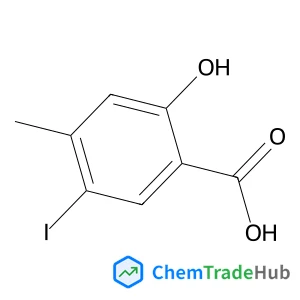
![(3S,4aS,8aS)-2-[(2R,3S)-3-Amino-2-hydroxy-4-phenylbutyl]-N-(2-methyl-2-propanyl)decahydro-3-isoquinolinecarboxamide structure](https://static.chemtradehub.com/structs/136/136522-17-3-4d77.webp "(3S,4aS,8aS)-2-[(2R,3S)-3-Amino-2-hydroxy-4-phenylbutyl]-N-(2-methyl-2-propanyl)decahydro-3-isoquinolinecarboxamide structure")
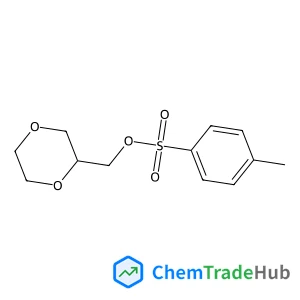
![3-[4-(difluoromethoxy)phenyl]-2-({[(9H-fluoren-9-yl)methoxy]carbonyl}amino)propanoic acid structure](https://static.chemtradehub.com/structs/149/1496564-27-2-952e.webp "3-[4-(difluoromethoxy)phenyl]-2-({[(9H-fluoren-9-yl)methoxy]carbonyl}amino)propanoic acid structure")





