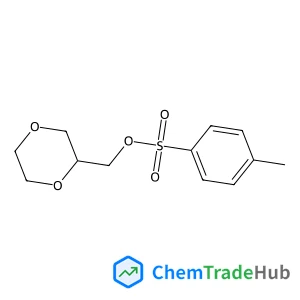
(S)-(1,4-Dioxan-2-yl)methyl 4-methylbenzenesulfonate
CAS Number:
917882-64-5
Molecular Formula:
C12H16O5S
Tianlei Zhang, Xinguang Lan, Zhangyu Qiao, Rui Wang, Xiaohu Yu, Qiong Xu, Zhiyin Wang, Linxia Jin, ZhuQing Wang
To study the catalytic effects of (H2O)n (n = 1–3), the mechanisms of the reaction HO2 + HO → 3O2 + H2O without and with (H2O)n (n = 1–3) have been investigated theoretically at the CCSD(T)/aug-cc-pVTZ//M06-2X/aug-cc-pVTZ level of theory, coupled with rate constant calculations using the conventional transition state theory. Our results show that upon incorporation of (H2O)n (n = 1–3) into the channel of H2O + 3O2 formation, two different reactions, i.e. HO + HO2⋯(H2O)n (n = 1–3) and HO2 + HO⋯(H2O)n (n = 1–3), have been observed, and these two reactions are competitive with each other. The catalytic effects of (H2O)n (n = 1–3) mainly arise from the contribution of a single water vapor molecule; this is because the effective rate constants with water are respectively larger by 2–3 and 3–4 orders of magnitude than those of the reactions with (H2O)2 and (H2O)3. Furthermore, the catalytic effects of the water monomer mainly arise from the H2O⋯HO2 + HO reaction, and the enhancement factor of this reaction is obvious within the temperature range of 240.0–425.0 K, with the branching ratio (k′(RW)/ktot) of 17.27–80.77%. Overall, the present results provide a new example of how water and water clusters catalyze gas phase reactions under atmospheric conditions.
Yu Du, Qiang Kang
DOI: 10.1039/C8QO00809D
Yunpeng Chen, Yunfan Yang, Yu Zhao, Shixing Liu, Yongqing Li
DOI: 10.1039/C8QO01111G
Kazumasa Funabiki, Hiroki Iwata, Yosuke Yano, Yasuhiro Kubota, Masaki Matsui
DOI: 10.1039/C5QO00008D
Jia-hao Zhang, Yin Wei
DOI: 10.1039/C8QO00907D
Xifa Yang, Guolin Cheng, Jinhai Shen, Changsheng Kuai, Xiuling Cui
DOI: 10.1039/C4QO00260A
Yanan Wang, Min Jiang, Jin-Tao Liu
DOI: 10.1039/C5QO00044K
Yuguang Wang, Yi You, Zhiqiang Weng
DOI: 10.1039/C5QO00045A
2-(2-Chloroacetamido)-3-phenylpropanoic acid (CAS: 7765-11-9) is generally consi...
2-(Benzyloxy)-5-bromobenzoic acid can be handled safely if appropriate precautio...
(4-Methyl-1,2,5-oxadiazol-3-yl)methanamine hydrochloride is a chemical compound ...
2-(5-Hexylthiophen-2-yl)-4,4,5,5-tetramethyl-1,3,2-dioxaborolane (CAS: 917985-54...
While 4-(8-Methyl-9H-1,3-dioxolo[4,5-h][2,3]benzodiazepin-5-yl)benzenamine (CAS:...
The market for tert-butyl 3-hydroxy-4,5,7,8-tetrahydro-2H-pyrazolo[3,4-d]azepine...
Waste containing 3,5-Diamino-1H-pyrazole-4-carbonitrile (CAS: 6844-58-2) should ...
(6-Fluoro-3-pyridinyl)boronic acid can be synthesized through the reaction of 6-...
Dibenzyl carbonimidoylbiscarbamate (CAS: 10065-79-9) finds applications in vario...
The market for (beta,beta,2,3,4,5,6-~2~H_7_)Phenylalanine (CAS: 74228-83-4) is g...

Physical Chemistry Chemical Physics (PCCP) is an international journal co-owned by 19 physical chemistry and physics societies from around the world. This journal publishes original, cutting-edge research in physical chemistry, chemical physics and biophysical chemistry. To be suitable for publication in PCCP, articles must include significant innovation and/or insight into physical chemistry; this is the most important criterion that reviewers and Editors will judge against when evaluating submissions. The journal has a broad scope and welcomes contributions spanning experiment, theory, computation and data science. Topical coverage includes spectroscopy, dynamics, kinetics, statistical mechanics, thermodynamics, electrochemistry, catalysis, surface science, quantum mechanics, quantum computing and machine learning. Interdisciplinary research areas such as polymers and soft matter, materials, nanoscience, energy, surfaces/interfaces, and biophysical chemistry are welcomed if they demonstrate significant innovation and/or insight into physical chemistry. Joined experimental/theoretical studies are particularly appreciated when complementary and based on up-to-date approaches.