













Enabling electrochemical reduction of nitrogen to ammonia at ambient conditions through rational catalyst design
Literature Information
Publication Date
2014-11-14
DOI
10.1039/C4CP04838E
Impact Factor
3.676
Authors
Younes Abghoui, Anna L. Garden, Valtýr Freyr Hlynsson, Snædís Björgvinsdóttir, Hrefna Ólafsdóttir, Egill Skúlason
View Original
Abstract
Commercial design of a sustainable route for on-site production of ammonia represents a potential economic and environmental breakthrough. In an analogous process to the naturally occurring enzymatic mechanism, synthesis of ammonia could be achieved in an electrochemical cell, in which electricity would be used to reduce atmospheric nitrogen and water into ammonia at ambient conditions. To date, such a process has not been realized due to slow kinetics and low faradaic efficiencies. Although progress has been made in this regard, at present there exists no device that can produce ammonia efficiently from air and water at room temperature and ambient pressure. In this work, a scheme is presented in which electronic structure calculations are used to screen for catalysts that are stable, active and selective towards N2 electro-reduction to ammonia, while at the same time suppressing the competing H2 evolution reaction. The scheme is applied to transition metal nitride catalysts. The most promising candidates are the (100) facets of the rocksalt structures of VN and ZrN, which show promise of producing ammonia in high yield at low onset potentials.
Recommended Journals
Related Literature
ESR observation of the formation of an Au(ii) complex in zeolite Y
Zhenping Qu, Liviu Giurgiu, Emil Roduner
2006-05-09
Communication
DOI: 10.1039/B601900E
Modular nanometer-scale structuring of gel fibres by sequential self-organization
Lucas Applegarth, Nigel Clark, A. Christine Richardson, Andrew D. M. Parker, Ivana Radosavljevic-Evans, Andres E. Goeta, Judith A. K. Howard, Jonathan W. Steed
2005-10-04
Communication
DOI: 10.1039/B511259A
Chiral diphosphites and diphosphoramidites as cheap and efficient ligands in Rh-catalyzed asymmetric olefinhydrogenation
Manfred T. Reetz, Gerlinde Mehler, Oleg Bondarev
2006-05-02
Communication
DOI: 10.1039/B601638C
Supramolecular binding of protonated amines to a receptor microgel in aqueous medium
Alan Tominey, David Andrew, Lewis Oliphant, Georgina M. Rosair, Juliette Dupré, Arno Kraft
2006-05-03
Communication
DOI: 10.1039/B604393C
Anion-directed self-organization of thermotropic liquid crystalline materials containing a guanidinium moiety
Dongwoo Kim, Sangyong Jon, Hyung-Kun Lee, Kangkyun Baek, Nam-Keun Oh, Wang-Cheol Zin, Kimoon Kim
2005-10-05
Communication
DOI: 10.1039/B511517E
Assessment of ordered and complementary pore volumes in polymer-templated mesoporous silicas and organosilicas
Mietek Jaroniec, Leonid A. Solovyov
2006-05-03
Communication
DOI: 10.1039/B604283J
A star-shaped ruthenium complex with five ferrocenyl-terminated arms bridged by trans-platinum fragments
Guillaume Vives, Alexandre Carella, Jean-Pierre Launay, Gwénaël Rapenne
2006-04-28
Communication
DOI: 10.1039/B603508F
Analytical platforms for activity-based protein profiling – exploiting the versatility of chemistry for functional proteomics
Stephan A. Sieber, Benjamin F. Cravatt
2006-04-25
Feature Article
DOI: 10.1039/B600653C
You might also like
Compound Q&A
Is 6-(3-Fluorophenyl)picolinic acid (CAS: 887982-40-3) safe?
6-(3-Fluorophenyl)picolinic acid is generally considered safe for laboratory use...
887982-40-36-(3-Fluorophenyl)pi...
Compound Q&A
What industries use (3R)-3-Pyrrolidinol (CAS: 2799-21-5)?
(3R)-3-Pyrrolidinol is used in the pharmaceutical industry as a precursor for dr...
2799-21-5(3R)-3-Pyrrolidinol
Compound Q&A
What precautions should be taken when handling (4R,5R)-4,5-Diethoxycarbonyl-2,2-dimethyldioxolane (CAS: 59779-75-8)?
When handling (4R,5R)-4,5-Diethoxycarbonyl-2,2-dimethyldioxolane (CAS: 59779-75-...
59779-75-8(4R,5R)-4,5-Diethoxy...
Compound Q&A
How is 1-(6-Chloroimidazo[1,2-b]pyridazin-3-yl)ethanone (CAS: 90734-71-7) typically synthesized?
1-(6-Chloroimidazo[1,2-b]pyridazin-3-yl)ethanone is often synthesized via a mult...
90734-71-71-(6-Chloroimidazo[1...
Compound Q&A
What is the market or research trend for N-Ethyl-3,4-dimethylbenzylamine (CAS: 39180-83-1)?
The market for N-Ethyl-3,4-dimethylbenzylamine (CAS: 39180-83-1) remains steady,...
39180-83-1N-Ethyl-3,4-dimethyl...
Compound Q&A
What is Tert-butyl 3-(pyrrolidin-1-yl)azetidine-1-carboxylate (CAS: 1019008-21-9)?
Tert-butyl 3-(pyrrolidin-1-yl)azetidine-1-carboxylate is a chemical compound wit...
1019008-21-9Tert-butyl 3-(pyrrol...
Compound Q&A
What regulatory guidelines apply to 1-Bromo-3-chloro-2,4-dimethoxybenzene (CAS: 1228956-93-1)?
1-Bromo-3-chloro-2,4-dimethoxybenzene (CAS: 1228956-93-1) falls under the classi...
1228956-93-11-Bromo-3-chloro-2,4...
Compound Q&A
Is 8-Bromo-2-methyl-3,4-dihydroisoquinolin-1(2H)-one (CAS: 1368622-07-4) safe?
The safety of 8-Bromo-2-methyl-3,4-dihydroisoquinolin-1(2H)-one (CAS: 1368622-07...
1368622-07-48-Bromo-2-methyl-3,4...
Compound Q&A
Is Benzyl [(3S)-2,6-dioxo-3-piperidinyl]carbamate (CAS: 22785-43-9) safe?
Benzyl [(3S)-2,6-dioxo-3-piperidinyl]carbamate is generally safe when handled wi...
22785-43-9Benzyl [(3S)-2,6-dio...
Compound Q&A
How should 1-{[4-(4,4,5,5-Tetramethyl-1,3,2-dioxaborolan-2-yl)phenyl]sulfonyl}pyrrolidine (CAS: 928657-21-0) be stored?
1-{[4-(4,4,5,5-Tetramethyl-1,3,2-dioxaborolan-2-yl)phenyl]sulfonyl}pyrrolidine s...
928657-21-01-{[4-(4,4,5,5-Tetra...
Source Journal
Physical Chemistry Chemical Physics

CiteScore:
5.5
Self-citation Rate:
10.3%
Articles per Year:
3036
Physical Chemistry Chemical Physics (PCCP) is an international journal co-owned by 19 physical chemistry and physics societies from around the world. This journal publishes original, cutting-edge research in physical chemistry, chemical physics and biophysical chemistry. To be suitable for publication in PCCP, articles must include significant innovation and/or insight into physical chemistry; this is the most important criterion that reviewers and Editors will judge against when evaluating submissions. The journal has a broad scope and welcomes contributions spanning experiment, theory, computation and data science. Topical coverage includes spectroscopy, dynamics, kinetics, statistical mechanics, thermodynamics, electrochemistry, catalysis, surface science, quantum mechanics, quantum computing and machine learning. Interdisciplinary research areas such as polymers and soft matter, materials, nanoscience, energy, surfaces/interfaces, and biophysical chemistry are welcomed if they demonstrate significant innovation and/or insight into physical chemistry. Joined experimental/theoretical studies are particularly appreciated when complementary and based on up-to-date approaches.
Recommended Compounds
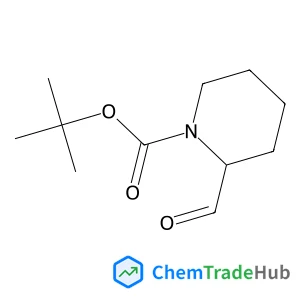
2-Methyl-2-propanyl (2R)-2-formyl-1-piperidinecarboxylate
CAS Number:
134526-69-5
Molecular Formula:
C11H19NO3
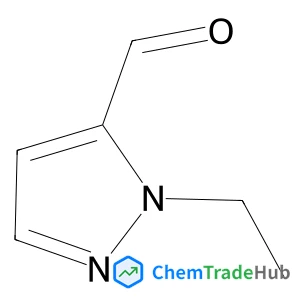
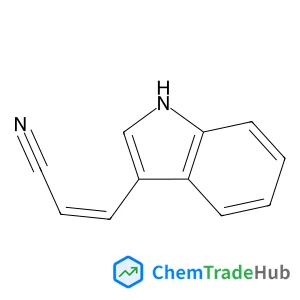

trans-2-(2-Methoxyphenyl)-5-oxotetrahydrofuran-3-carboxylic acid
CAS Number:
99226-02-5
Molecular Formula:
C12H12O5
Recommended Suppliers





Disclaimer
This page provides academic journal information for reference and research purposes only. We are not affiliated with any journal publishers and do not handle publication submissions. For publication-related inquiries, please contact the respective journal publishers directly.
If you notice any inaccuracies in the information displayed, please contact us at support@chemtradehub.com. We will promptly review and address your concerns.