













Characterization and preparation of bio-tubular scaffolds for fabricating artificial vascular grafts by combining electrospinning and a 3D printing system
Literature Information
Publication Date
2014-12-18
DOI
10.1039/C4CP04801F
Impact Factor
3.676
Authors
Dong Nyoung Heo, Ji Sun Park, Jin Ho Lee, Jun Hee Lee, Wan Doo Kim, Il Keun Kwon, Su A. Park
View Original
Abstract
The last decade has seen artificial blood vessels composed of natural polymer nanofibers grafted into human bodies to facilitate the recovery of damaged blood vessels. However, electrospun nanofibers (ENs) of biocompatible materials such as chitosan (CTS) suffer from poor mechanical properties. This study describes the design and fabrication of artificial blood vessels composed of a blend of CTS and PCL ENs and coated with PCL strands using rapid prototyping technology. The resulting tubular vessels exhibited excellent mechanical properties and showed that this process may be useful for vascular reconstruction.
Related Literature
Adsorbing the 3d-transition metal atoms to effectively modulate the electronic and magnetic behaviors of zigzag SiC nanoribbons
Hui Li, Wei Chen, Xiaopeng Shen, Jingwei Liu, Xuri Huang, Guangtao Yu
2017-01-03
Paper
DOI: 10.1039/C6CP06717D
Graphene-modulated photo-absorption in adsorbed azobenzene monolayers
2017-01-30
Paper
DOI: 10.1039/C6CP06939H
Chemically induced topological zero mode at graphene armchair edges
M. Ziatdinov, H. Lim, S. Fujii, K. Kusakabe, M. Kiguchi, T. Enoki, Y. Kim
2017-01-17
Paper
DOI: 10.1039/C6CP08352H
Effects of the Hofmeister series of sodium salts on the solvent properties of water
L. A. Ferreira, V. N. Uversky, B. Y. Zaslavsky
2017-01-09
Paper
DOI: 10.1039/C6CP08214A
Conceptual density functional theory for electron transfer and transport in mesoscopic systems
Paulo R. Bueno, David A. Miranda
2017-02-02
Paper
DOI: 10.1039/C6CP02504H
Collective proton transfer in ordinary ice: local environments, temperature dependence and deuteration effects
Christof Drechsel-Grau, Dominik Marx
2016-11-07
Perspective
DOI: 10.1039/C6CP05679B
Molecular interactions of organic molecules at the air/water interface investigated by sum frequency generation vibrational spectroscopy
2017-01-05
Paper
DOI: 10.1039/C6CP07827C
Layered structure of the near-surface region of oxidized chalcopyrite (CuFeS2): hard X-ray photoelectron spectroscopy, X-ray absorption spectroscopy and DFT+U studies
Yuri Mikhlin, Vladimir Nasluzov, Alexander Romanchenko, Yevgeny Tomashevich, Alexey Shor, Roberto Félix
2017-01-09
Paper
DOI: 10.1039/C6CP07598C
Correction: First-principles analysis of the spectroscopic limited maximum efficiency of photovoltaic absorber layers for CuAu-like chalcogenides and silicon
Marnik Bercx, Nasrin Sarmadian, Rolando Saniz, Bart Partoens, Dirk Lamoen
2017-02-10
Correction
DOI: 10.1039/C7CP90033C
Mechanism of activated chemiluminescence of cyclic peroxides: 1,2-dioxetanes and 1,2-dioxetanones
Ignacio Fdez. Galván, Daniel Roca-Sanjuán, Erick L. Bastos, Wilhelm J. Baader, Roland Lindh
2017-01-03
Paper
DOI: 10.1039/C6CP08154A
You might also like
Compound Q&A
What precautions should be taken when handling 4-(2-Furylmethyl)thiomorpholine 1,1-dioxide (CAS: 79206-94-3)?
When handling 4-(2-Furylmethyl)thiomorpholine 1,1-dioxide (CAS: 79206-94-3), it ...
79206-94-34-(2-Furylmethyl)thi...
Compound Q&A
What precautions should be taken when handling 4-Chloro-N-[2-(4-morpholinyl)ethyl]benzamide (CAS: 71320-77-9)?
When handling 4-Chloro-N-[2-(4-morpholinyl)ethyl]benzamide (CAS: 71320-77-9), it...
71320-77-94-Chloro-N-[2-(4-mor...
Compound Q&A
How should waste containing 2-[2-(2-Methoxyethoxy)ethoxy]ethyl 4-methylbenzenesulfonate (CAS: 62921-74-8) be handled?
Waste containing this compound (CAS: 62921-74-8) should be handled according to ...
62921-74-82-[2-(2-Methoxyethox...
Compound Q&A
How should waste containing (S)-Methyl 2-amino-3-cyclohexylpropanoate be handled?
Waste containing (S)-Methyl 2-amino-3-cyclohexylpropanoate should be collected i...
40056-18-6(S)-Methyl 2-amino-3...
Compound Q&A
How is 5-({4-[(2S,4R)-4-Hydroxy-2-methyltetrahydro-2H-pyran-4-yl]-2-thienyl}sulfanyl)-1-methyl-1,3-dihydro-2H-indol-2-one (CAS: 166882-70-8) typically synthesized?
This compound can be synthesized using a multi-step process involving the conjug...
166882-70-85-({4-[(2S,4R)-4-Hyd...
Compound Q&A
Are there alternatives to (2E)-3-(3,4-Dichlorophenyl)acrylic acid (CAS: 7312-27-8) in synthesis?
There are several alternatives to (2E)-3-(3,4-Dichlorophenyl)acrylic acid in syn...
7312-27-8(2E)-3-(3,4-Dichloro...
Compound Q&A
How should Ethyl 6-(2-nitrophenyl)imidazo[2,1-b][1,3]thiazole-3-carboxylate (CAS: 925437-84-9) be stored?
Ethyl 6-(2-nitrophenyl)imidazo[2,1-b][1,3]thiazole-3-carboxylate (CAS: 925437-84...
925437-84-9Ethyl 6-(2-nitrophen...
Compound Q&A
How should waste containing 2-(1,3-Thiazol-2-yl)ethanamine (CAS: 18453-07-1) be handled?
Waste containing 2-(1,3-Thiazol-2-yl)ethanamine (CAS: 18453-07-1) should be coll...
18453-07-12-(1,3-Thiazol-2-yl)...
Compound Q&A
How is Methyl 5-iodo-2-methylbenzoate (CAS: 103440-54-6) typically synthesized?
Methyl 5-iodo-2-methylbenzoate can be synthesized through the iodination of meth...
103440-54-6Methyl 5-iodo-2-meth...
Compound Q&A
How is 5-Chloro[1,2,4]triazolo[1,5-a]pyridine (CAS: 1427399-34-5) typically synthesized?
5-Chloro[1,2,4]triazolo[1,5-a]pyridine is commonly synthesized via the condensat...
1427399-34-55-Chloro[1,2,4]triaz...
Source Journal
Physical Chemistry Chemical Physics

CiteScore:
5.5
Self-citation Rate:
10.3%
Articles per Year:
3036
Physical Chemistry Chemical Physics (PCCP) is an international journal co-owned by 19 physical chemistry and physics societies from around the world. This journal publishes original, cutting-edge research in physical chemistry, chemical physics and biophysical chemistry. To be suitable for publication in PCCP, articles must include significant innovation and/or insight into physical chemistry; this is the most important criterion that reviewers and Editors will judge against when evaluating submissions. The journal has a broad scope and welcomes contributions spanning experiment, theory, computation and data science. Topical coverage includes spectroscopy, dynamics, kinetics, statistical mechanics, thermodynamics, electrochemistry, catalysis, surface science, quantum mechanics, quantum computing and machine learning. Interdisciplinary research areas such as polymers and soft matter, materials, nanoscience, energy, surfaces/interfaces, and biophysical chemistry are welcomed if they demonstrate significant innovation and/or insight into physical chemistry. Joined experimental/theoretical studies are particularly appreciated when complementary and based on up-to-date approaches.
Recommended Compounds
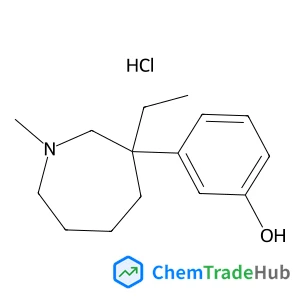
3-(3-Ethyl-1-methyl-3-azepanyl)phenol hydrochloride (1:1)
CAS Number:
59263-76-2
Molecular Formula:
C15H24ClNO
Recommended Suppliers





Disclaimer
This page provides academic journal information for reference and research purposes only. We are not affiliated with any journal publishers and do not handle publication submissions. For publication-related inquiries, please contact the respective journal publishers directly.
If you notice any inaccuracies in the information displayed, please contact us at support@chemtradehub.com. We will promptly review and address your concerns.