












![1H-Imidazo[4,5-c]pyridine-7-carboxylic acid structure](https://static.chemtradehub.com/structs/123/1234616-39-7-1344.webp "1H-Imidazo[4,5-c]pyridine-7-carboxylic acid structure")
Pressure-enhanced surface interactions between nano-TiO2 and ionic liquid mixtures probed by high pressure IR spectroscopy
Literature Information
Publication Date
2014-11-26
DOI
10.1039/C4CP04768K
Impact Factor
3.676
Authors
Hai-Chou Chang, Jyh-Chiang Jiang, Meng-Hsiu Kuo, Ding-Tsai Hsu, Sheng Hsien Lin
View Original
Abstract
The pressure-dependent interactions between the ionic liquid mixture ([MPI][I1.5]) and nano-TiO2 surfaces have been studied up to 2.5 GPa. The results of infrared spectroscopic profiles of [MPI][I1.5] and [MPI][I1.5]–nano-TiO2 indicated that no appreciable changes in the C–H stretching bands with the addition of nano-TiO2 were observed under ambient pressure. As the pressure was elevated to 0.7 GPa, the C–H stretching absorption of [MPI][I1.5] underwent band-narrowing and red-shifts in frequency. In contrast to the results of [MPI][I1.5], the spectra of [MPI][I1.5]–nano-TiO2 do not show dramatic changes under high pressures. A possible explanation for this observation is the formation of certain pressure-enhanced C–H⋯nano-TiO2 interactions around the imidazolium C–H and alkyl C–H groups. As imidazolium C–H⋯I− is replaced by the weaker imidazolium C–H⋯polyiodide, the splitting of the imidazolium C–H stretching bands was observed. The experimental results indicate that both nano-TiO2 and polyiodides are capable of disturbing the self-assembly of ionic liquids. This study suggests the possibility to tune the efficiency of dye-sensitized solar cells via a high pressure method.
Related Literature
Photoinduced dynamics of the hole-transport material H101 in organic solvents and on mesoporous Al2O3 and TiO2 thin films
Johannes R. Klein, Mirko Scholz, Kawon Oum, Thomas Lenzer
2017-08-07
Paper
DOI: 10.1039/C7CP01718A
Tunable interaction between metal clusters and graphene
Paulo Piquini, Alex A. Schmidt, Marcelo A. Kuroda
2017-08-10
Paper
DOI: 10.1039/C7CP04615D
Metal-doped ceria nanoparticles: stability and redox processes
Alberto Figueroba, Albert Bruix, Gábor Kovács
2017-07-25
Paper
DOI: 10.1039/C7CP02820B
A comparative VUV absorption mass-spectroscopy study on protonated peptides of different size
D. Egorov, R. Hoekstra, T. Schlathölter
2017-07-13
Paper
DOI: 10.1039/C7CP03203J
Magnetism and spin entropy in Ru doped Na0.5CoO2
M. H. N. Assadi, H. Katayama-Yoshida
2017-08-22
Paper
DOI: 10.1039/C7CP03752J
The role of van der Waals and exchange interactions in high-pressure solid hydrogen
Graeme J. Ackland
2017-08-02
Paper
DOI: 10.1039/C7CP03729E
Role of intrinsic hydrogen bonds in the assembly of perylene imide derivatives in solution and at the liquid–solid interface
Zongxia Guo, Kun Wang, Ping Yu, Shengyue Zhang, Kai Sun, Zhibo Li
2017-08-01
Paper
DOI: 10.1039/C7CP04928E
Radical-driven processes within a peptidic sequence of type I collagen upon single-photon ionisation in the gas phase
Lucas Schwob, Mathieu Lalande, Dmitrii Egorov, Jimmy Rangama, Ronnie Hoekstra, Violaine Vizcaino, Thomas Schlathölter, Jean-Christophe Poully
2017-07-25
Paper
DOI: 10.1039/C7CP03376A
Identifying the charge generation dynamics in Cs+-based triple cation mixed perovskite solar cells
Manuel Salado, Ramesh K. Kokal, Laura Calio, Samrana Kazim, Melepurath Deepa, Shahzada Ahmad
2017-07-27
Paper
DOI: 10.1039/C7CP03760K
You might also like
Compound Q&A
Is 6-(3-Fluorophenyl)picolinic acid (CAS: 887982-40-3) safe?
6-(3-Fluorophenyl)picolinic acid is generally considered safe for laboratory use...
887982-40-36-(3-Fluorophenyl)pi...
Compound Q&A
What industries use (3R)-3-Pyrrolidinol (CAS: 2799-21-5)?
(3R)-3-Pyrrolidinol is used in the pharmaceutical industry as a precursor for dr...
2799-21-5(3R)-3-Pyrrolidinol
Compound Q&A
What precautions should be taken when handling (4R,5R)-4,5-Diethoxycarbonyl-2,2-dimethyldioxolane (CAS: 59779-75-8)?
When handling (4R,5R)-4,5-Diethoxycarbonyl-2,2-dimethyldioxolane (CAS: 59779-75-...
59779-75-8(4R,5R)-4,5-Diethoxy...
Compound Q&A
How is 1-(6-Chloroimidazo[1,2-b]pyridazin-3-yl)ethanone (CAS: 90734-71-7) typically synthesized?
1-(6-Chloroimidazo[1,2-b]pyridazin-3-yl)ethanone is often synthesized via a mult...
90734-71-71-(6-Chloroimidazo[1...
Compound Q&A
What is the market or research trend for N-Ethyl-3,4-dimethylbenzylamine (CAS: 39180-83-1)?
The market for N-Ethyl-3,4-dimethylbenzylamine (CAS: 39180-83-1) remains steady,...
39180-83-1N-Ethyl-3,4-dimethyl...
Compound Q&A
What is Tert-butyl 3-(pyrrolidin-1-yl)azetidine-1-carboxylate (CAS: 1019008-21-9)?
Tert-butyl 3-(pyrrolidin-1-yl)azetidine-1-carboxylate is a chemical compound wit...
1019008-21-9Tert-butyl 3-(pyrrol...
Compound Q&A
What regulatory guidelines apply to 1-Bromo-3-chloro-2,4-dimethoxybenzene (CAS: 1228956-93-1)?
1-Bromo-3-chloro-2,4-dimethoxybenzene (CAS: 1228956-93-1) falls under the classi...
1228956-93-11-Bromo-3-chloro-2,4...
Compound Q&A
Is 8-Bromo-2-methyl-3,4-dihydroisoquinolin-1(2H)-one (CAS: 1368622-07-4) safe?
The safety of 8-Bromo-2-methyl-3,4-dihydroisoquinolin-1(2H)-one (CAS: 1368622-07...
1368622-07-48-Bromo-2-methyl-3,4...
Compound Q&A
Is Benzyl [(3S)-2,6-dioxo-3-piperidinyl]carbamate (CAS: 22785-43-9) safe?
Benzyl [(3S)-2,6-dioxo-3-piperidinyl]carbamate is generally safe when handled wi...
22785-43-9Benzyl [(3S)-2,6-dio...
Compound Q&A
How should 1-{[4-(4,4,5,5-Tetramethyl-1,3,2-dioxaborolan-2-yl)phenyl]sulfonyl}pyrrolidine (CAS: 928657-21-0) be stored?
1-{[4-(4,4,5,5-Tetramethyl-1,3,2-dioxaborolan-2-yl)phenyl]sulfonyl}pyrrolidine s...
928657-21-01-{[4-(4,4,5,5-Tetra...
Source Journal
Physical Chemistry Chemical Physics

CiteScore:
5.5
Self-citation Rate:
10.3%
Articles per Year:
3036
Physical Chemistry Chemical Physics (PCCP) is an international journal co-owned by 19 physical chemistry and physics societies from around the world. This journal publishes original, cutting-edge research in physical chemistry, chemical physics and biophysical chemistry. To be suitable for publication in PCCP, articles must include significant innovation and/or insight into physical chemistry; this is the most important criterion that reviewers and Editors will judge against when evaluating submissions. The journal has a broad scope and welcomes contributions spanning experiment, theory, computation and data science. Topical coverage includes spectroscopy, dynamics, kinetics, statistical mechanics, thermodynamics, electrochemistry, catalysis, surface science, quantum mechanics, quantum computing and machine learning. Interdisciplinary research areas such as polymers and soft matter, materials, nanoscience, energy, surfaces/interfaces, and biophysical chemistry are welcomed if they demonstrate significant innovation and/or insight into physical chemistry. Joined experimental/theoretical studies are particularly appreciated when complementary and based on up-to-date approaches.
Recommended Compounds
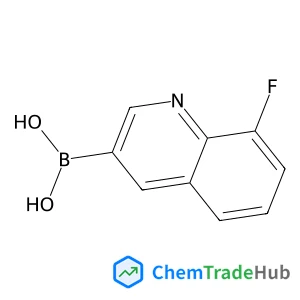
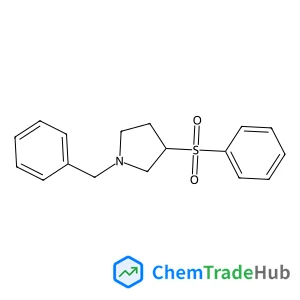
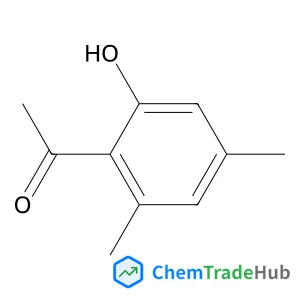
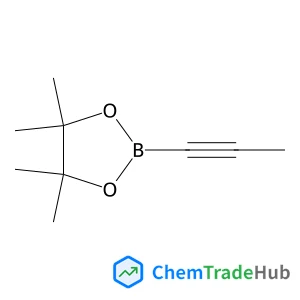
4,4,5,5-Tetramethyl-2-(1-propyn-1-YL)-1,3,2-dioxaborolane
CAS Number:
347389-75-7
Molecular Formula:
C9H15BO2
Recommended Suppliers



Disclaimer
This page provides academic journal information for reference and research purposes only. We are not affiliated with any journal publishers and do not handle publication submissions. For publication-related inquiries, please contact the respective journal publishers directly.
If you notice any inaccuracies in the information displayed, please contact us at support@chemtradehub.com. We will promptly review and address your concerns.