












Reporter-encapsulated liposomes on graphene field effect transistors for signal enhanced detection of physiological enzymes
Literature Information
Publication Date
2014-12-11
DOI
10.1039/C4CP04644G
Impact Factor
3.676
Authors
Mark Platt
View Original
Abstract
A novel approach for enzymatic assay using reporter-encapsulated liposomes on graphene field effect transistors (FET) is proposed. This approach involves real time monitoring of drain current (Id) of reduced graphene oxide (rGO) upon rupture of reporter-encapsulated 1-palmitoyl-2-oleoyl-sn-glycero-3-phosphatidylcholine (POPC) liposomes triggered by enzymes. For validation of the proposed approach, 2,4,6-trinitrophenol (TNP) is used as the reporter for specific detection of phospholipase A2 (PLA2), a key enzyme in various membrane related physiological processes. Experimental results revealed that Id increased with PLA2 concentration, which is attributed to the interaction between released TNP and rGO. The limit of detection (LOD) achieved by the proposed approach was 80 pM, which is superior to most assays reported previously and much lower than the cut-off level of circulating secretory PLA2 (2.07 nM). Besides the high accuracy of the electronic detection methodology, the signal enhancement effect realized by the excess concentration of TNP (approximately 1 mM) in liposomes is believed to be the main reason for the significantly enhanced sensitivity of the proposed assay, indicating great potential for further improvement in the sensitivity by increasing the concentration of TNP. In addition, the proposed approach is rapid (incubation time ≤ 10 min) and label-free, thus showing great potential for practical applications in the future.
Related Literature
Exploring experimental fitness landscapes for chemical synthesis and property optimization
Katharine Moore Tibbetts, Xiao-Jiang Feng, Herschel Rabitz
2017-01-18
Paper
DOI: 10.1039/C6CP06187G
Charge transport mechanisms in sol–gel grown La0.7Pb0.3MnO3/LaAlO3 manganite films
Eesh Vaghela, M. J. Keshvani, Keval Gadani, Zalak Joshi, Hetal Boricha, K. Asokan, D. Venkateshwarlu, V. Ganesan, N. A. Shah, P. S. Solanki
2017-01-31
Paper
DOI: 10.1039/C6CP07730G
Corrosion inhibition of copper in aqueous chloride solution by 1H-1,2,3-triazole and 1,2,4-triazole and their combinations: electrochemical, Raman and theoretical studies
Stanley Udochukwu Ofoegbu, Tiago L. P. Galvão, José R. B. Gomes, João Tedim, Helena I. S. Nogueira, M. G. S. Ferreira
2017-02-07
Paper
DOI: 10.1039/C7CP00241F
The role of π-linkers in tuning the optoelectronic properties of triphenylamine derivatives for solar cell applications – A DFT/TDDFT study‡
Arunkumar Kathiravan, Rajadurai Vijay Solomon
2017-01-26
Paper
DOI: 10.1039/C6CP07768D
Prediction of a novel 10-fold gold coordinated structure in AuIn2 above 10 GPa
P. Modak, Ashok K. Verma
2017-01-06
Paper
DOI: 10.1039/C6CP07805B
Influence of NO and (NO)2 adsorption on the properties of Fe-N4 porphyrin-like graphene sheets
Elham Ashori, Francesc Illas
2017-01-03
Paper
DOI: 10.1039/C6CP07898B
Comparative study of the intermolecular dynamics of imidazolium-based ionic liquids with linear and branched alkyl chains: OHD-RIKES measurements
Lianjie Xue, Fehmi Bardak, George Tamas, Edward L. Quitevis
2017-01-19
Paper
DOI: 10.1039/C6CP08263G
Correction: First-principles analysis of the spectroscopic limited maximum efficiency of photovoltaic absorber layers for CuAu-like chalcogenides and silicon
Marnik Bercx, Nasrin Sarmadian, Rolando Saniz, Bart Partoens, Dirk Lamoen
2017-02-10
Correction
DOI: 10.1039/C7CP90033C
Low intensity, continuous wave photodoping of ZnO quantum dots – photon energy and particle size effects
Matías E. Aguirre, S. Municoy, M. A. Grela, A. J. Colussi
2017-01-04
Paper
DOI: 10.1039/C6CP06829D
A tailored multi-frequency EPR approach to accurately determine the magnetic resonance parameters of dynamic nuclear polarization agents: application to AMUPol
P. Gast, D. Mance, E. Zurlo, M. Baldus, M. Huber
2017-01-18
Paper
DOI: 10.1039/C6CP05864G
You might also like
Compound Q&A
What precautions should be taken when handling 4-(2-Furylmethyl)thiomorpholine 1,1-dioxide (CAS: 79206-94-3)?
When handling 4-(2-Furylmethyl)thiomorpholine 1,1-dioxide (CAS: 79206-94-3), it ...
79206-94-34-(2-Furylmethyl)thi...
Compound Q&A
What precautions should be taken when handling 4-Chloro-N-[2-(4-morpholinyl)ethyl]benzamide (CAS: 71320-77-9)?
When handling 4-Chloro-N-[2-(4-morpholinyl)ethyl]benzamide (CAS: 71320-77-9), it...
71320-77-94-Chloro-N-[2-(4-mor...
Compound Q&A
How should waste containing 2-[2-(2-Methoxyethoxy)ethoxy]ethyl 4-methylbenzenesulfonate (CAS: 62921-74-8) be handled?
Waste containing this compound (CAS: 62921-74-8) should be handled according to ...
62921-74-82-[2-(2-Methoxyethox...
Compound Q&A
How should waste containing (S)-Methyl 2-amino-3-cyclohexylpropanoate be handled?
Waste containing (S)-Methyl 2-amino-3-cyclohexylpropanoate should be collected i...
40056-18-6(S)-Methyl 2-amino-3...
Compound Q&A
How is 5-({4-[(2S,4R)-4-Hydroxy-2-methyltetrahydro-2H-pyran-4-yl]-2-thienyl}sulfanyl)-1-methyl-1,3-dihydro-2H-indol-2-one (CAS: 166882-70-8) typically synthesized?
This compound can be synthesized using a multi-step process involving the conjug...
166882-70-85-({4-[(2S,4R)-4-Hyd...
Compound Q&A
Are there alternatives to (2E)-3-(3,4-Dichlorophenyl)acrylic acid (CAS: 7312-27-8) in synthesis?
There are several alternatives to (2E)-3-(3,4-Dichlorophenyl)acrylic acid in syn...
7312-27-8(2E)-3-(3,4-Dichloro...
Compound Q&A
How should Ethyl 6-(2-nitrophenyl)imidazo[2,1-b][1,3]thiazole-3-carboxylate (CAS: 925437-84-9) be stored?
Ethyl 6-(2-nitrophenyl)imidazo[2,1-b][1,3]thiazole-3-carboxylate (CAS: 925437-84...
925437-84-9Ethyl 6-(2-nitrophen...
Compound Q&A
How should waste containing 2-(1,3-Thiazol-2-yl)ethanamine (CAS: 18453-07-1) be handled?
Waste containing 2-(1,3-Thiazol-2-yl)ethanamine (CAS: 18453-07-1) should be coll...
18453-07-12-(1,3-Thiazol-2-yl)...
Compound Q&A
How is Methyl 5-iodo-2-methylbenzoate (CAS: 103440-54-6) typically synthesized?
Methyl 5-iodo-2-methylbenzoate can be synthesized through the iodination of meth...
103440-54-6Methyl 5-iodo-2-meth...
Compound Q&A
How is 5-Chloro[1,2,4]triazolo[1,5-a]pyridine (CAS: 1427399-34-5) typically synthesized?
5-Chloro[1,2,4]triazolo[1,5-a]pyridine is commonly synthesized via the condensat...
1427399-34-55-Chloro[1,2,4]triaz...
Source Journal
Physical Chemistry Chemical Physics

CiteScore:
5.5
Self-citation Rate:
10.3%
Articles per Year:
3036
Physical Chemistry Chemical Physics (PCCP) is an international journal co-owned by 19 physical chemistry and physics societies from around the world. This journal publishes original, cutting-edge research in physical chemistry, chemical physics and biophysical chemistry. To be suitable for publication in PCCP, articles must include significant innovation and/or insight into physical chemistry; this is the most important criterion that reviewers and Editors will judge against when evaluating submissions. The journal has a broad scope and welcomes contributions spanning experiment, theory, computation and data science. Topical coverage includes spectroscopy, dynamics, kinetics, statistical mechanics, thermodynamics, electrochemistry, catalysis, surface science, quantum mechanics, quantum computing and machine learning. Interdisciplinary research areas such as polymers and soft matter, materials, nanoscience, energy, surfaces/interfaces, and biophysical chemistry are welcomed if they demonstrate significant innovation and/or insight into physical chemistry. Joined experimental/theoretical studies are particularly appreciated when complementary and based on up-to-date approaches.
Recommended Compounds
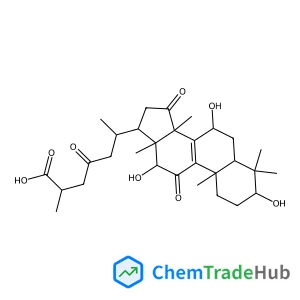
(3beta,7beta,12beta)-3,7,12-Trihydroxy-11,15,23-trioxolanost-8-en-26-oic acid
CAS Number:
98665-22-6
Molecular Formula:
C30H44O8
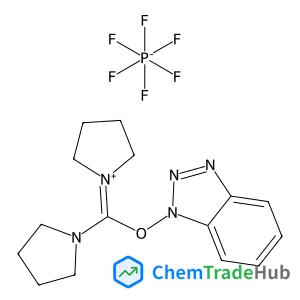
(1H-Benzotriazol-1-yloxy)(di-1-pyrrolidinyl)methylium hexafluorophosphate
CAS Number:
105379-24-6
Molecular Formula:
C15H21F6N5OP

Recommended Suppliers






Disclaimer
This page provides academic journal information for reference and research purposes only. We are not affiliated with any journal publishers and do not handle publication submissions. For publication-related inquiries, please contact the respective journal publishers directly.
If you notice any inaccuracies in the information displayed, please contact us at support@chemtradehub.com. We will promptly review and address your concerns.