













A tailored multi-frequency EPR approach to accurately determine the magnetic resonance parameters of dynamic nuclear polarization agents: application to AMUPol
Literature Information
Publication Date
2017-01-18
DOI
10.1039/C6CP05864G
Impact Factor
3.676
Authors
P. Gast, D. Mance, E. Zurlo, M. Baldus, M. Huber
View Original
Abstract
To understand the dynamic nuclear polarization (DNP) enhancements of biradical polarizing agents, the magnetic resonance parameters need to be known. We describe a tailored EPR approach to accurately determine electron spin–spin coupling parameters using a combination of standard (9 GHz), high (95 GHz) and ultra-high (275 GHz) frequency EPR. Comparing liquid- and frozen-solution continuous-wave EPR spectra provides accurate anisotropic dipolar interaction D and isotropic exchange interaction J parameters of the DNP biradical AMUPol. We found that D was larger by as much as 30% compared to earlier estimates, and that J is 43 MHz, whereas before it was considered to be negligible. With the refined data, quantum mechanical calculations confirm that an increase in dipolar electron–electron couplings leads to higher cross-effect DNP efficiencies. Moreover, the DNP calculations qualitatively reproduce the difference of TOTAPOL and AMUPol DNP efficiencies found experimentally and suggest that AMUPol is particularly effective in improving the DNP efficiency at magnetic fields higher than 500 MHz. The multi-frequency EPR approach will aid in predicting the optimal structures for future DNP agents.
Related Literature
Intrinsic high-k–low-loss dielectric polyimides containing ortho-position aromatic nitrile moieties: reconsideration on Clausius–Mossotti equation
Tianwen Zhu, Qiaoxi Yu, Weiwen Zheng, Runxin Bei, Wenhui Wang, Minming Wu, Siwei Liu, Zhenguo Chi, Yi Zhang, Jiarui Xu
2021-03-24
Paper
DOI: 10.1039/D1PY00084E
Conjugated microporous polymers using a copper-catalyzed [4 + 2] cyclobenzannulation reaction: promising materials for iodine and dye adsorption
Saleh Al-Mousawi
2021-03-17
Paper
DOI: 10.1039/D1PY00193K
Retraction: A polyurethane–chitosan brush as an injectable hydrogel for controlled drug delivery and tissue engineering
2021-04-08
Retraction
DOI: 10.1039/D1PY90044G
RAFT polymerisation of trifluoroethylene: the importance of understanding reverse additions
Marc Guerre, Cédric Totée, Gilles Silly, Olinda Gimello, Bruno Améduri, Jean-François Tahon, Rinaldo Poli, Sophie Barrau, Vincent Ladmiral
2021-03-15
Paper
DOI: 10.1039/D0PY01754J
Visible light-degradable supramolecular gels comprising cross-linked polyrotaxanes capped with trithiocarbonate groups
Tae Woong Kang, Atsushi Tamura, Yoshinori Arisaka, Nobuhiko Yui
2021-06-09
Paper
DOI: 10.1039/D1PY00569C
Photo cleavable thioacetal block copolymers for controlled release
Yongjun Men, Tobias G. Brevé, Antonia G. Denkova, Rienk Eelkema
2021-06-08
Paper
DOI: 10.1039/D1PY00514F
Towards scalable, low dispersity, and dimensionally tunable 2D platelets using living crystallization-driven self-assembly
Charlotte E. Ellis, Tomoya Fukui, Cristina Cordoba, Arthur Blackburn, Ian Manners
2021-05-27
Paper
DOI: 10.1039/D1PY00571E
Initiator-dependent kinetics of lyotropic liquid crystal-templated thermal polymerization
Younes Saadat, Kyungtae Kim, Reza Foudazi
2021-03-11
Paper
DOI: 10.1039/D1PY00127B
Oxygen tolerant, photoinduced controlled radical polymerization approach for the synthesis of giant amphiphiles
Alexis Theodorou, Petros Mandriotis, Athina Anastasaki, Kelly Velonia
2021-03-18
Paper
DOI: 10.1039/D0PY01608J
You might also like
Compound Q&A
What precautions should be taken when handling 4-(2-Furylmethyl)thiomorpholine 1,1-dioxide (CAS: 79206-94-3)?
When handling 4-(2-Furylmethyl)thiomorpholine 1,1-dioxide (CAS: 79206-94-3), it ...
79206-94-34-(2-Furylmethyl)thi...
Compound Q&A
What precautions should be taken when handling 4-Chloro-N-[2-(4-morpholinyl)ethyl]benzamide (CAS: 71320-77-9)?
When handling 4-Chloro-N-[2-(4-morpholinyl)ethyl]benzamide (CAS: 71320-77-9), it...
71320-77-94-Chloro-N-[2-(4-mor...
Compound Q&A
How should waste containing 2-[2-(2-Methoxyethoxy)ethoxy]ethyl 4-methylbenzenesulfonate (CAS: 62921-74-8) be handled?
Waste containing this compound (CAS: 62921-74-8) should be handled according to ...
62921-74-82-[2-(2-Methoxyethox...
Compound Q&A
How should waste containing (S)-Methyl 2-amino-3-cyclohexylpropanoate be handled?
Waste containing (S)-Methyl 2-amino-3-cyclohexylpropanoate should be collected i...
40056-18-6(S)-Methyl 2-amino-3...
Compound Q&A
How is 5-({4-[(2S,4R)-4-Hydroxy-2-methyltetrahydro-2H-pyran-4-yl]-2-thienyl}sulfanyl)-1-methyl-1,3-dihydro-2H-indol-2-one (CAS: 166882-70-8) typically synthesized?
This compound can be synthesized using a multi-step process involving the conjug...
166882-70-85-({4-[(2S,4R)-4-Hyd...
Compound Q&A
Are there alternatives to (2E)-3-(3,4-Dichlorophenyl)acrylic acid (CAS: 7312-27-8) in synthesis?
There are several alternatives to (2E)-3-(3,4-Dichlorophenyl)acrylic acid in syn...
7312-27-8(2E)-3-(3,4-Dichloro...
Compound Q&A
How should Ethyl 6-(2-nitrophenyl)imidazo[2,1-b][1,3]thiazole-3-carboxylate (CAS: 925437-84-9) be stored?
Ethyl 6-(2-nitrophenyl)imidazo[2,1-b][1,3]thiazole-3-carboxylate (CAS: 925437-84...
925437-84-9Ethyl 6-(2-nitrophen...
Compound Q&A
How should waste containing 2-(1,3-Thiazol-2-yl)ethanamine (CAS: 18453-07-1) be handled?
Waste containing 2-(1,3-Thiazol-2-yl)ethanamine (CAS: 18453-07-1) should be coll...
18453-07-12-(1,3-Thiazol-2-yl)...
Compound Q&A
How is Methyl 5-iodo-2-methylbenzoate (CAS: 103440-54-6) typically synthesized?
Methyl 5-iodo-2-methylbenzoate can be synthesized through the iodination of meth...
103440-54-6Methyl 5-iodo-2-meth...
Compound Q&A
How is 5-Chloro[1,2,4]triazolo[1,5-a]pyridine (CAS: 1427399-34-5) typically synthesized?
5-Chloro[1,2,4]triazolo[1,5-a]pyridine is commonly synthesized via the condensat...
1427399-34-55-Chloro[1,2,4]triaz...
Source Journal
Physical Chemistry Chemical Physics

CiteScore:
5.5
Self-citation Rate:
10.3%
Articles per Year:
3036
Physical Chemistry Chemical Physics (PCCP) is an international journal co-owned by 19 physical chemistry and physics societies from around the world. This journal publishes original, cutting-edge research in physical chemistry, chemical physics and biophysical chemistry. To be suitable for publication in PCCP, articles must include significant innovation and/or insight into physical chemistry; this is the most important criterion that reviewers and Editors will judge against when evaluating submissions. The journal has a broad scope and welcomes contributions spanning experiment, theory, computation and data science. Topical coverage includes spectroscopy, dynamics, kinetics, statistical mechanics, thermodynamics, electrochemistry, catalysis, surface science, quantum mechanics, quantum computing and machine learning. Interdisciplinary research areas such as polymers and soft matter, materials, nanoscience, energy, surfaces/interfaces, and biophysical chemistry are welcomed if they demonstrate significant innovation and/or insight into physical chemistry. Joined experimental/theoretical studies are particularly appreciated when complementary and based on up-to-date approaches.
Recommended Compounds
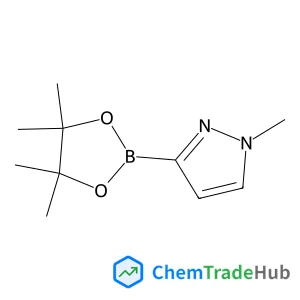
1-Methyl-3-(4,4,5,5-tetramethyl-1,3,2-dioxaborolan-2-yl)-1H-pyrazole
CAS Number:
1020174-04-2
Molecular Formula:
C10H17BN2O2

Methyl 2-cyano-3,12-dioxooleana-1,9(11)-dien-28-oate
CAS Number:
218600-53-4
Molecular Formula:
C32H43NO4

3-(Methylamino)-1-phenyl-1-propanone hydrochloride (1:1)
CAS Number:
2538-50-3
Molecular Formula:
C10H14ClNO
Recommended Suppliers




Disclaimer
This page provides academic journal information for reference and research purposes only. We are not affiliated with any journal publishers and do not handle publication submissions. For publication-related inquiries, please contact the respective journal publishers directly.
If you notice any inaccuracies in the information displayed, please contact us at support@chemtradehub.com. We will promptly review and address your concerns.