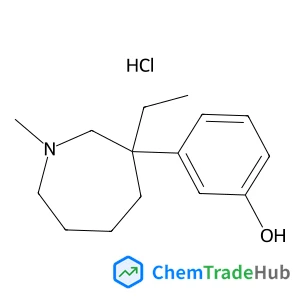
3-(3-Ethyl-1-methyl-3-azepanyl)phenol hydrochloride (1:1)
CAS Number:
59263-76-2
Molecular Formula:
C15H24ClNO
Muhammad Yasin Naz, Shaharin Anwar Sulaiman, Bambang Ariwahjoedi
Spray coating technology has demonstrated great potential in the slow release fertilizers industry. The better understanding of the key spray parameters benefits both the environment and low cost coating processes. The use of starch based materials to coat the slow release fertilizers is a new development. However, the hydraulic spray jet breakup of the non-Newtonian starchy solutions is a complex phenomenon and very little known. The aim of this research was to study the axial and radial distributions of the Sauter Mean Diameter (SMD) and velocity vectors in pulsing spray patterns of native and modified tapioca starch solutions. To meet the objective, high speed imaging and Phase Doppler Anemometry (PDA) techniques were employed to characterize the four compositions of the starch–urea–borax complex namely S0, S1, S2 and S3. The unheated solutions exhibited very high viscosities ranging from 2035 to 3030 cP. No jet breakup was seen at any stage of the nozzle operation at an injection pressure of 1–5 bar. However, at 80 °C temperature and 5 bar pressure, the viscosity was reduced to 455 to 638 cP and dense spray patterns emerged from the nozzle obscuring the PDA signals. The axial size distribution revealed a significant decrease in SMD along the spray centreline. The smallest axial SMD (51 to 79 μm) was noticed in S0 spray followed by S1, S2 and S3. Unlikely, the radial SMD in S0 spray did not vary significantly at any stage of the spray injection. This trend was attributed to the continuous growth of the surface wave instabilities on the native starch sheet. However, SMD obtained with S1, S2 and S3 varied appreciably along the radial direction. The mean velocity vector profiles followed the non-Gaussian distribution. The constant vector distributions were seen in the near nozzle regions, where the spray was in the phase of development. In far regions, the velocity vectors were poly-dispersed and a series of ups and downs were seen in the respective radial distributions.
Teng Fang, Shuqi Zheng, Tian Zhou, Lei Yan, Peng Zhang
DOI: 10.1039/C6CP07897D
Hui Li, Wei Chen, Xiaopeng Shen, Jingwei Liu, Xuri Huang, Guangtao Yu
DOI: 10.1039/C6CP06717D
Han-Shi Hu, Nikolas Kaltsoyannis
DOI: 10.1039/C7CP00113D
Rocío Domínguez, Núria F. Montcada, Pilar de la Cruz, Fernando Langa
DOI: 10.1039/C6CP08166E
Alexandra R. McIsaac, David A. Mazziotti
DOI: 10.1039/C6CP07563K
Mandeep K. Chahal, Muniappan Sankar, Ray J. Butcher
DOI: 10.1039/C6CP08396J
Bason Clancy, Joshua Salafsky
DOI: 10.1039/C6CP07708K
Guillaume Bareigts, Christophe Labbez
DOI: 10.1039/C6CP08056A
Vladimir I. Novoderezhkin, Elisabet Romero, Javier Prior, Rienk van Grondelle
DOI: 10.1039/C6CP07308E
Minoru Otani
DOI: 10.1039/C6CP08466D
When handling 4-(2-Furylmethyl)thiomorpholine 1,1-dioxide (CAS: 79206-94-3), it ...
When handling 4-Chloro-N-[2-(4-morpholinyl)ethyl]benzamide (CAS: 71320-77-9), it...
Waste containing this compound (CAS: 62921-74-8) should be handled according to ...
Waste containing (S)-Methyl 2-amino-3-cyclohexylpropanoate should be collected i...
This compound can be synthesized using a multi-step process involving the conjug...
There are several alternatives to (2E)-3-(3,4-Dichlorophenyl)acrylic acid in syn...
Ethyl 6-(2-nitrophenyl)imidazo[2,1-b][1,3]thiazole-3-carboxylate (CAS: 925437-84...
Waste containing 2-(1,3-Thiazol-2-yl)ethanamine (CAS: 18453-07-1) should be coll...
Methyl 5-iodo-2-methylbenzoate can be synthesized through the iodination of meth...
5-Chloro[1,2,4]triazolo[1,5-a]pyridine is commonly synthesized via the condensat...

Physical Chemistry Chemical Physics (PCCP) is an international journal co-owned by 19 physical chemistry and physics societies from around the world. This journal publishes original, cutting-edge research in physical chemistry, chemical physics and biophysical chemistry. To be suitable for publication in PCCP, articles must include significant innovation and/or insight into physical chemistry; this is the most important criterion that reviewers and Editors will judge against when evaluating submissions. The journal has a broad scope and welcomes contributions spanning experiment, theory, computation and data science. Topical coverage includes spectroscopy, dynamics, kinetics, statistical mechanics, thermodynamics, electrochemistry, catalysis, surface science, quantum mechanics, quantum computing and machine learning. Interdisciplinary research areas such as polymers and soft matter, materials, nanoscience, energy, surfaces/interfaces, and biophysical chemistry are welcomed if they demonstrate significant innovation and/or insight into physical chemistry. Joined experimental/theoretical studies are particularly appreciated when complementary and based on up-to-date approaches.

![N-[(Benzyloxy)carbonyl]serine structure](https://static.chemtradehub.com/structs/276/2768-56-1-77f7.webp "N-[(Benzyloxy)carbonyl]serine structure")