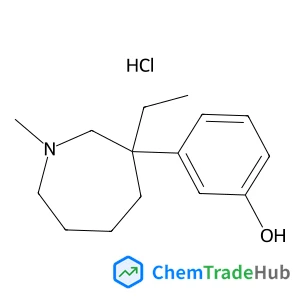
3-(3-Ethyl-1-methyl-3-azepanyl)phenol hydrochloride (1:1)
CAS Number:
59263-76-2
Molecular Formula:
C15H24ClNO
Alexandra R. McIsaac, David A. Mazziotti
We examine the 1-electron reduction of manganese porphyrin complexes Mn(III) porphyrin and Mn(III) TDE-2-ImP5+, which have attracted recent interest due to their properties as superoxide dismutase mimics. We perform a series of electronic structure calculations using the variational 2-electron reduced density matrix (2-RDM) method with a large [30,30] active space that represents a wavefunction with 1019 variables, as well as the more traditional complete active space self-consistent field (CASSCF) method with a [14,14] active space. We show that the larger 2-RDM calculation, intractable with CASSCF, is required to capture the full effects of electron correlation in the molecule and predict the non-innocence of the porphyrin ligand during the reduction. The CASSCF method predicts single-reference systems exhibiting a metal-centered reduction, but the 2-RDM method predicts a strongly correlated system exhibiting a ligand-centered reduction. Based on these results, we find that the porphyrin ligand is reduced rather than the manganese, and suggest that the electron correlation plays a role in driving the ligand non-innocence.
Haoxiang Wang, Lei Shen
DOI: 10.1039/D1PY00637A
Josina L. Bohlen, Bragavie Kulendran, Hannah Rothfuss, Peter W. Roesky
DOI: 10.1039/D1PY00552A
Huiqun Wang, Sebla Onbulak, Steven Weigand, Frank S. Bates, Marc A. Hillmyer
DOI: 10.1039/D0PY01728K
Chen-Lu He, Zeyu Feng, Yan Li, Manman Zhou, Liyang Zhao, Sizhen Shan, Mengqiao Wang, Xin Chen, Xi-Sheng Wang, Gang Zou
DOI: 10.1039/D1PY00082A
Xiaojun Wang, Xueyan Zhang, Yong Wang, Shengtao Ding
DOI: 10.1039/D1PY00718A
Xabier Lopez de Pariza, Nicolas Zivic, Fernando Ruipérez, Timothy E. Long, Haritz Sardon
DOI: 10.1039/D1PY00734C
Tingyu He, Yanqiu Wang, Liang Xu, Xiangming Fu, Atsushi Narumi, Shin-ichiro Sato
DOI: 10.1039/D1PY00070E
Marcel Fickenscher, Tom Reimers, Holger Frey
DOI: 10.1039/D1PY00302J
Georges M. Pavlov, Anna A. Gosteva, Olga V. Okatova, Olga A. Dommes, Irina I. Gavrilova
DOI: 10.1039/D0PY01725F
When handling 4-(2-Furylmethyl)thiomorpholine 1,1-dioxide (CAS: 79206-94-3), it ...
When handling 4-Chloro-N-[2-(4-morpholinyl)ethyl]benzamide (CAS: 71320-77-9), it...
Waste containing this compound (CAS: 62921-74-8) should be handled according to ...
Waste containing (S)-Methyl 2-amino-3-cyclohexylpropanoate should be collected i...
This compound can be synthesized using a multi-step process involving the conjug...
There are several alternatives to (2E)-3-(3,4-Dichlorophenyl)acrylic acid in syn...
Ethyl 6-(2-nitrophenyl)imidazo[2,1-b][1,3]thiazole-3-carboxylate (CAS: 925437-84...
Waste containing 2-(1,3-Thiazol-2-yl)ethanamine (CAS: 18453-07-1) should be coll...
Methyl 5-iodo-2-methylbenzoate can be synthesized through the iodination of meth...
5-Chloro[1,2,4]triazolo[1,5-a]pyridine is commonly synthesized via the condensat...

Physical Chemistry Chemical Physics (PCCP) is an international journal co-owned by 19 physical chemistry and physics societies from around the world. This journal publishes original, cutting-edge research in physical chemistry, chemical physics and biophysical chemistry. To be suitable for publication in PCCP, articles must include significant innovation and/or insight into physical chemistry; this is the most important criterion that reviewers and Editors will judge against when evaluating submissions. The journal has a broad scope and welcomes contributions spanning experiment, theory, computation and data science. Topical coverage includes spectroscopy, dynamics, kinetics, statistical mechanics, thermodynamics, electrochemistry, catalysis, surface science, quantum mechanics, quantum computing and machine learning. Interdisciplinary research areas such as polymers and soft matter, materials, nanoscience, energy, surfaces/interfaces, and biophysical chemistry are welcomed if they demonstrate significant innovation and/or insight into physical chemistry. Joined experimental/theoretical studies are particularly appreciated when complementary and based on up-to-date approaches.