












Mechanical strain can switch the sign of quantum capacitance from positive to negative
Literature Information
Publication Date
2014-09-16
DOI
10.1039/C4CP03131H
Impact Factor
3.676
Authors
Yuranan Hanlumyuang, Xiaobao Li
View Original
Abstract
Quantum capacitance is a fundamental quantity that can directly reveal many-body interactions among electrons and is expected to play a critical role in nanoelectronics. One of the many tantalizing recent physical revelations about quantum capacitance is that it can possess a negative value, hence allowing for the possibility of enhancing the overall capacitance in some particular material systems beyond the scaling predicted by classical electrostatics. Using detailed quantum mechanical simulations, we found an intriguing result that mechanical strains can tune both signs and values of quantum capacitance. We used a small coaxially gated carbon nanotube as a paradigmatical capacitor system and showed that, for the range of mechanical strain considered, quantum capacitance can be adjusted from very large positive to very large negative values (in the order of plus/minus hundreds of attofarads), compared to the corresponding classical geometric value (0.31035 aF). This finding opens novel avenues in designing quantum capacitance for applications in nanosensors, energy storage, and nanoelectronics.
Related Literature
Photochemical polymerization of thiophene derivatives in aqueous solution
Sergey A. Piletsky, Elena V. Piletska, Kal Karim, Frank Davis, Seamus P. J. Higson, Anthony P. F. Turner
2004-08-20
Communication
DOI: 10.1039/B408387C
A novel strategy for the preparation of arylhydroxylamines: chemoselective reduction of aromatic nitro compounds using bakers' yeast
Feng Li, Jingnan Cui, Rong Zhang
2004-09-07
Communication
DOI: 10.1039/B408566C
Single-walled carbon nanotubes acquire a specific lectin-affinity through supramolecular wrapping with lactose-appended schizophyllan
Teruaki Hasegawa, Tomohisa Fujisawa, Munenori Numata, Mariko Umeda, Takahiro Matsumoto, Taro Kimura, Shiro Okumura, Kazuo Sakurai, Seiji Shinkai
2004-08-20
Communication
DOI: 10.1039/B407409B
Polystyryl-supported TBD as an efficient and reusable catalyst under solvent-free conditions
Francesco Fringuelli, Ferdinando Pizzo, Carla Vittoriani, Luigi Vaccaro
2004-10-19
Communication
DOI: 10.1039/B409808K
Novel Pt/CeO2/C catalysts for electrooxidation of alcohols in alkaline media
Changwei Xu, Pei Kang Shen
2004-08-25
Communication
DOI: 10.1039/B408589B
Optical sensing of amine vapors with a series of tin compounds
Evonne A. Baldauff
2004-07-30
Communication
DOI: 10.1039/B406230B
New reactions in water: metal-free conversion of alcohols and ketones into α-iodoketones
José Barluenga, María Marco-Arias, Francisco González-Bobes, Alfredo Ballesteros, José M. González
2004-10-04
Communication
DOI: 10.1039/B411227J
Racemic d,l-asparagine causes enantiomeric excess of other coexisting racemic d,l-amino acids during recrystallization: a hypothesis accounting for the origin of l-amino acids in the biosphere
Shosuke Kojo, Hiromi Uchino, Mayu Yoshimura, Kyoko Tanaka
2004-09-07
Communication
DOI: 10.1039/B409941A
Photoinduced production of NAD(P)H from an activated fluorescein–DNA monolayer
Heinz-Bernhard Kraatz, Jeremy S. Lee
2004-08-10
Communication
DOI: 10.1039/B406689H
Fabrication and photoluminescence of chemically stable La2O3:Eu3+–La2Sn2O7 core–shell-structured nanoparticles
Eiji Hosono, Shinobu Fujihara
2004-08-13
Communication
DOI: 10.1039/B408495K
You might also like
Compound Q&A
What is the market or research trend for N-(4-Methoxybenzyl)-2-pyridinamine (CAS: 52818-63-0)?
N-(4-Methoxybenzyl)-2-pyridinamine (CAS: 52818-63-0) is increasingly being used ...
52818-63-0N-(4-Methoxybenzyl)-...
Compound Q&A
What precautions should be taken when handling Ethyl 4-(2-chlorophenyl)-1,3-thiazole-2-carboxylate (CAS: 1050507-06-6)?
When handling Ethyl 4-(2-chlorophenyl)-1,3-thiazole-2-carboxylate, appropriate p...
1050507-06-6Ethyl 4-(2-chlorophe...
Compound Q&A
What regulatory guidelines apply to diethyldiselane (CAS: 628-39-7)?
Diethyldiselane (CAS: 628-39-7) is classified under the Globally Harmonized Syst...
628-39-7Diethyldiselane
Compound Q&A
What is the market or research trend for oxocopper (CAS: 12053-18-8)?
The market for oxocopper (CAS: 12053-18-8) is primarily driven by its use in cat...
12053-18-8oxocopper; oxo-(oxoc...
Compound Q&A
What is the market or research trend for 5-{[(2-Methyl-2-propanyl)oxy]carbonyl}-5-azaspiro[2.4]heptane-7-carboxylic acid?
The market for 5-{[(2-Methyl-2-propanyl)oxy]carbonyl}-5-azaspiro[2.4]heptane-7-c...
1268519-54-55-{[(2-Methyl-2-prop...
Compound Q&A
What is 2-(1-Pyrrolidinyl)-4-pyridinamine (CAS: 35981-63-6)?
2-(1-Pyrrolidinyl)-4-pyridinamine is a chemical compound with the CAS number 359...
35981-63-62-(1-Pyrrolidinyl)-4...
Compound Q&A
What are the physical and chemical properties of 2-(3-Pyridinyl)-1-azabicyclo[2.2.2]octane (CAS: 91556-75-1)?
2-(3-Pyridinyl)-1-azabicyclo[2.2.2]octane (CAS: 91556-75-1) is a crystalline sol...
91556-75-12-(3-Pyridinyl)-1-az...
Compound Q&A
How is (S)-Alpha-allyl-proline hydrochloride (CAS: 129704-91-2) typically synthesized?
(S)-Alpha-allyl-proline hydrochloride is usually synthesized via a Wittig reacti...
129704-91-2(S)-Alpha-allyl-prol...
Compound Q&A
What is 3-Methyl-1,2-oxazole-5-carboxylic acid (CAS: 4857-42-5)?
3-Methyl-1,2-oxazole-5-carboxylic acid (CAS: 4857-42-5) is an organic compound w...
4857-42-53-Methyl-1,2-oxazole...
Compound Q&A
How is Lys-SMCC-DM1 (CAS: 1281816-04-3) typically synthesized?
Lys-SMCC-DM1 is synthesized via a multi-step process involving the coupling of S...
1281816-04-3Lys-SMCC-DM1
Source Journal
Physical Chemistry Chemical Physics

CiteScore:
5.5
Self-citation Rate:
10.3%
Articles per Year:
3036
Physical Chemistry Chemical Physics (PCCP) is an international journal co-owned by 19 physical chemistry and physics societies from around the world. This journal publishes original, cutting-edge research in physical chemistry, chemical physics and biophysical chemistry. To be suitable for publication in PCCP, articles must include significant innovation and/or insight into physical chemistry; this is the most important criterion that reviewers and Editors will judge against when evaluating submissions. The journal has a broad scope and welcomes contributions spanning experiment, theory, computation and data science. Topical coverage includes spectroscopy, dynamics, kinetics, statistical mechanics, thermodynamics, electrochemistry, catalysis, surface science, quantum mechanics, quantum computing and machine learning. Interdisciplinary research areas such as polymers and soft matter, materials, nanoscience, energy, surfaces/interfaces, and biophysical chemistry are welcomed if they demonstrate significant innovation and/or insight into physical chemistry. Joined experimental/theoretical studies are particularly appreciated when complementary and based on up-to-date approaches.
Recommended Compounds

2-(4,4-Difluorobutyl)-1H-isoindole-1,3(2H)-dione
CAS Number:
1265341-14-7
Molecular Formula:
C12H11F2NO2
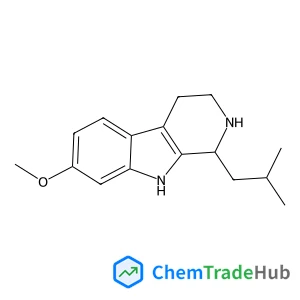
1-Isobutyl-7-methoxy-2,3,4,9-tetrahydro-1H-beta-carboline
CAS Number:
175975-76-5
Molecular Formula:
C16H22N2O

(2R)-2-(3-Bromophenyl)pyrrolidine hydrochloride (1:1)
CAS Number:
1391550-13-2
Molecular Formula:
C10H13BrClN
Recommended Suppliers







Disclaimer
This page provides academic journal information for reference and research purposes only. We are not affiliated with any journal publishers and do not handle publication submissions. For publication-related inquiries, please contact the respective journal publishers directly.
If you notice any inaccuracies in the information displayed, please contact us at support@chemtradehub.com. We will promptly review and address your concerns.