












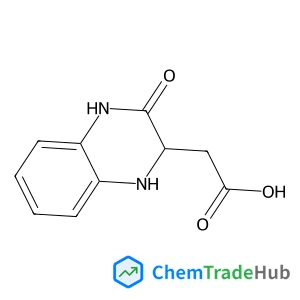
(3-Oxo-1,2,3,4-tetrahydro-2-quinoxalinyl)acetic acid
CAS Number:
136584-14-0
Molecular Formula:
C10H10N2O3
Marco Ferretti, Katia Duquesne, James N. Sturgis, Rienk van Grondelle
Roseobacter (Rsb.) denitrificans is a marine aerobic anoxygenic photosynthetic purple bacterium with an unusually high-800 nm absorption band. Ultrafast excited state processes have been intensively studied in the past in order to understand why the energy transfer efficiency between photosynthetic antennae approaches unity and recently it has been proved that the organization of the antennae proteins within the membranes plays an important role. Thanks to the development of genetic manipulation and to the capability of Rsb. denitrificans to grow anaerobically as well, it is possible to construct several mutants in order to compare the ultrafast dynamics between isolated complexes and complexes embedded in membrane environments. Time resolved fluorescence and transient absorption have been applied to isolate LH2, genetically modified membranes with LH2-only and wild type membranes with both LH2 and LH1 antennae of Rsb. denitrificans, in order to understand the effect of the membrane environment on the energy transfer efficiency. A global analysis is applied to calculate the lifetime of the excited states of LH2 and LH1, and although there is shortening of the relaxation lifetime of the LH2-only membranes with respect to the isolated LH2, we find an energy transfer efficiency from LH2 to LH1 of 95%, which still approaches unity.
Keitel Cervantes-Salguero, Ibuki Kawamata, Shin-ichiro M. Nomura, Satoshi Murata
DOI: 10.1039/C7CP02214J
Andrea Basagni, Agnese Marcelli, Andrea Alessi, Stefano Zanardi, Roberto Fusco, Mario Salvalaggio, Laura Bussotti
DOI: 10.1039/C6CP08721C
Ji Xing, Maoying Liao, Min Yin, Dongdong Li, Ye Song
DOI: 10.1039/C7CP02016C
Donglin Li, Yonggang Yang, Chaozheng Li, Yufang Liu
DOI: 10.1039/C7CP02268A
Sandra Hoppe, Yong Li, Lyudmila V. Moskaleva, Stefan Müller
DOI: 10.1039/C7CP02221B
DOI: 10.1039/C7CP90124K
Kana Yamagiwa, Masahiro Shibuta
DOI: 10.1039/C7CP01693J
Rebecca Sure, Andreas Hansen, Peter Schwerdtfeger, Stefan Grimme
DOI: 10.1039/C7CP00735C
Katsufumi Tomobe, Eiji Yamamoto, Masato Yasui, Kenji Yasuoka
DOI: 10.1039/C7CP02392H
J. Ahrens, M. Frank, G. H. Clever, D. Schwarzer
DOI: 10.1039/C7CP02253K
This compound is mainly used as an intermediate in the synthesis of antipsychoti...
Waste containing 1-(D-Ribofuranosyl)-1,4-dihydro-3-pyridinecarboxamide (CAS: 191...
2-Methyl-2-propanyl 3-bromo-3-(hydroxymethyl)-1-azetidinecarboxylate (CAS: 20079...
N-(4-Chloro-2-pyridinyl)acetamide (CAS: 245056-66-0) is a chemical compound with...
5-Chloro-2-hydroxybenzoic acid, also known as 5-chlorosalicylic acid, is an arom...
When handling 1,1-Dichloro-1-fluoroethane (CAS: 1717-00-6), it is important to u...
Fmoc-(2S,3R)-3-phenylpyrrolidine-2-carboxylic acid is a white crystalline solid ...
4-Amino-5-bromo-2-pyridinecarboxylic acid is primarily used as a precursor in th...
Handling this compound should be done with personal protective equipment (PPE) i...
When handling 8-bromo-2,2-dimethyl-3,4-dihydro-2H-1,4-benzoxazin-3-one, use prop...

Physical Chemistry Chemical Physics (PCCP) is an international journal co-owned by 19 physical chemistry and physics societies from around the world. This journal publishes original, cutting-edge research in physical chemistry, chemical physics and biophysical chemistry. To be suitable for publication in PCCP, articles must include significant innovation and/or insight into physical chemistry; this is the most important criterion that reviewers and Editors will judge against when evaluating submissions. The journal has a broad scope and welcomes contributions spanning experiment, theory, computation and data science. Topical coverage includes spectroscopy, dynamics, kinetics, statistical mechanics, thermodynamics, electrochemistry, catalysis, surface science, quantum mechanics, quantum computing and machine learning. Interdisciplinary research areas such as polymers and soft matter, materials, nanoscience, energy, surfaces/interfaces, and biophysical chemistry are welcomed if they demonstrate significant innovation and/or insight into physical chemistry. Joined experimental/theoretical studies are particularly appreciated when complementary and based on up-to-date approaches.
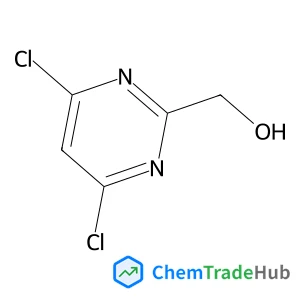
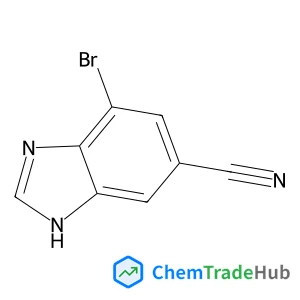

![4-Chloro-3-(trifluoromethyl)-1H-pyrrolo[2,3-b]pyridine structure](https://static.chemtradehub.com/structs/869/869335-75-1-a9d0.webp "4-Chloro-3-(trifluoromethyl)-1H-pyrrolo[2,3-b]pyridine structure")





