













Water-mediated interactions between trimethylamine-N-oxide and urea
Literature Information
Publication Date
2014-08-12
DOI
10.1039/C4CP02709D
Impact Factor
3.676
Authors
Johannes Hunger, Niklas Ottosson, Kamila Mazur, Mischa Bonn, Huib J. Bakker
View Original
Abstract
The amphiphilic osmolyte trimethylamine-N-oxide (TMAO) is commonly found in natural organisms, where it counteracts biochemical stress associated with urea in aqueous environments. Despite the important role of TMAO as osmoprotectant, the mechanism behind TMAO's action has remained elusive. Here, we study the interaction between urea, TMAO, and water in solution using broadband (100 MHz–1.6 THz) dielectric spectroscopy. We find that the previously reported tight hydrogen bonds between 3 water molecules and the hydrophilic amine oxide group of TMAO, remain intact at all investigated concentrations of urea, showing that no significant hydrogen bonding occurs between the two co-solutes. Despite the absence of direct TMAO–urea interactions, the solute reorientation times of urea and TMAO show an anomalous nonlinear increase with concentration, for ternary mixtures containing equal amounts of TMAO and urea. The nonlinear increase of the reorientation correlates with changes in the viscosity, showing that the combination of TMAO and urea cooperatively enhances the hydrogen-bond structure of the ternary solutions. This nonlinear increase is indicative of water mediated interaction between the two solutes and is not observed if urea is combined with other amphiphilic solutes.
Related Literature
Cu(i)–SNS complexes for outer-sphere hydroboration and hydrosilylation of carbonyls
Matthew R. Elsby, R. Tom Baker
2019-10-28
Communication
DOI: 10.1039/C9CC07266G
Multidimensional scaling assisted Fourier-transform infrared spectroscopic analysis of fruit wine samples: introducing a novel analytical approach
Keshav Kumar, Anja Giehl, Ralf Schweiggert, Claus-Dieter Patz
2019-07-25
Paper
DOI: 10.1039/C9AY01425J
A facile method to fabricate a porous Si/C composite with excellent cycling stability for use as the anode in a lithium ion battery
Xiaosong Zhang, Le Zhou, Yi Zhang, Shunrong Yan, Junjie Huang, Zebo Fang
2019-10-11
Communication
DOI: 10.1039/C9CC06661F
Sustainable and scalable production of monodisperse and highly uniform colloidal carbonaceous spheres using sodium polyacrylate as the dispersant
Yutong Gong, Lei Xie, Haoran Li, Yong Wang
2014-09-01
Communication
DOI: 10.1039/C4CC04998E
Facile synthesis of yolk–shell structured Si–C nanocomposites as anodes for lithium-ion batteries
Lei Pan, Haibin Wang, Dacheng Gao, Shengyang Chen, Lei Tan, Lei Li
2014-04-14
Communication
DOI: 10.1039/C4CC01728E
Photo-responsive MOFs: light-induced switching of porous single crystals containing a photochromic diarylethene
Ian M. Walton, Jordan M. Cox, Jarrett A. Coppin, Crysania M. Linderman, Dinesh G. (Dan) Patel, Jason B. Benedict
2013-07-22
Communication
DOI: 10.1039/C3CC44119A
Droplet-based microfluidic synthesis of (Au nanorod@Ag)–polyaniline Janus nanoparticles and their application as a surface-enhanced Raman scattering nanosensor for mercury detection
Yue Wang, Mengxue Shang, Yaning Wang, Zhangrun Xu
2019-07-12
Paper
DOI: 10.1039/C9AY01213C
A label-free fluorescence method for actin detection based on DNA-templated silver nanoclusters
Mingjian Chen, Changbei Ma, Ying Yan
2019-07-31
Paper
DOI: 10.1039/C9AY01154D
You might also like
Compound Q&A
What are the main uses of 1H-Indazole-6-carbonitrile (CAS: 141290-59-7)?
1H-Indazole-6-carbonitrile finds applications in pharmaceuticals, where it serve...
141290-59-71H-Indazole-6-carbon...
Compound Q&A
How should waste containing Dioctyl (2E)-2-butenedioate (CAS: 2997-85-5) be handled?
Waste containing Dioctyl (2E)-2-butenedioate (CAS: 2997-85-5) should be collecte...
2997-85-5Dioctyl (2E)-2-buten...
Compound Q&A
What industries use Sodium [(1,2-benzoxazol-3-ylmethyl)sulfonyl]azanide (CAS: 68291-98-5)?
Sodium [(1,2-benzoxazol-3-ylmethyl)sulfonyl]azanide is primarily used in pharmac...
68291-98-5Sodium [(1,2-benzoxa...
Compound Q&A
Are there alternatives to Dimethyl 4-(4,4,5,5-tetramethyl-1,3,2-dioxaborolan-2-yl)-2,6-pyridinedicarboxylate (CAS: 741709-66-0) in synthesis?
Dimethyl 4-(4,4,5,5-tetramethyl-1,3,2-dioxaborolan-2-yl)-2,6-pyridinedicarboxyla...
741709-66-0Dimethyl 4-(4,4,5,5-...
Compound Q&A
How should waste containing 2-Fluoro-6-hydrazinopyridine (CAS: 80714-39-2) be handled?
Waste containing 2-Fluoro-6-hydrazinopyridine (CAS: 80714-39-2) should be manage...
80714-39-22-Fluoro-6-hydrazino...
Compound Q&A
What is 6-Formyl-2-pyridinecarboxylic acid (CAS: 499214-11-8)?
6-Formyl-2-pyridinecarboxylic acid is an organic compound with the molecular for...
499214-11-86-Formyl-2-pyridinec...
Compound Q&A
What is the market or research trend for 3-(3,4-dimethoxyphenyl)-2,5-dimethyl-N-(2-morpholin-4-ylethyl)pyrazolo[1,5-a]pyrimidin-7-amine (CAS: 900874-91-1)?
Research trends for this compound indicate a focus on its potential applications...
900874-91-13-(3,4-dimethoxyphen...
Compound Q&A
How is 9H-Tribenzo[b,d,f]azepine (CAS: 29875-73-8) typically synthesized?
9H-Tribenzo[b,d,f]azepine is typically synthesized via a multi-step process invo...
29875-73-89H-Tribenzo[b,d,f]az...
Compound Q&A
How is 1-Cyclopropyl-7-ethoxy-6-fluoro-8-methoxy-4-oxo-1,4-dihydro-3-quinolinecarboxylic acid (CAS: 1797982-51-4) typically synthesized?
1-Cyclopropyl-7-ethoxy-6-fluoro-8-methoxy-4-oxo-1,4-dihydro-3-quinolinecarboxyli...
1797982-51-41-Cyclopropyl-7-etho...
Compound Q&A
How should waste containing Methyl 3-oxo-1,2,3,4-tetrahydro-6-quinoxalinecarboxylate (CAS: 671820-52-3) be handled?
Waste containing Methyl 3-oxo-1,2,3,4-tetrahydro-6-quinoxalinecarboxylate (CAS: ...
671820-52-3Methyl 3-oxo-1,2,3,4...
Source Journal
Physical Chemistry Chemical Physics

CiteScore:
5.5
Self-citation Rate:
10.3%
Articles per Year:
3036
Physical Chemistry Chemical Physics (PCCP) is an international journal co-owned by 19 physical chemistry and physics societies from around the world. This journal publishes original, cutting-edge research in physical chemistry, chemical physics and biophysical chemistry. To be suitable for publication in PCCP, articles must include significant innovation and/or insight into physical chemistry; this is the most important criterion that reviewers and Editors will judge against when evaluating submissions. The journal has a broad scope and welcomes contributions spanning experiment, theory, computation and data science. Topical coverage includes spectroscopy, dynamics, kinetics, statistical mechanics, thermodynamics, electrochemistry, catalysis, surface science, quantum mechanics, quantum computing and machine learning. Interdisciplinary research areas such as polymers and soft matter, materials, nanoscience, energy, surfaces/interfaces, and biophysical chemistry are welcomed if they demonstrate significant innovation and/or insight into physical chemistry. Joined experimental/theoretical studies are particularly appreciated when complementary and based on up-to-date approaches.
Recommended Compounds
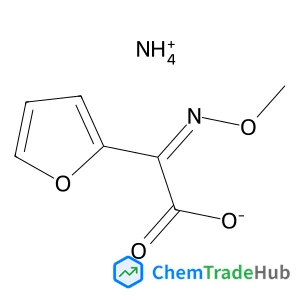
Ammonium (Z)-2-(furan-2-yl)-2-(methoxyimino)acetate
CAS Number:
97148-39-5
Molecular Formula:
C7H10N2O4


Recommended Suppliers




Disclaimer
This page provides academic journal information for reference and research purposes only. We are not affiliated with any journal publishers and do not handle publication submissions. For publication-related inquiries, please contact the respective journal publishers directly.
If you notice any inaccuracies in the information displayed, please contact us at support@chemtradehub.com. We will promptly review and address your concerns.