












Facile synthesis of yolk–shell structured Si–C nanocomposites as anodes for lithium-ion batteries
Literature Information
Publication Date
2014-04-14
DOI
10.1039/C4CC01728E
Impact Factor
6.222
Authors
Lei Pan, Haibin Wang, Dacheng Gao, Shengyang Chen, Lei Tan, Lei Li
View Original
Abstract
Yolk–shell structured Si–C nanocomposites are easily synthesized by using a new method based on alkaline etching technology, and exhibit high specific capacity, good cycling stability and rate performance as anodes for lithium-ion batteries.
Recommended Journals
Related Literature
Photodissociation of DOBr—Time-dependent wavepacket calculations
Alex Brown, Gabriel G. Balint-Kurti, László Füsti-Molnár
2001-08-30
Paper
DOI: 10.1039/B102542M
Framework dynamics including computer simulations of the water adsorption isotherm of zeolite Na-MAP
Jörg-Rüdiger Hill, Alan R. Minihan, Erich Wimmer, Chris J. Adams
2000-08-23
Paper
DOI: 10.1039/B003771K
Fast dimerisation of the triparaquat radical dication
M. Vuckovic, S. V. Mentus, E. Janata, B. H. Milosavljevic
2001-09-11
Paper
DOI: 10.1039/B103926C
Nearside-farside analysis of differential cross sections: The reaction I + HI → IH + I
C. Noli, J. N. L. Connor, N. Rougeau, C. Kubach
2001-08-31
Paper
DOI: 10.1039/B104099P
The electronic spectra of symmetric cyanine dyes: A CASPT2 study
2001-08-22
Paper
DOI: 10.1039/B103417K
Long-range spherical potential energy function from the second virial coefficient using decomposition into subspaces
J. P. Braga, J. L. Neves
2001-09-11
Paper
DOI: 10.1039/B105180F
Anhydrous zirconium(IV) sulfate and tin(IV) sulfate: solid Lewis acid catalysts in liquid-phase hydro-acyloxy-addition reactions?
Ivo J. Dijs, Roene de Koning, John W. Geus, Leonardus W. Jenneskens
2001-09-12
Paper
DOI: 10.1039/B105049B
Electronic absorption spectral study of the oxidation of uranium dioxide in chloride melts
Vladimir A. Volkovich, Trevor R. Griffiths, Derek J. Fray, Robert C. Thied
2000-08-02
Paper
DOI: 10.1039/B004464O
You might also like
Compound Q&A
What are the main uses of 1H-Indazole-6-carbonitrile (CAS: 141290-59-7)?
1H-Indazole-6-carbonitrile finds applications in pharmaceuticals, where it serve...
141290-59-71H-Indazole-6-carbon...
Compound Q&A
How should waste containing Dioctyl (2E)-2-butenedioate (CAS: 2997-85-5) be handled?
Waste containing Dioctyl (2E)-2-butenedioate (CAS: 2997-85-5) should be collecte...
2997-85-5Dioctyl (2E)-2-buten...
Compound Q&A
What industries use Sodium [(1,2-benzoxazol-3-ylmethyl)sulfonyl]azanide (CAS: 68291-98-5)?
Sodium [(1,2-benzoxazol-3-ylmethyl)sulfonyl]azanide is primarily used in pharmac...
68291-98-5Sodium [(1,2-benzoxa...
Compound Q&A
Are there alternatives to Dimethyl 4-(4,4,5,5-tetramethyl-1,3,2-dioxaborolan-2-yl)-2,6-pyridinedicarboxylate (CAS: 741709-66-0) in synthesis?
Dimethyl 4-(4,4,5,5-tetramethyl-1,3,2-dioxaborolan-2-yl)-2,6-pyridinedicarboxyla...
741709-66-0Dimethyl 4-(4,4,5,5-...
Compound Q&A
How should waste containing 2-Fluoro-6-hydrazinopyridine (CAS: 80714-39-2) be handled?
Waste containing 2-Fluoro-6-hydrazinopyridine (CAS: 80714-39-2) should be manage...
80714-39-22-Fluoro-6-hydrazino...
Compound Q&A
What is 6-Formyl-2-pyridinecarboxylic acid (CAS: 499214-11-8)?
6-Formyl-2-pyridinecarboxylic acid is an organic compound with the molecular for...
499214-11-86-Formyl-2-pyridinec...
Compound Q&A
What is the market or research trend for 3-(3,4-dimethoxyphenyl)-2,5-dimethyl-N-(2-morpholin-4-ylethyl)pyrazolo[1,5-a]pyrimidin-7-amine (CAS: 900874-91-1)?
Research trends for this compound indicate a focus on its potential applications...
900874-91-13-(3,4-dimethoxyphen...
Compound Q&A
How is 9H-Tribenzo[b,d,f]azepine (CAS: 29875-73-8) typically synthesized?
9H-Tribenzo[b,d,f]azepine is typically synthesized via a multi-step process invo...
29875-73-89H-Tribenzo[b,d,f]az...
Compound Q&A
How is 1-Cyclopropyl-7-ethoxy-6-fluoro-8-methoxy-4-oxo-1,4-dihydro-3-quinolinecarboxylic acid (CAS: 1797982-51-4) typically synthesized?
1-Cyclopropyl-7-ethoxy-6-fluoro-8-methoxy-4-oxo-1,4-dihydro-3-quinolinecarboxyli...
1797982-51-41-Cyclopropyl-7-etho...
Compound Q&A
How should waste containing Methyl 3-oxo-1,2,3,4-tetrahydro-6-quinoxalinecarboxylate (CAS: 671820-52-3) be handled?
Waste containing Methyl 3-oxo-1,2,3,4-tetrahydro-6-quinoxalinecarboxylate (CAS: ...
671820-52-3Methyl 3-oxo-1,2,3,4...
Source Journal
Chemical Communications

CiteScore:
8.6
Self-citation Rate:
4.7%
Articles per Year:
2458
ChemComm publishes urgent research which is of outstanding significance and interest to experts in the field, while also appealing to the journal’s broad chemistry readership. Our communication format is ideally suited to short, urgent studies that are of such importance that they require accelerated publication. Our scope covers all topics in chemistry, and research at the interface of chemistry and other disciplines (such as materials science, nanoscience, physics, engineering and biology) where there is a significant novelty in the chemistry aspects. Major topic areas covered include: Analytical Chemistry Catalysis Chemical Biology and medicinal chemistry Computational Chemistry and Machine Learning Energy and sustainable chemistry Environmental Chemistry Green Chemistry Inorganic Chemistry Materials Chemistry Nanoscience Organic Chemistry Physical Chemistry Polymer Chemistry Supramolecular Chemistry
Recommended Compounds

![(1S)-1,5-Anhydro-1-[3-(1-benzothiophen-2-ylmethyl)-4-fluorophenyl]-D-glucitol structure](https://static.chemtradehub.com/structs/761/761423-87-4-dbeb.webp "(1S)-1,5-Anhydro-1-[3-(1-benzothiophen-2-ylmethyl)-4-fluorophenyl]-D-glucitol structure")
(1S)-1,5-Anhydro-1-[3-(1-benzothiophen-2-ylmethyl)-4-fluorophenyl]-D-glucitol
CAS Number:
761423-87-4
Molecular Formula:
C21H21FO5S
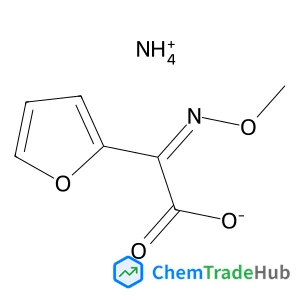
Ammonium (Z)-2-(furan-2-yl)-2-(methoxyimino)acetate
CAS Number:
97148-39-5
Molecular Formula:
C7H10N2O4
Recommended Suppliers





Disclaimer
This page provides academic journal information for reference and research purposes only. We are not affiliated with any journal publishers and do not handle publication submissions. For publication-related inquiries, please contact the respective journal publishers directly.
If you notice any inaccuracies in the information displayed, please contact us at support@chemtradehub.com. We will promptly review and address your concerns.