












Sustainable and scalable production of monodisperse and highly uniform colloidal carbonaceous spheres using sodium polyacrylate as the dispersant
Literature Information
Publication Date
2014-09-01
DOI
10.1039/C4CC04998E
Impact Factor
6.222
Authors
Yutong Gong, Lei Xie, Haoran Li, Yong Wang
View Original
Abstract
Monodisperse, uniform colloidal carbonaceous spheres were fabricated by the hydrothermal treatment of glucose with the help of a tiny amount of sodium polyacrylate (PAANa). This synthetic strategy is effective at high glucose concentration and for scale-up experiments. The sphere size can be easily tuned by the reaction time, temperature and glucose concentration.
Related Literature
Ionic plastic phases in trimethylammonium trifluoroacetate studied by 1H and 19F NMR spectroscopy, X-ray diffraction and thermal measurements
Koji Kuchitsu, Hiroshi Ono, Shin'ichi Ishimaru, Ryuichi Ikeda, Hiroyuki Ishida
2000-08-07
Paper
DOI: 10.1039/B004193I
Photodissociation of DOBr—Time-dependent wavepacket calculations
Alex Brown, Gabriel G. Balint-Kurti, László Füsti-Molnár
2001-08-30
Paper
DOI: 10.1039/B102542M
Shock tube combustion of liquid hydrocarbon sprays of toluene
2001-09-06
Paper
DOI: 10.1039/B101803P
Thermochemical aspects of the rotational dynamics of the ammonium ion in an environment of water molecules
David A. Johnson
2000-06-05
Paper
DOI: 10.1039/B002569K
Active site and mechanism of the selective catalytic reduction of NO by NH3 over V2O5: A periodic first-principles study
Xilin Yin, Huanmei Han, Akira Miyamoto
2000-08-15
Paper
DOI: 10.1039/B003838P
Dynamic colloidal interactions between protein-stabilised particles—experiment and simulation
Herley Casanova, Jianshe Chen, Eric Dickinson, Brent S. Murray, Phillip V. Nelson, Martin Whittle
2000-08-09
Paper
DOI: 10.1039/B004023L
Long-range spherical potential energy function from the second virial coefficient using decomposition into subspaces
J. P. Braga, J. L. Neves
2001-09-11
Paper
DOI: 10.1039/B105180F
You might also like
Compound Q&A
What are the main uses of 1H-Indazole-6-carbonitrile (CAS: 141290-59-7)?
1H-Indazole-6-carbonitrile finds applications in pharmaceuticals, where it serve...
141290-59-71H-Indazole-6-carbon...
Compound Q&A
How should waste containing Dioctyl (2E)-2-butenedioate (CAS: 2997-85-5) be handled?
Waste containing Dioctyl (2E)-2-butenedioate (CAS: 2997-85-5) should be collecte...
2997-85-5Dioctyl (2E)-2-buten...
Compound Q&A
What industries use Sodium [(1,2-benzoxazol-3-ylmethyl)sulfonyl]azanide (CAS: 68291-98-5)?
Sodium [(1,2-benzoxazol-3-ylmethyl)sulfonyl]azanide is primarily used in pharmac...
68291-98-5Sodium [(1,2-benzoxa...
Compound Q&A
Are there alternatives to Dimethyl 4-(4,4,5,5-tetramethyl-1,3,2-dioxaborolan-2-yl)-2,6-pyridinedicarboxylate (CAS: 741709-66-0) in synthesis?
Dimethyl 4-(4,4,5,5-tetramethyl-1,3,2-dioxaborolan-2-yl)-2,6-pyridinedicarboxyla...
741709-66-0Dimethyl 4-(4,4,5,5-...
Compound Q&A
How should waste containing 2-Fluoro-6-hydrazinopyridine (CAS: 80714-39-2) be handled?
Waste containing 2-Fluoro-6-hydrazinopyridine (CAS: 80714-39-2) should be manage...
80714-39-22-Fluoro-6-hydrazino...
Compound Q&A
What is 6-Formyl-2-pyridinecarboxylic acid (CAS: 499214-11-8)?
6-Formyl-2-pyridinecarboxylic acid is an organic compound with the molecular for...
499214-11-86-Formyl-2-pyridinec...
Compound Q&A
What is the market or research trend for 3-(3,4-dimethoxyphenyl)-2,5-dimethyl-N-(2-morpholin-4-ylethyl)pyrazolo[1,5-a]pyrimidin-7-amine (CAS: 900874-91-1)?
Research trends for this compound indicate a focus on its potential applications...
900874-91-13-(3,4-dimethoxyphen...
Compound Q&A
How is 9H-Tribenzo[b,d,f]azepine (CAS: 29875-73-8) typically synthesized?
9H-Tribenzo[b,d,f]azepine is typically synthesized via a multi-step process invo...
29875-73-89H-Tribenzo[b,d,f]az...
Compound Q&A
How is 1-Cyclopropyl-7-ethoxy-6-fluoro-8-methoxy-4-oxo-1,4-dihydro-3-quinolinecarboxylic acid (CAS: 1797982-51-4) typically synthesized?
1-Cyclopropyl-7-ethoxy-6-fluoro-8-methoxy-4-oxo-1,4-dihydro-3-quinolinecarboxyli...
1797982-51-41-Cyclopropyl-7-etho...
Compound Q&A
How should waste containing Methyl 3-oxo-1,2,3,4-tetrahydro-6-quinoxalinecarboxylate (CAS: 671820-52-3) be handled?
Waste containing Methyl 3-oxo-1,2,3,4-tetrahydro-6-quinoxalinecarboxylate (CAS: ...
671820-52-3Methyl 3-oxo-1,2,3,4...
Source Journal
Chemical Communications

CiteScore:
8.6
Self-citation Rate:
4.7%
Articles per Year:
2458
ChemComm publishes urgent research which is of outstanding significance and interest to experts in the field, while also appealing to the journal’s broad chemistry readership. Our communication format is ideally suited to short, urgent studies that are of such importance that they require accelerated publication. Our scope covers all topics in chemistry, and research at the interface of chemistry and other disciplines (such as materials science, nanoscience, physics, engineering and biology) where there is a significant novelty in the chemistry aspects. Major topic areas covered include: Analytical Chemistry Catalysis Chemical Biology and medicinal chemistry Computational Chemistry and Machine Learning Energy and sustainable chemistry Environmental Chemistry Green Chemistry Inorganic Chemistry Materials Chemistry Nanoscience Organic Chemistry Physical Chemistry Polymer Chemistry Supramolecular Chemistry
Recommended Compounds

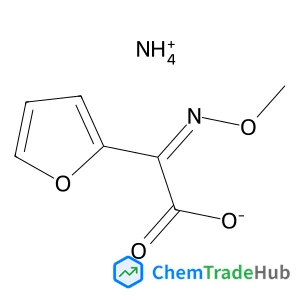
Ammonium (Z)-2-(furan-2-yl)-2-(methoxyimino)acetate
CAS Number:
97148-39-5
Molecular Formula:
C7H10N2O4


Recommended Suppliers





Disclaimer
This page provides academic journal information for reference and research purposes only. We are not affiliated with any journal publishers and do not handle publication submissions. For publication-related inquiries, please contact the respective journal publishers directly.
If you notice any inaccuracies in the information displayed, please contact us at support@chemtradehub.com. We will promptly review and address your concerns.