












Cu(i)–SNS complexes for outer-sphere hydroboration and hydrosilylation of carbonyls
Literature Information
Publication Date
2019-10-28
DOI
10.1039/C9CC07266G
Impact Factor
6.222
Authors
Matthew R. Elsby, R. Tom Baker
View Original
Abstract
Two new NHC–Cu(I)-[κ2-SNS] complexes were synthesized to directly compare the bifunctional catalytic activity of a hard amido vs. a soft thiolate donor. The Cu thiolate complex catalyzed ketone hydroboration but not hydrosilylation, while the Cu amido complex is a high-performing outer-sphere carbonyl reduction catalyst using boranes and silanes.
Related Literature
Mechanism of the laser initiated ultrafast intracluster reaction in Ba···FCH3 and Ba···FCD3
V. Stert, H.-H. Ritze, P. Farmanara, W. Radloff
2001-08-23
Paper
DOI: 10.1039/B104528H
Hydrogen effects in hexane reactions over Al2O3 supported Pt, Ir and Pt–Ir catalysts
Paper
DOI: 10.1039/A902976A
Diblock polyampholytes at the silicon/water interface: Adsorption at various modified silicon substrates
Boris Mahltig, Robert Jérôme, Manfred Stamm
2001-09-06
Paper
DOI: 10.1039/B104237H
Photodissociation of DOBr—Time-dependent wavepacket calculations
Alex Brown, Gabriel G. Balint-Kurti, László Füsti-Molnár
2001-08-30
Paper
DOI: 10.1039/B102542M
Kinetics of the gas-phase reaction of atomic chlorine with selected monoterpenes
Qadir K. Timerghazin, Parisa A. Ariya
2001-08-22
Paper
DOI: 10.1039/B101380G
Ab initio calculation of experimental structure factors for Ni(NH3)4(NO2)2
2000-08-02
Paper
DOI: 10.1039/B003222K
Dimers of the major components of the atmosphere: Realistic potential energy surfaces and quantum mechanical prediction of spectral features
2001-08-30
Communication
DOI: 10.1039/B106672M
Active site and mechanism of the selective catalytic reduction of NO by NH3 over V2O5: A periodic first-principles study
Xilin Yin, Huanmei Han, Akira Miyamoto
2000-08-15
Paper
DOI: 10.1039/B003838P
Ab initio and kinetic calculations for the reactions of H with SiH(4−n)Fn (n = 1–3)
Qingzhu Zhang, Shaokun Wang, Chunsheng Wang, Yueshu Gu
2001-08-31
Paper
DOI: 10.1039/B104107J
You might also like
Compound Q&A
What are the main uses of 1H-Indazole-6-carbonitrile (CAS: 141290-59-7)?
1H-Indazole-6-carbonitrile finds applications in pharmaceuticals, where it serve...
141290-59-71H-Indazole-6-carbon...
Compound Q&A
How should waste containing Dioctyl (2E)-2-butenedioate (CAS: 2997-85-5) be handled?
Waste containing Dioctyl (2E)-2-butenedioate (CAS: 2997-85-5) should be collecte...
2997-85-5Dioctyl (2E)-2-buten...
Compound Q&A
What industries use Sodium [(1,2-benzoxazol-3-ylmethyl)sulfonyl]azanide (CAS: 68291-98-5)?
Sodium [(1,2-benzoxazol-3-ylmethyl)sulfonyl]azanide is primarily used in pharmac...
68291-98-5Sodium [(1,2-benzoxa...
Compound Q&A
Are there alternatives to Dimethyl 4-(4,4,5,5-tetramethyl-1,3,2-dioxaborolan-2-yl)-2,6-pyridinedicarboxylate (CAS: 741709-66-0) in synthesis?
Dimethyl 4-(4,4,5,5-tetramethyl-1,3,2-dioxaborolan-2-yl)-2,6-pyridinedicarboxyla...
741709-66-0Dimethyl 4-(4,4,5,5-...
Compound Q&A
How should waste containing 2-Fluoro-6-hydrazinopyridine (CAS: 80714-39-2) be handled?
Waste containing 2-Fluoro-6-hydrazinopyridine (CAS: 80714-39-2) should be manage...
80714-39-22-Fluoro-6-hydrazino...
Compound Q&A
What is 6-Formyl-2-pyridinecarboxylic acid (CAS: 499214-11-8)?
6-Formyl-2-pyridinecarboxylic acid is an organic compound with the molecular for...
499214-11-86-Formyl-2-pyridinec...
Compound Q&A
What is the market or research trend for 3-(3,4-dimethoxyphenyl)-2,5-dimethyl-N-(2-morpholin-4-ylethyl)pyrazolo[1,5-a]pyrimidin-7-amine (CAS: 900874-91-1)?
Research trends for this compound indicate a focus on its potential applications...
900874-91-13-(3,4-dimethoxyphen...
Compound Q&A
How is 9H-Tribenzo[b,d,f]azepine (CAS: 29875-73-8) typically synthesized?
9H-Tribenzo[b,d,f]azepine is typically synthesized via a multi-step process invo...
29875-73-89H-Tribenzo[b,d,f]az...
Compound Q&A
How is 1-Cyclopropyl-7-ethoxy-6-fluoro-8-methoxy-4-oxo-1,4-dihydro-3-quinolinecarboxylic acid (CAS: 1797982-51-4) typically synthesized?
1-Cyclopropyl-7-ethoxy-6-fluoro-8-methoxy-4-oxo-1,4-dihydro-3-quinolinecarboxyli...
1797982-51-41-Cyclopropyl-7-etho...
Compound Q&A
How should waste containing Methyl 3-oxo-1,2,3,4-tetrahydro-6-quinoxalinecarboxylate (CAS: 671820-52-3) be handled?
Waste containing Methyl 3-oxo-1,2,3,4-tetrahydro-6-quinoxalinecarboxylate (CAS: ...
671820-52-3Methyl 3-oxo-1,2,3,4...
Source Journal
Chemical Communications

CiteScore:
8.6
Self-citation Rate:
4.7%
Articles per Year:
2458
ChemComm publishes urgent research which is of outstanding significance and interest to experts in the field, while also appealing to the journal’s broad chemistry readership. Our communication format is ideally suited to short, urgent studies that are of such importance that they require accelerated publication. Our scope covers all topics in chemistry, and research at the interface of chemistry and other disciplines (such as materials science, nanoscience, physics, engineering and biology) where there is a significant novelty in the chemistry aspects. Major topic areas covered include: Analytical Chemistry Catalysis Chemical Biology and medicinal chemistry Computational Chemistry and Machine Learning Energy and sustainable chemistry Environmental Chemistry Green Chemistry Inorganic Chemistry Materials Chemistry Nanoscience Organic Chemistry Physical Chemistry Polymer Chemistry Supramolecular Chemistry
Recommended Compounds
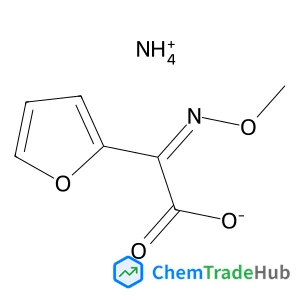
Ammonium (Z)-2-(furan-2-yl)-2-(methoxyimino)acetate
CAS Number:
97148-39-5
Molecular Formula:
C7H10N2O4
Recommended Suppliers






Disclaimer
This page provides academic journal information for reference and research purposes only. We are not affiliated with any journal publishers and do not handle publication submissions. For publication-related inquiries, please contact the respective journal publishers directly.
If you notice any inaccuracies in the information displayed, please contact us at support@chemtradehub.com. We will promptly review and address your concerns.