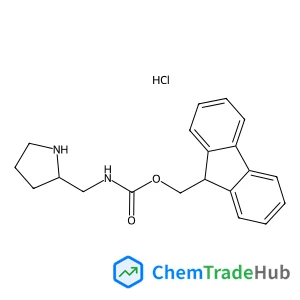
(S)-(9H-Fluoren-9-yl)methyl (pyrrolidin-2-ylmethyl)carbamate hydrochloride
CAS Number:
1217813-15-4
Molecular Formula:
C20H23ClN2O2
Elisa Gambuzzi, Alfonso Pedone
Classical molecular dynamics simulations have been used to investigate the local and medium range structure of Ce-containing silicophosphate glasses widely used in optical and photonic devices because of their enhanced UV absorption and radiation damage resistance properties. New Ce3+–O and Ce4+–O parameters for a force-field based on the core–shell model were developed by fitting on the crystalline structures of Ce-containing crystal phases, and used to get insights into the structure of five silicophosphate glasses with increasing Ce2O3 and P2O5 content. An excellent agreement between experimental and computational data was found for the local environment around cerium ions and network former cations. The Ce3+–O bond lengths are generally longer than Ce4+–O, which shows higher coordination numbers. Both P and Si are four-fold coordinated; their allocation in the network is not uniform: the increasing Ce content leads to the formation of silica-rich domains and phosphate-rich domains, which entrap Ce cations increasing their solubility in the glass. We found that both the Qn distributions of phosphorous and Ce clustering depend on the Ce/P ratio in the glass. In particular, Ce clustering begins for Ce/P ratios between 0.17 and 0.29 in the glass series investigated.

Accounts of Chemical Research

Chemistry of Heterocyclic Compounds

Australian Journal of Chemistry

Chemistry of Natural Compounds

Advances in Colloid and Interface Science

Journal of the American Chemical Society

Chemical & Pharmaceutical Bulletin

Bulletin of the Chemical Society of Japan

Cement and Concrete Research

Journal of the Chinese Chemical Society
Jinxing Ye, Darren J. Dixon, Peter S. Hynes
DOI: 10.1039/B508833J
Rongcai Huang, Kevin H. Shaughnessy
DOI: 10.1039/B509406B
Neil T. Kemp, Nagindar K. Singh
DOI: 10.1039/B506195D
Olalla Nieto Faza, Carlos Silva López, Rosana Álvarez, Ángel R. de Lera
DOI: 10.1039/B506601H
D. Krishna Kumar, D. Amilan Jose, Amitava Das, Parthasarathi Dastidar
DOI: 10.1039/B506941F
Andrea Deák, Gábor Tárkányi
DOI: 10.1039/B506728F
Patrick J. Hrdlicka, T. Santhosh Kumar, Jesper Wengel
DOI: 10.1039/B506986F
Gavin D. Jones, Chris McFarland, Thomas J. Anderson, David A. Vicic
DOI: 10.1039/B504996B
Nina Gommermann, Paul Knochel
DOI: 10.1039/B507810E
Waste containing N-Methoxy-N-methyl-1,3-thiazole-5-carboxamide (CAS: 898825-89-3...
N-(4-Biphenylyl)dibenzo[b,d]furan-4-amine should be stored in a tightly sealed c...
The market for 3-Acetamido-5-amino-2,4,6-triiodobenzoic acid (CAS: 1713-07-1) is...
Benzyl 2-O-acetyl-3,4,6-tri-O-benzyl-beta-D-galactopyranoside (CAS: 61820-03-9) ...
2-Ethylpiperazine dihydrochloride (CAS: 438050-52-3) is regulated under the Glob...
1,1'-[1,3-Phenylenebis(methylene)]bis(3-methyl-1H-pyrrole-2,5-dione) (CAS: 11946...
Several alternatives can be used in the synthesis of 5-Fluoro-2-(1-pyrrolidinyl)...
Proper personal protective equipment (PPE) must be worn when handling this compo...
When handling 6-Bromoimidazo[1,2-a]pyridin-8-amine, it is important to wear appr...
Alternatives to (2S,4R)-4-(4-Nitrobenzyl)pyrrolidine-2-carboxylic acid hydrochlo...

Physical Chemistry Chemical Physics (PCCP) is an international journal co-owned by 19 physical chemistry and physics societies from around the world. This journal publishes original, cutting-edge research in physical chemistry, chemical physics and biophysical chemistry. To be suitable for publication in PCCP, articles must include significant innovation and/or insight into physical chemistry; this is the most important criterion that reviewers and Editors will judge against when evaluating submissions. The journal has a broad scope and welcomes contributions spanning experiment, theory, computation and data science. Topical coverage includes spectroscopy, dynamics, kinetics, statistical mechanics, thermodynamics, electrochemistry, catalysis, surface science, quantum mechanics, quantum computing and machine learning. Interdisciplinary research areas such as polymers and soft matter, materials, nanoscience, energy, surfaces/interfaces, and biophysical chemistry are welcomed if they demonstrate significant innovation and/or insight into physical chemistry. Joined experimental/theoretical studies are particularly appreciated when complementary and based on up-to-date approaches.
![[(5-Methyl-1,3,4-thiadiazol-2-yl)sulfanyl]acetic acid structure](https://static.chemtradehub.com/structs/509/50918-26-8-4ce8.webp "[(5-Methyl-1,3,4-thiadiazol-2-yl)sulfanyl]acetic acid structure")