













Excited electronic states of thiophene: high resolution photoabsorption Fourier transform spectroscopy and ab initio calculations‡
Literature Information
Publication Date
2014-09-08
DOI
10.1039/C4CP02420F
Impact Factor
3.676
Authors
D. M. P. Holland, E. A. Seddon, T. Korona, N. de Oliveira, L. E. Archer, D. Joyeux, L. Nahon
View Original
Abstract
The recently introduced synchrotron radiation-based Fourier transform spectroscopy has been employed to study the excited electronic states of thiophene. A highly resolved photoabsorption spectrum has been measured between ∼5 and 12.5 eV, providing a wealth of new data. High-level ab initio computations have been performed using the second-order algebraic-diagrammatic construction (ADC(2)) polarization propagator approach, and the equation-of-motion coupled-cluster (EOM-CC) method at the CCSD and CC3 levels, to guide the assignment of the spectrum. The adiabatic energy corrections have been evaluated, thereby extending the theoretical study beyond the vertical excitation picture and leading to a significantly improved understanding of the spectrum. The low-lying π → π* and π → σ* transitions result in prominent broad absorption bands. Two strong Rydberg series converging onto the 2A2 state limit have been assigned to the 1a2 → npb11B2 and the 1a2 → nda21A1 transitions. A second, and much weaker, d-type series has been assigned to the 1a2 → ndb11B2 transitions. Excitation into some of the Rydberg states belonging to the two strong series gives rise to vibrational structure, most of which has been interpreted in terms of excitations of the totally symmetric ν4 and ν8 modes. One Rydberg series, assigned to the 3b1 → nsa11B1 transitions, has been identified converging onto the à 2B1 state limit, and at higher energies Rydberg states converging onto the 2A1 state limit could be identified. The present spectra reveal highly irregular vibrational structure in certain low energy absorption bands, and thus provide a new source of information for the rapidly developing studies of excited state non-adiabatic dynamics and photochemistry.
Related Literature
Time-dependent density functional theory study on the coexistent intermolecular hydrogen-bonding and dihydrogen-bonding of the phenol-H2O-diethylmethylsilane complex in electronic excited states
Ce Hao, Zhilong Xiu, Jieshan Qiu
2010-07-09
Paper
DOI: 10.1039/B927049C
Effects of mutation on the amyloidogenic propensity of apolipoprotein C-II60–70peptide
Nevena Todorova, Andrew Hung, Simon M. Maaser, Michael D. W. Griffin, John Karas, Geoffrey J. Howlett, Irene Yarovsky
2010-10-11
Paper
DOI: 10.1039/C0CP00299B
Spectroelectrochemical studies of hole percolation on functionalised nanocrystalline TiO2 films: a comparison of two different ruthenium complexes
Xiaoe Li, Mohammad K. Nazeeruddin, Mukundan Thelakkat, Piers R. F. Barnes, Ramón Vilar, James R. Durrant
2010-11-16
Paper
DOI: 10.1039/C0CP01013H
Formation of O adatom pairs and charge transfer upon O2 dissociation on reduced TiO2(110)
Yingge Du, Nathaniel A. Deskins, Zhenrong Zhang, Zdenek Dohnalek, Michel Dupuis, Igor Lyubinetsky
2010-03-25
Paper
DOI: 10.1039/C000250J
Ordering fluctuations in a shear-banding wormlike micellar system
R. Angelico, C. Oliviero Rossi, L. Ambrosone, K. Mortensen, U. Olsson
2010-06-08
Paper
DOI: 10.1039/B926152D
Selective adsorption and chiral amplification of amino acids in vermiculite clay-implications for the origin of biochirality
Daniel Fitz, T. Jakschitz, Bernd M. Rode
2010-10-28
Paper
DOI: 10.1039/C0CP01388A
Existence of dual species composed of Cu+ in CuMFI being bridged by C2H2
Atsushi Itadani, Takashi Yumura, Takahiro Ohkubo, Hisayoshi Kobayashi, Yasushige Kuroda
2010-05-07
Paper
DOI: 10.1039/C000967A
Sensitive and selective electrochemical sensing of l-cysteine based on a caterpillar-like manganese dioxide–carbon nanocomposite
Chunhui Xiao, Jinhua Chen, Bo Liu, Xiaochen Chu, Liang Wu, Shouzhuo Yao
2010-11-23
Paper
DOI: 10.1039/C0CP00980F
Modification of the chiral selectivity of d-glucose oxidase and l-lactate oxidase in a collagen matrix‡
Ritu Kataky, Ruzniza Mohamed Zawawi
2010-07-22
Paper
DOI: 10.1039/C003933K
In situ formation of silvernanostructures produced via laser irradiation within sol–gel derived films and their interaction with a fluorescence tagged protein
Graham Hungerford, Marion Toury, David McLoskey, Scott Finnigan, Shaun Gellie, A. Sheila Holmes-Smith
2010-09-22
Paper
DOI: 10.1039/C0CP01081B
You might also like
Compound Q&A
How should waste containing N-Methoxy-N-methyl-1,3-thiazole-5-carboxamide (CAS: 898825-89-3) be handled?
Waste containing N-Methoxy-N-methyl-1,3-thiazole-5-carboxamide (CAS: 898825-89-3...
898825-89-3N-Methoxy-N-methyl-1...
Compound Q&A
How should N-(4-Biphenylyl)dibenzo[b,d]furan-4-amine (CAS: 1318338-47-4) be stored?
N-(4-Biphenylyl)dibenzo[b,d]furan-4-amine should be stored in a tightly sealed c...
1318338-47-4N-(4-Biphenylyl)dibe...
Compound Q&A
What is the market or research trend for 3-Acetamido-5-amino-2,4,6-triiodobenzoic acid (CAS: 1713-07-1)?
The market for 3-Acetamido-5-amino-2,4,6-triiodobenzoic acid (CAS: 1713-07-1) is...
1713-07-13-Acetamido-5-amino-...
Compound Q&A
How should Benzyl 2-O-acetyl-3,4,6-tri-O-benzyl-beta-D-galactopyranoside (CAS: 61820-03-9) be stored?
Benzyl 2-O-acetyl-3,4,6-tri-O-benzyl-beta-D-galactopyranoside (CAS: 61820-03-9) ...
61820-03-9Benzyl 2-O-acetyl-3,...
Compound Q&A
What regulatory guidelines apply to 2-Ethylpiperazine dihydrochloride (CAS: 438050-52-3)?
2-Ethylpiperazine dihydrochloride (CAS: 438050-52-3) is regulated under the Glob...
438050-52-32-Ethylpiperazine di...
Compound Q&A
What regulatory guidelines apply to 1,1'-[1,3-Phenylenebis(methylene)]bis(3-methyl-1H-pyrrole-2,5-dione) (CAS: 119462-56-5)?
1,1'-[1,3-Phenylenebis(methylene)]bis(3-methyl-1H-pyrrole-2,5-dione) (CAS: 11946...
119462-56-51,1'-[1,3-Phenyleneb...
Compound Q&A
Are there alternatives to 5-Fluoro-2-(1-pyrrolidinyl)pyridine (CAS: 1287217-79-1) in synthesis?
Several alternatives can be used in the synthesis of 5-Fluoro-2-(1-pyrrolidinyl)...
1287217-79-15-Fluoro-2-(1-pyrrol...
Compound Q&A
What precautions should be taken when handling 1-((2R,3R,4R,5R)-5-((bis(4-methoxyphenyl)(phenyl)methoxy)methyl)-4-hydroxy-3-methoxytetrahydrofuran-2-yl)-5-methylpyrimidine-2,4(1H,3H)-dione (CAS: 153631-19-7)?
Proper personal protective equipment (PPE) must be worn when handling this compo...
153631-19-71-((2R,3R,4R,5R)-5-(...
Compound Q&A
What precautions should be taken when handling 6-Bromoimidazo[1,2-a]pyridin-8-amine (CAS: 676371-00-9)?
When handling 6-Bromoimidazo[1,2-a]pyridin-8-amine, it is important to wear appr...
676371-00-96-Bromoimidazo[1,2-a...
Compound Q&A
Are there alternatives to (2S,4R)-4-(4-Nitrobenzyl)pyrrolidine-2-carboxylic acid hydrochloride (CAS: 1049740-22-8) in synthesis?
Alternatives to (2S,4R)-4-(4-Nitrobenzyl)pyrrolidine-2-carboxylic acid hydrochlo...
1049740-22-8(2S,4R)-4-(4-Nitrobe...
Source Journal
Physical Chemistry Chemical Physics

CiteScore:
5.5
Self-citation Rate:
10.3%
Articles per Year:
3036
Physical Chemistry Chemical Physics (PCCP) is an international journal co-owned by 19 physical chemistry and physics societies from around the world. This journal publishes original, cutting-edge research in physical chemistry, chemical physics and biophysical chemistry. To be suitable for publication in PCCP, articles must include significant innovation and/or insight into physical chemistry; this is the most important criterion that reviewers and Editors will judge against when evaluating submissions. The journal has a broad scope and welcomes contributions spanning experiment, theory, computation and data science. Topical coverage includes spectroscopy, dynamics, kinetics, statistical mechanics, thermodynamics, electrochemistry, catalysis, surface science, quantum mechanics, quantum computing and machine learning. Interdisciplinary research areas such as polymers and soft matter, materials, nanoscience, energy, surfaces/interfaces, and biophysical chemistry are welcomed if they demonstrate significant innovation and/or insight into physical chemistry. Joined experimental/theoretical studies are particularly appreciated when complementary and based on up-to-date approaches.
Recommended Compounds
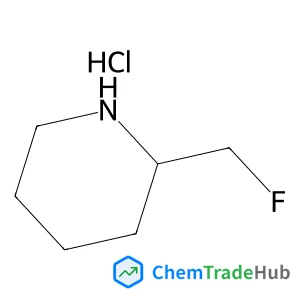
(2S)-2-(Fluoromethyl)piperidine hydrochloride (1:1)
CAS Number:
886216-73-5
Molecular Formula:
C6H13ClFN

N-(4-Chlorobenzyl)-beta-alanine hydrochloride (1:1)
CAS Number:
1172479-10-5
Molecular Formula:
C10H13Cl2NO2
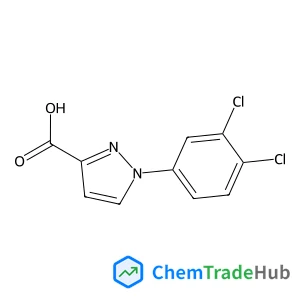
1-(3,4-Dichlorophenyl)-1H-pyrazole-3-carboxylic acid
CAS Number:
1152949-12-6
Molecular Formula:
C10H6Cl2N2O2
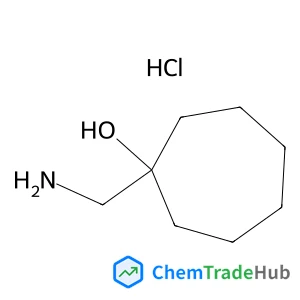
Recommended Suppliers





Disclaimer
This page provides academic journal information for reference and research purposes only. We are not affiliated with any journal publishers and do not handle publication submissions. For publication-related inquiries, please contact the respective journal publishers directly.
If you notice any inaccuracies in the information displayed, please contact us at support@chemtradehub.com. We will promptly review and address your concerns.