


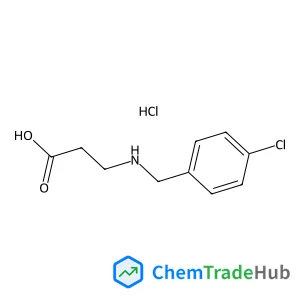
N-(4-Chlorobenzyl)-beta-alanine hydrochloride (1:1)
CAS Number:
1172479-10-5
Molecular Formula:
C10H13Cl2NO2
Yingge Du, Nathaniel A. Deskins, Zhenrong Zhang, Zdenek Dohnalek, Michel Dupuis, Igor Lyubinetsky
Scanning tunneling microscopy and density functional theory have been used to investigate the details of O2 dissociation leading to the formation of oxygen adatom (Oa) pairs at terminal Ti sites. An intermediate, metastable Oa–Oa configuration with two nearest-neighbor O atoms is observed after O2 dissociation at 300 K. The nearest-neighbor Oa pairs are destabilized by Coulomb repulsion of charged Oa's and separate further along the Ti row into energetically more favorable second-nearest neighbor configuration. The potential energy profile calculated for O2 dissociation on Ti rows and following Oa's separation strongly supports the experimental observations. Furthermore, our results suggest that the itinerant electrons associated with the O vacancies (VO) are being utilized in the O2 dissociation process at the Ti row. Experimentally this is supported by the observation that not all VO's can be healed by O2 exposure at 300 K, as some VO's becoming less reactive due to supplying certain charge to Oa's. Further, theoretical results show that at least two oxygen vacancies per O2 molecule are required in order for the O2 dissociation at the Ti row to become viable.

Cellulose

Herald of the Russian Academy of Sciences

Bioorganic & Medicinal Chemistry Letters

Acta Metallurgica Sinica-English Letters

Atomization and Sprays

Bioorganic & Medicinal Chemistry

Chinese Journal of Chemistry

Medicinal Chemistry Research

Journal of Asian Natural Products Research

Journal of the Indian Institute of Science
Mina Jafari, Paul M. Zimmerman
DOI: 10.1039/C8CP00044A
Lei Wang, Zhaoxiang Dai, Rulong Zhou
DOI: 10.1039/C8CP02569J
J. Milewski
DOI: 10.1039/C8CP02440E
Nirmali Prabha Das, Brigitta Müller, Ágota Tóth, Dezső Horváth, Gábor Schuszter
DOI: 10.1039/C8CP01798K
P. Polzin, I. V. Eliani, J. Ströh, M. Braun, N. Ruser, P. Rönfeldt, F. Bertram, C. Näther, S. Wöhlbrandt, M. Suta, H. Terraschke
DOI: 10.1039/C7CP07142F
Adam Orłowski, Lior Artzi, Pierre-Andre Cazade, Melissabye Gunnoo, Edward A. Bayer, Damien Thompson
DOI: 10.1039/C7CP07764E
Xuewen Zhang, Chunjun Liang, Mengjie Sun, Huimin Zhang, Chao Ji, Zebang Guo, Yajun Xu, Fulin Sun, Qi Song, Zhiqun He
DOI: 10.1039/C8CP00563J
DOI: 10.1039/C7CP06621J
Yun Kyung Shin, A. S. M. Jonayat, Wonho Lee, Clive A. Randall, Adri C. T. van Duin
DOI: 10.1039/C8CP03586E
Waste containing N-Methoxy-N-methyl-1,3-thiazole-5-carboxamide (CAS: 898825-89-3...
N-(4-Biphenylyl)dibenzo[b,d]furan-4-amine should be stored in a tightly sealed c...
The market for 3-Acetamido-5-amino-2,4,6-triiodobenzoic acid (CAS: 1713-07-1) is...
Benzyl 2-O-acetyl-3,4,6-tri-O-benzyl-beta-D-galactopyranoside (CAS: 61820-03-9) ...
2-Ethylpiperazine dihydrochloride (CAS: 438050-52-3) is regulated under the Glob...
1,1'-[1,3-Phenylenebis(methylene)]bis(3-methyl-1H-pyrrole-2,5-dione) (CAS: 11946...
Several alternatives can be used in the synthesis of 5-Fluoro-2-(1-pyrrolidinyl)...
Proper personal protective equipment (PPE) must be worn when handling this compo...
When handling 6-Bromoimidazo[1,2-a]pyridin-8-amine, it is important to wear appr...
Alternatives to (2S,4R)-4-(4-Nitrobenzyl)pyrrolidine-2-carboxylic acid hydrochlo...

Physical Chemistry Chemical Physics (PCCP) is an international journal co-owned by 19 physical chemistry and physics societies from around the world. This journal publishes original, cutting-edge research in physical chemistry, chemical physics and biophysical chemistry. To be suitable for publication in PCCP, articles must include significant innovation and/or insight into physical chemistry; this is the most important criterion that reviewers and Editors will judge against when evaluating submissions. The journal has a broad scope and welcomes contributions spanning experiment, theory, computation and data science. Topical coverage includes spectroscopy, dynamics, kinetics, statistical mechanics, thermodynamics, electrochemistry, catalysis, surface science, quantum mechanics, quantum computing and machine learning. Interdisciplinary research areas such as polymers and soft matter, materials, nanoscience, energy, surfaces/interfaces, and biophysical chemistry are welcomed if they demonstrate significant innovation and/or insight into physical chemistry. Joined experimental/theoretical studies are particularly appreciated when complementary and based on up-to-date approaches.
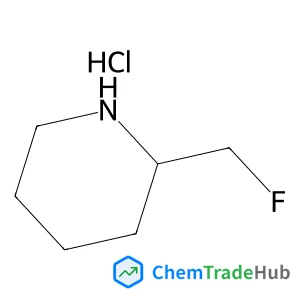
![tert-Butyl 6-chloro-4-oxospiro[chroman-2,4'-piperidine]-1'-carboxylate structure](https://static.chemtradehub.com/structs/101/1011482-37-3-88a5.webp "tert-Butyl 6-chloro-4-oxospiro[chroman-2,4'-piperidine]-1'-carboxylate structure")

![[(5-Methyl-1,3,4-thiadiazol-2-yl)sulfanyl]acetic acid structure](https://static.chemtradehub.com/structs/509/50918-26-8-4ce8.webp "[(5-Methyl-1,3,4-thiadiazol-2-yl)sulfanyl]acetic acid structure")





