



Selective adsorption and chiral amplification of amino acids in vermiculite clay-implications for the origin of biochirality
Literature Information
Publication Date
2010-10-28
DOI
10.1039/C0CP01388A
Impact Factor
3.676
Authors
Daniel Fitz, T. Jakschitz, Bernd M. Rode
View Original
Abstract
Smectite clays are hydrated layer silicates that, like micas, occur naturally in abundance. Importantly, they have readily modifiable interlayer spaces that provide excellent sites for nanochemistry. Vermiculite is one such smectite clay and in the presence of small chain-length alkyl-NH3Cl ions forms sensitive, 1-D ordered model clay systems with expandable nano-pore inter-layer regions. These inter-layers readily adsorb organic molecules. n-Propyl NH3Cl vermiculite clay gels were used to determine the adsorption of alanine, lysine and histidine by chiral HPLC. The results show that during reaction with fresh vermiculite interlayers, significant chiral enrichment of either L- and D-enantiomers occurs depending on the amino acid. Chiral enrichment of the supernatant solutions is up to about 1% per pass. In contrast, addition to clay interlayers already reacted with amino acid solutions resulted in little or no change in D/L ratio during the time of the experiment. Adsorption of small amounts of amphiphilic organic molecules in clay inter-layers is known to produce Layer-by-Layer or Langmuir–Blodgett films. Moreover atomistic simulations show that self-organization of organic species in clay interlayers is important. These non-centrosymmetric, chirally active nanofilms may cause clays to act subsequently as chiral amplifiers, concentrating organic material from dilute solution and having different adsorption energetics for D- and L-enantiomers. The additional role of clays in RNA oligomerization already postulated by Ferris and others, together with the need for the organization of amphiphilic molecules and lipids noted by Szostak and others, suggests that such chiral separation by clays in lagoonal environments at normal biological temperatures might also have played a significant role in the origin of biochirality.
Recommended Journals

Cellulose

Colloid Journal

Medicinal Chemistry Research

Biocatalysis and Biotransformation

Bioorganic & Medicinal Chemistry

Main Group Chemistry

Polycyclic Aromatic Compounds

Journal of Asian Natural Products Research

Critical Reviews in Solid State and Materials Sciences

Herald of the Russian Academy of Sciences
Related Literature
Spectroscopy and dynamics of dehydrobenzo[12]annulene derivatives possessing peripheral carboxyphenyl groups: theory and experiment
Eduardo Gomez, Mario Gutiérrez, Miquel Moreno, Ichiro Hisaki, Schoichi Nakagawa, Abderrazzak Douhal
2017-12-13
Paper
DOI: 10.1039/C7CP06819K
Macroscale precipitation kinetics: towards complex precipitate structure design
Nirmali Prabha Das, Brigitta Müller, Ágota Tóth, Dezső Horváth, Gábor Schuszter
2018-05-17
Paper
DOI: 10.1039/C8CP01798K
Clathrate ice sL: a new crystalline phase of ice with ultralow density predicted by first-principles phase diagram computations
Lars Ojamäe
2018-02-28
Paper
DOI: 10.1039/C8CP00699G
Chiral effects on the final step of an octahedron-shaped coordination capsule self-assembly
Y. Matsumura, S. Iuchi, S. Hiraoka
2018-01-25
Communication
DOI: 10.1039/C7CP08237A
B3@Si12+: strong stabilizing effects of a triatomic cyclic boron unit on tubular silicon clusters
Hung Tan Pham, Thi Tuyet Mai Dang, Long Van Duong
2018-02-19
Paper
DOI: 10.1039/C8CP00380G
Influence of interface inhomogeneity on the electrical transport mechanism of CdSe nanowire/Au Schottky junctions
Weifeng Jin, Xiaojing Mu, Kun Zhang, Zhengguo Shang
2018-07-19
Paper
DOI: 10.1039/C8CP02859A
Half-metallic and magnetic semiconducting behaviors of metal-doped blue phosphorus nanoribbons from first-principles calculations
Shun-Jin Peng, Kai-Ming Wu, Kai-Lun Yao, Chee-Leung Mak, Chi-Hang Lam
2018-02-13
Paper
DOI: 10.1039/C7CP08635K
Determination of an accurate size distribution of nanoparticles using particle tracking analysis corrected for the adverse effect of random Brownian motion
Yusuke Matsuura, Naoko Ouchi, Ayako Nakamura, Haruhisa Kato
2018-06-08
Paper
DOI: 10.1039/C7CP08332G
Effect of halogen dopants on the properties of Li2O2: is chloride special?
Henry A. Cortes
2018-05-08
Paper
DOI: 10.1039/C8CP01211C
Photoelectron shake-ups as a probe of molecular symmetry: 4d XPS analysis of I3− in solution
Jesper Norell, Gilbert Grell, Oliver Kühn, Michael Odelius, Sergey I. Bokarev
2018-07-10
Paper
DOI: 10.1039/C8CP02530D
You might also like
Compound Q&A
How should waste containing N-Methoxy-N-methyl-1,3-thiazole-5-carboxamide (CAS: 898825-89-3) be handled?
Waste containing N-Methoxy-N-methyl-1,3-thiazole-5-carboxamide (CAS: 898825-89-3...
898825-89-3N-Methoxy-N-methyl-1...
Compound Q&A
How should N-(4-Biphenylyl)dibenzo[b,d]furan-4-amine (CAS: 1318338-47-4) be stored?
N-(4-Biphenylyl)dibenzo[b,d]furan-4-amine should be stored in a tightly sealed c...
1318338-47-4N-(4-Biphenylyl)dibe...
Compound Q&A
What is the market or research trend for 3-Acetamido-5-amino-2,4,6-triiodobenzoic acid (CAS: 1713-07-1)?
The market for 3-Acetamido-5-amino-2,4,6-triiodobenzoic acid (CAS: 1713-07-1) is...
1713-07-13-Acetamido-5-amino-...
Compound Q&A
How should Benzyl 2-O-acetyl-3,4,6-tri-O-benzyl-beta-D-galactopyranoside (CAS: 61820-03-9) be stored?
Benzyl 2-O-acetyl-3,4,6-tri-O-benzyl-beta-D-galactopyranoside (CAS: 61820-03-9) ...
61820-03-9Benzyl 2-O-acetyl-3,...
Compound Q&A
What regulatory guidelines apply to 2-Ethylpiperazine dihydrochloride (CAS: 438050-52-3)?
2-Ethylpiperazine dihydrochloride (CAS: 438050-52-3) is regulated under the Glob...
438050-52-32-Ethylpiperazine di...
Compound Q&A
What regulatory guidelines apply to 1,1'-[1,3-Phenylenebis(methylene)]bis(3-methyl-1H-pyrrole-2,5-dione) (CAS: 119462-56-5)?
1,1'-[1,3-Phenylenebis(methylene)]bis(3-methyl-1H-pyrrole-2,5-dione) (CAS: 11946...
119462-56-51,1'-[1,3-Phenyleneb...
Compound Q&A
Are there alternatives to 5-Fluoro-2-(1-pyrrolidinyl)pyridine (CAS: 1287217-79-1) in synthesis?
Several alternatives can be used in the synthesis of 5-Fluoro-2-(1-pyrrolidinyl)...
1287217-79-15-Fluoro-2-(1-pyrrol...
Compound Q&A
What precautions should be taken when handling 1-((2R,3R,4R,5R)-5-((bis(4-methoxyphenyl)(phenyl)methoxy)methyl)-4-hydroxy-3-methoxytetrahydrofuran-2-yl)-5-methylpyrimidine-2,4(1H,3H)-dione (CAS: 153631-19-7)?
Proper personal protective equipment (PPE) must be worn when handling this compo...
153631-19-71-((2R,3R,4R,5R)-5-(...
Compound Q&A
What precautions should be taken when handling 6-Bromoimidazo[1,2-a]pyridin-8-amine (CAS: 676371-00-9)?
When handling 6-Bromoimidazo[1,2-a]pyridin-8-amine, it is important to wear appr...
676371-00-96-Bromoimidazo[1,2-a...
Compound Q&A
Are there alternatives to (2S,4R)-4-(4-Nitrobenzyl)pyrrolidine-2-carboxylic acid hydrochloride (CAS: 1049740-22-8) in synthesis?
Alternatives to (2S,4R)-4-(4-Nitrobenzyl)pyrrolidine-2-carboxylic acid hydrochlo...
1049740-22-8(2S,4R)-4-(4-Nitrobe...
Source Journal
Physical Chemistry Chemical Physics

CiteScore:
5.5
Self-citation Rate:
10.3%
Articles per Year:
3036
Physical Chemistry Chemical Physics (PCCP) is an international journal co-owned by 19 physical chemistry and physics societies from around the world. This journal publishes original, cutting-edge research in physical chemistry, chemical physics and biophysical chemistry. To be suitable for publication in PCCP, articles must include significant innovation and/or insight into physical chemistry; this is the most important criterion that reviewers and Editors will judge against when evaluating submissions. The journal has a broad scope and welcomes contributions spanning experiment, theory, computation and data science. Topical coverage includes spectroscopy, dynamics, kinetics, statistical mechanics, thermodynamics, electrochemistry, catalysis, surface science, quantum mechanics, quantum computing and machine learning. Interdisciplinary research areas such as polymers and soft matter, materials, nanoscience, energy, surfaces/interfaces, and biophysical chemistry are welcomed if they demonstrate significant innovation and/or insight into physical chemistry. Joined experimental/theoretical studies are particularly appreciated when complementary and based on up-to-date approaches.
Recommended Compounds

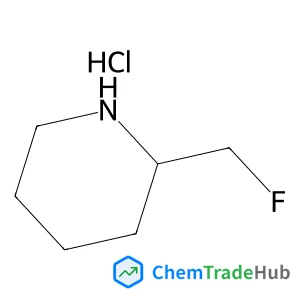
(2S)-2-(Fluoromethyl)piperidine hydrochloride (1:1)
CAS Number:
886216-73-5
Molecular Formula:
C6H13ClFN

![tert-Butyl 6-chloro-4-oxospiro[chroman-2,4'-piperidine]-1'-carboxylate structure](https://static.chemtradehub.com/structs/101/1011482-37-3-88a5.webp "tert-Butyl 6-chloro-4-oxospiro[chroman-2,4'-piperidine]-1'-carboxylate structure")
tert-Butyl 6-chloro-4-oxospiro[chroman-2,4'-piperidine]-1'-carboxylate
CAS Number:
1011482-37-3
Molecular Formula:
C18H22ClNO4
Recommended Suppliers




Disclaimer
This page provides academic journal information for reference and research purposes only. We are not affiliated with any journal publishers and do not handle publication submissions. For publication-related inquiries, please contact the respective journal publishers directly.
If you notice any inaccuracies in the information displayed, please contact us at support@chemtradehub.com. We will promptly review and address your concerns.