












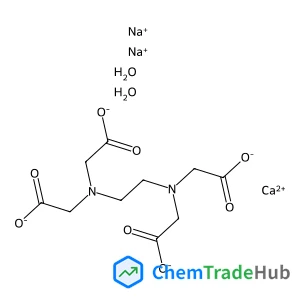
EthylenediaminetetraaceticacidcalciumDisodiumsalthydrate
CAS Number:
23411-34-9
Molecular Formula:
C10H16CaN2Na2O10
M. A. López-Quintela
A new homogeneous assay for a fast, selective and sensitive detection and elimination of lead ions has been developed using copper clusters as novel fluorescent probes in aqueous solutions. At the same time, their elimination is achieved using the efficient photocatalytic activity of such clusters. Both effects are explained in terms of an efficient electron transfer due to the LUMO energy of the cluster overlapping with the ion redox potential. The mechanism, which allows the explanation of previously reported results for different types of metal clusters, is further confirmed using smaller and larger Cu clusters displaying non-selective and non-quenching luminescence in the presence of different cations.
Changwei Wang, Yama Aman, Xiaoxi Ji, Yirong Mo
DOI: 10.1039/C9CP01710K
Yifan Zhao, Yin Lian, Huifeng Tan
DOI: 10.1039/C8CP07787H
J. Halter, T. Gloor, B. Amoroso, F. N. Büchi
DOI: 10.1039/C9CP02149C
Bo Yang, Maodong Li, Jiye Wang, Jingchao Zhang, Dongmei Liao, Yanan Yue
DOI: 10.1039/C9CP01605H
Lidong Zhang, Zheng-Jiang Shao, Xiao-Ming Cao
DOI: 10.1039/C9CP01795J
DOI: 10.1039/C9CP01850F
Yasukazu Hirao, Yosuke Hamamoto, Nobuhiro Nagamachi, Takashi Kubo
DOI: 10.1039/C9CP01836K
Shaoxian Zheng, Jibin Pu, Junhui Sun, Liang-Feng Huang, Liping Wang, Qunji Xue
DOI: 10.1039/C8CP07533F
1H-Indazole-6-carbonitrile finds applications in pharmaceuticals, where it serve...
Waste containing Dioctyl (2E)-2-butenedioate (CAS: 2997-85-5) should be collecte...
Sodium [(1,2-benzoxazol-3-ylmethyl)sulfonyl]azanide is primarily used in pharmac...
Dimethyl 4-(4,4,5,5-tetramethyl-1,3,2-dioxaborolan-2-yl)-2,6-pyridinedicarboxyla...
Waste containing 2-Fluoro-6-hydrazinopyridine (CAS: 80714-39-2) should be manage...
6-Formyl-2-pyridinecarboxylic acid is an organic compound with the molecular for...
Research trends for this compound indicate a focus on its potential applications...
9H-Tribenzo[b,d,f]azepine is typically synthesized via a multi-step process invo...
1-Cyclopropyl-7-ethoxy-6-fluoro-8-methoxy-4-oxo-1,4-dihydro-3-quinolinecarboxyli...
Waste containing Methyl 3-oxo-1,2,3,4-tetrahydro-6-quinoxalinecarboxylate (CAS: ...

Physical Chemistry Chemical Physics (PCCP) is an international journal co-owned by 19 physical chemistry and physics societies from around the world. This journal publishes original, cutting-edge research in physical chemistry, chemical physics and biophysical chemistry. To be suitable for publication in PCCP, articles must include significant innovation and/or insight into physical chemistry; this is the most important criterion that reviewers and Editors will judge against when evaluating submissions. The journal has a broad scope and welcomes contributions spanning experiment, theory, computation and data science. Topical coverage includes spectroscopy, dynamics, kinetics, statistical mechanics, thermodynamics, electrochemistry, catalysis, surface science, quantum mechanics, quantum computing and machine learning. Interdisciplinary research areas such as polymers and soft matter, materials, nanoscience, energy, surfaces/interfaces, and biophysical chemistry are welcomed if they demonstrate significant innovation and/or insight into physical chemistry. Joined experimental/theoretical studies are particularly appreciated when complementary and based on up-to-date approaches.

![(1S)-1,5-Anhydro-1-[3-(1-benzothiophen-2-ylmethyl)-4-fluorophenyl]-D-glucitol structure](https://static.chemtradehub.com/structs/761/761423-87-4-dbeb.webp "(1S)-1,5-Anhydro-1-[3-(1-benzothiophen-2-ylmethyl)-4-fluorophenyl]-D-glucitol structure")





