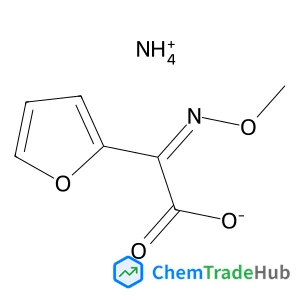
Ammonium (Z)-2-(furan-2-yl)-2-(methoxyimino)acetate
CAS Number:
97148-39-5
Molecular Formula:
C7H10N2O4
Changwei Wang, Yama Aman, Xiaoxi Ji, Yirong Mo
In this study, fifty-one iconic tetrel bonding complexes were studied using the block localized wave function (BLW) method which can derive the self-consistent wavefunction for an electron-localized (diabatic) state where charge transfer is strictly deactivated. Energy decompositions based on the BLW method (BLW-ED in short) show that the frozen energy, which is mostly composed of the Pauli repulsion and electrostatic components, plays the dominating role in thirty-one out of these fifty-one systems. A further quantitative study of electrostatic potential (ESP) was carried out by analyzing the variation of ESP along the binding direction for each monomer. In general, a Lewis base with the stronger ESP leads to higher stabilizing frozen and polarization energies. In addition, the relative strengths for complexes constructed with different carbon group elements are also examined qualitatively using the ESP model. The positive contribution of the charge transfer interaction is confirmed by both the BLW-ED results and the weakening of bond strengths after the charge transfer interaction is disabled. Finally, by replacing all atoms of a monomer with σ-holes (Lewis acid) with empirical point charges, attractive electrostatic interaction was observed in all cases, providing us a simple electrostatic explanation for the tetrel bonding, though the anisotropy of electron density associated with the σ-holes is unconsidered.
Modan Liu, Wolfgang Wenzel
DOI: 10.1039/D0PY01062F
Haobo Yuan, Ryo Tanaka, Yuushou Nakayama, Takeshi Shiono
DOI: 10.1039/D0PY01180K
Subaru Konishi, Yu Kashiwagi, Go Watanabe, Takuya Katashima, Osamu Urakawa, Akira Harada
DOI: 10.1039/D0PY01347A
William D. Walker, Michael J. Sandoz, Samuel Roland, Tony M. Buster, John K. Newman, Derek L. Patton
DOI: 10.1039/D0PY01006E
Julie Meimoun, Yann Bernhard, Lydie Pelinski, Till Bousquet, Sylvain Pellegrini, Jean-Marie Raquez, Julien De Winter, Pascal Gerbaux, Frédéric Cazaux, Jean-François Tahon, Valérie Gaucher, Thomas Chenal, Audrey Favrelle-Huret, Philippe Zinck
DOI: 10.1039/D0PY01301C
Enjie He, Kai Tu, Jiannan Cheng, Huanjun Lu, Lifen Zhang, Zhenping Cheng, Xiulin Zhu
DOI: 10.1039/D0PY01644F
Abhishek U. Shete, Bryan P. Sutherland
DOI: 10.1039/D0PY01310B
1H-Indazole-6-carbonitrile finds applications in pharmaceuticals, where it serve...
Waste containing Dioctyl (2E)-2-butenedioate (CAS: 2997-85-5) should be collecte...
Sodium [(1,2-benzoxazol-3-ylmethyl)sulfonyl]azanide is primarily used in pharmac...
Dimethyl 4-(4,4,5,5-tetramethyl-1,3,2-dioxaborolan-2-yl)-2,6-pyridinedicarboxyla...
Waste containing 2-Fluoro-6-hydrazinopyridine (CAS: 80714-39-2) should be manage...
6-Formyl-2-pyridinecarboxylic acid is an organic compound with the molecular for...
Research trends for this compound indicate a focus on its potential applications...
9H-Tribenzo[b,d,f]azepine is typically synthesized via a multi-step process invo...
1-Cyclopropyl-7-ethoxy-6-fluoro-8-methoxy-4-oxo-1,4-dihydro-3-quinolinecarboxyli...
Waste containing Methyl 3-oxo-1,2,3,4-tetrahydro-6-quinoxalinecarboxylate (CAS: ...

Physical Chemistry Chemical Physics (PCCP) is an international journal co-owned by 19 physical chemistry and physics societies from around the world. This journal publishes original, cutting-edge research in physical chemistry, chemical physics and biophysical chemistry. To be suitable for publication in PCCP, articles must include significant innovation and/or insight into physical chemistry; this is the most important criterion that reviewers and Editors will judge against when evaluating submissions. The journal has a broad scope and welcomes contributions spanning experiment, theory, computation and data science. Topical coverage includes spectroscopy, dynamics, kinetics, statistical mechanics, thermodynamics, electrochemistry, catalysis, surface science, quantum mechanics, quantum computing and machine learning. Interdisciplinary research areas such as polymers and soft matter, materials, nanoscience, energy, surfaces/interfaces, and biophysical chemistry are welcomed if they demonstrate significant innovation and/or insight into physical chemistry. Joined experimental/theoretical studies are particularly appreciated when complementary and based on up-to-date approaches.