












Uniaxial deformation of nanorod filled polymer nanocomposites: a coarse-grained molecular dynamics simulation
Literature Information
Publication Date
2014-06-09
DOI
10.1039/C4CP01555J
Impact Factor
3.676
Authors
Jianxiang Shen, Zhanhu Guo, Dapeng Cao
View Original
Abstract
A coarse-grained molecular dynamics simulation was used to investigate the stress–strain behavior of nanorod-filled polymer composites. The effects of the interfacial interaction, aspect ratio of fillers, filler functionalization, chemical couplings between the polymer and the filler and the filler loading on the mechanical reinforcement were explored. The results indicate that there exists an optimal nanorod volume fraction for elastomer reinforcement. The strong polymer–nanorod interaction enhances the reinforcement of polymer nanocomposites. Meanwhile, it is found that nanorods with longer length and smaller diameter, and the chemical functionalization of nanorods can help realize the efficient interfacial stress transfer. And excessive chemical couplings between polymers and nanorods are harmful to mechanical properties. An upturn in the modulus at large deformation is observed in the Mooney–Rivlin plot, attributed to the limited chain extensibility. Particularly, the medium polymer–nanorod interfacial strength and low nanorod volume loading will lead to better dispersion of nanorods. It is suggested that the reinforcement mechanism comes from the nanorod alignment and bond orientation, as well as from the limited extensibility of chain bridges at large deformation. In addition, an optimal nanorod volume fraction can also be explained by the strong polymer–nanorod network. Compared to glassy systems, the mechanism for the significantly enhanced reinforcement of rubbery systems is also demonstrated. In short, our simulation study of nanorod-induced mechanical reinforcement will provide a basic understanding of polymer reinforcement.
Related Literature
A novel fluorometric assay for trypsin on the basis of a gemini anionic surfactant/BSA/NR supramolecular assembly system with favorable salt resistance
Lan Jia, Yufang Yang, Xiang Liu, Song Chen, Jingxin Zhu
2019-08-22
Paper
DOI: 10.1039/C9AY01345H
Molecular brass: Cu4Zn4, a ligand protected superatom cluster
Kerstin Freitag, Hung Banh, Christian Gemel, Rüdiger W. Seidel, Samia Kahlal, Jean-Yves Saillard, Roland A. Fischer
2014-06-19
Communication
DOI: 10.1039/C4CC03401E
A ternary system for delayed curing inverse vulcanisation
Bowen Zhang, Samuel Petcher, Tom Hasell
2019-08-14
Communication
DOI: 10.1039/C9CC04380B
Multidimensional scaling assisted Fourier-transform infrared spectroscopic analysis of fruit wine samples: introducing a novel analytical approach
Keshav Kumar, Anja Giehl, Ralf Schweiggert, Claus-Dieter Patz
2019-07-25
Paper
DOI: 10.1039/C9AY01425J
A strategy for rapid identification of healthy Tegillarca granosa from among those contaminated with unspecified heavy metals using infrared spectroscopy
Xi Chen, Leiming Yuan, Xiaojing Chen, Yijian Shi, Dehua Zhu
2017-06-30
Paper
DOI: 10.1039/C7AY00912G
A dissolvable hierarchical layered double hydroxide templated from porous zeolitic imidazolate framework-67 for dispersive solid phase extraction of bisphenol A
Milad Ghani
2019-07-31
Paper
DOI: 10.1039/C9AY01208G
Salting-out-assisted liquid–liquid extraction of 5-hydroxymethylfurfural from honey and the determination of 5-hydroxymethylfurfural by high-performance liquid chromatography
Wenbin Chen, Siyuan Wu, Jianing Zhang, Fengjie Yu, Xijuan Tu
2019-09-03
Paper
DOI: 10.1039/C9AY01770D
Facile assembly of bifunctional, magnetically retrievable mesoporous silica for enantioselective cascade reactions
Zhongrui Zhao, Fengwei Chang, Tao Wang, Lijian Wang, Lingbo Zhao, Cheng Peng, Guohua Liu
2019-10-12
Communication
DOI: 10.1039/C9CC07123G
You might also like
Compound Q&A
What are the main uses of 1H-Indazole-6-carbonitrile (CAS: 141290-59-7)?
1H-Indazole-6-carbonitrile finds applications in pharmaceuticals, where it serve...
141290-59-71H-Indazole-6-carbon...
Compound Q&A
How should waste containing Dioctyl (2E)-2-butenedioate (CAS: 2997-85-5) be handled?
Waste containing Dioctyl (2E)-2-butenedioate (CAS: 2997-85-5) should be collecte...
2997-85-5Dioctyl (2E)-2-buten...
Compound Q&A
What industries use Sodium [(1,2-benzoxazol-3-ylmethyl)sulfonyl]azanide (CAS: 68291-98-5)?
Sodium [(1,2-benzoxazol-3-ylmethyl)sulfonyl]azanide is primarily used in pharmac...
68291-98-5Sodium [(1,2-benzoxa...
Compound Q&A
Are there alternatives to Dimethyl 4-(4,4,5,5-tetramethyl-1,3,2-dioxaborolan-2-yl)-2,6-pyridinedicarboxylate (CAS: 741709-66-0) in synthesis?
Dimethyl 4-(4,4,5,5-tetramethyl-1,3,2-dioxaborolan-2-yl)-2,6-pyridinedicarboxyla...
741709-66-0Dimethyl 4-(4,4,5,5-...
Compound Q&A
How should waste containing 2-Fluoro-6-hydrazinopyridine (CAS: 80714-39-2) be handled?
Waste containing 2-Fluoro-6-hydrazinopyridine (CAS: 80714-39-2) should be manage...
80714-39-22-Fluoro-6-hydrazino...
Compound Q&A
What is 6-Formyl-2-pyridinecarboxylic acid (CAS: 499214-11-8)?
6-Formyl-2-pyridinecarboxylic acid is an organic compound with the molecular for...
499214-11-86-Formyl-2-pyridinec...
Compound Q&A
What is the market or research trend for 3-(3,4-dimethoxyphenyl)-2,5-dimethyl-N-(2-morpholin-4-ylethyl)pyrazolo[1,5-a]pyrimidin-7-amine (CAS: 900874-91-1)?
Research trends for this compound indicate a focus on its potential applications...
900874-91-13-(3,4-dimethoxyphen...
Compound Q&A
How is 9H-Tribenzo[b,d,f]azepine (CAS: 29875-73-8) typically synthesized?
9H-Tribenzo[b,d,f]azepine is typically synthesized via a multi-step process invo...
29875-73-89H-Tribenzo[b,d,f]az...
Compound Q&A
How is 1-Cyclopropyl-7-ethoxy-6-fluoro-8-methoxy-4-oxo-1,4-dihydro-3-quinolinecarboxylic acid (CAS: 1797982-51-4) typically synthesized?
1-Cyclopropyl-7-ethoxy-6-fluoro-8-methoxy-4-oxo-1,4-dihydro-3-quinolinecarboxyli...
1797982-51-41-Cyclopropyl-7-etho...
Compound Q&A
How should waste containing Methyl 3-oxo-1,2,3,4-tetrahydro-6-quinoxalinecarboxylate (CAS: 671820-52-3) be handled?
Waste containing Methyl 3-oxo-1,2,3,4-tetrahydro-6-quinoxalinecarboxylate (CAS: ...
671820-52-3Methyl 3-oxo-1,2,3,4...
Source Journal
Physical Chemistry Chemical Physics

CiteScore:
5.5
Self-citation Rate:
10.3%
Articles per Year:
3036
Physical Chemistry Chemical Physics (PCCP) is an international journal co-owned by 19 physical chemistry and physics societies from around the world. This journal publishes original, cutting-edge research in physical chemistry, chemical physics and biophysical chemistry. To be suitable for publication in PCCP, articles must include significant innovation and/or insight into physical chemistry; this is the most important criterion that reviewers and Editors will judge against when evaluating submissions. The journal has a broad scope and welcomes contributions spanning experiment, theory, computation and data science. Topical coverage includes spectroscopy, dynamics, kinetics, statistical mechanics, thermodynamics, electrochemistry, catalysis, surface science, quantum mechanics, quantum computing and machine learning. Interdisciplinary research areas such as polymers and soft matter, materials, nanoscience, energy, surfaces/interfaces, and biophysical chemistry are welcomed if they demonstrate significant innovation and/or insight into physical chemistry. Joined experimental/theoretical studies are particularly appreciated when complementary and based on up-to-date approaches.
Recommended Compounds

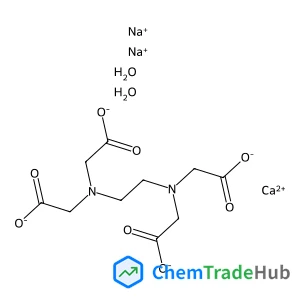
EthylenediaminetetraaceticacidcalciumDisodiumsalthydrate
CAS Number:
23411-34-9
Molecular Formula:
C10H16CaN2Na2O10
![N-[(9H-Fluoren-9-ylmethoxy)carbonyl]serine structure](https://static.chemtradehub.com/structs/737/73724-45-5-b0dc.webp "N-[(9H-Fluoren-9-ylmethoxy)carbonyl]serine structure")
Recommended Suppliers





Disclaimer
This page provides academic journal information for reference and research purposes only. We are not affiliated with any journal publishers and do not handle publication submissions. For publication-related inquiries, please contact the respective journal publishers directly.
If you notice any inaccuracies in the information displayed, please contact us at support@chemtradehub.com. We will promptly review and address your concerns.