












A dissolvable hierarchical layered double hydroxide templated from porous zeolitic imidazolate framework-67 for dispersive solid phase extraction of bisphenol A
Literature Information
Publication Date
2019-07-31
DOI
10.1039/C9AY01208G
Impact Factor
2.896
Authors
Milad Ghani
View Original
Abstract
This is the first time that the in situ preparation of advanced extraction media based on a hierarchical layered double hydroxide (HLDH) has been reported in a study. The sorbent was obtained through surfactant-assisted self-assembly of Co(II)/imidazolate (ZIF-67), followed by in situ conversion of the ZIF-67 into the final HLDH sorbent. The obtained Ni–Co LDH was used for dispersive solid-phase extraction (DSPE) of bisphenol A (BPA) as a model compound from different water samples and a PC baby bottle sample. After the extraction process, elution was accomplished by dissolving the HLDH containing the extracted analytes by changing the solution pH. The applied method didn't use any organic solvents for the extraction and desorption steps and eliminated the problems related to the memory effect of the sorbent in the DSPE method. The extracted analyte was then quantified using high-performance liquid chromatography (HPLC). An optimization strategy based on response surface methodology (RSM) was combined with chromatography analysis. Plackett–Burman design was utilized to screen the experimental factors. The effective factors were then optimized using Central Composite Design (CCD). Under optimum conditions, the linearity range of the method was 0.5–200 μg L−1. Relative standard deviations (RSDs) were between 4.3% and 5.2%, respectively. The limit of detection (LOD) and limit of quantification (LOQ) were 0.12 μg L−1 and 0.4 μg L−1, respectively. Relative recoveries higher than 92% were achieved in analysis of different environmental water samples.
Related Literature
Theoretical study of the hydrogen abstraction reactions for CH3R + Cl → CH2R + HCl (R = Cl and Br)
Jing-Fa Xiao, Ze-Sheng Li, Yi-Hong Ding, Jing-Yao Liu, Xu-Ri Huang, Chia-Chung Sun
2001-08-29
Paper
DOI: 10.1039/B104667P
Thermochemical aspects of the rotational dynamics of the ammonium ion in an environment of water molecules
David A. Johnson
2000-06-05
Paper
DOI: 10.1039/B002569K
Cooperative effect of carbamoylmethylene phosphine oxide on the extraction of lanthanides(III) to water-in-oil microemulsion from concentrated nitric acid medium
Hirochika Naganawa, Hideya Suzuki, Shoichi Tachimori
2000-06-27
Paper
DOI: 10.1039/B001710H
Active site and mechanism of the selective catalytic reduction of NO by NH3 over V2O5: A periodic first-principles study
Xilin Yin, Huanmei Han, Akira Miyamoto
2000-08-15
Paper
DOI: 10.1039/B003838P
Dimers of the major components of the atmosphere: Realistic potential energy surfaces and quantum mechanical prediction of spectral features
2001-08-30
Communication
DOI: 10.1039/B106672M
Quenching methods for chemical reaction dynamics within mixed quantum/classical approximation
2000-06-19
Paper
DOI: 10.1039/B002326O
FTIR study of the photo-induced reaction of NO + CO on Rh/TiO2
2001-09-03
Paper
DOI: 10.1039/B103627K
You might also like
Compound Q&A
What are the main uses of 1H-Indazole-6-carbonitrile (CAS: 141290-59-7)?
1H-Indazole-6-carbonitrile finds applications in pharmaceuticals, where it serve...
141290-59-71H-Indazole-6-carbon...
Compound Q&A
How should waste containing Dioctyl (2E)-2-butenedioate (CAS: 2997-85-5) be handled?
Waste containing Dioctyl (2E)-2-butenedioate (CAS: 2997-85-5) should be collecte...
2997-85-5Dioctyl (2E)-2-buten...
Compound Q&A
What industries use Sodium [(1,2-benzoxazol-3-ylmethyl)sulfonyl]azanide (CAS: 68291-98-5)?
Sodium [(1,2-benzoxazol-3-ylmethyl)sulfonyl]azanide is primarily used in pharmac...
68291-98-5Sodium [(1,2-benzoxa...
Compound Q&A
Are there alternatives to Dimethyl 4-(4,4,5,5-tetramethyl-1,3,2-dioxaborolan-2-yl)-2,6-pyridinedicarboxylate (CAS: 741709-66-0) in synthesis?
Dimethyl 4-(4,4,5,5-tetramethyl-1,3,2-dioxaborolan-2-yl)-2,6-pyridinedicarboxyla...
741709-66-0Dimethyl 4-(4,4,5,5-...
Compound Q&A
How should waste containing 2-Fluoro-6-hydrazinopyridine (CAS: 80714-39-2) be handled?
Waste containing 2-Fluoro-6-hydrazinopyridine (CAS: 80714-39-2) should be manage...
80714-39-22-Fluoro-6-hydrazino...
Compound Q&A
What is 6-Formyl-2-pyridinecarboxylic acid (CAS: 499214-11-8)?
6-Formyl-2-pyridinecarboxylic acid is an organic compound with the molecular for...
499214-11-86-Formyl-2-pyridinec...
Compound Q&A
What is the market or research trend for 3-(3,4-dimethoxyphenyl)-2,5-dimethyl-N-(2-morpholin-4-ylethyl)pyrazolo[1,5-a]pyrimidin-7-amine (CAS: 900874-91-1)?
Research trends for this compound indicate a focus on its potential applications...
900874-91-13-(3,4-dimethoxyphen...
Compound Q&A
How is 9H-Tribenzo[b,d,f]azepine (CAS: 29875-73-8) typically synthesized?
9H-Tribenzo[b,d,f]azepine is typically synthesized via a multi-step process invo...
29875-73-89H-Tribenzo[b,d,f]az...
Compound Q&A
How is 1-Cyclopropyl-7-ethoxy-6-fluoro-8-methoxy-4-oxo-1,4-dihydro-3-quinolinecarboxylic acid (CAS: 1797982-51-4) typically synthesized?
1-Cyclopropyl-7-ethoxy-6-fluoro-8-methoxy-4-oxo-1,4-dihydro-3-quinolinecarboxyli...
1797982-51-41-Cyclopropyl-7-etho...
Compound Q&A
How should waste containing Methyl 3-oxo-1,2,3,4-tetrahydro-6-quinoxalinecarboxylate (CAS: 671820-52-3) be handled?
Waste containing Methyl 3-oxo-1,2,3,4-tetrahydro-6-quinoxalinecarboxylate (CAS: ...
671820-52-3Methyl 3-oxo-1,2,3,4...
Source Journal
Analytical Methods

CiteScore:
5.1
Self-citation Rate:
3.7%
Articles per Year:
655
Analytical Methods welcomes early applications of new analytical and bioanalytical methods and technology demonstrating the potential for societal impact. We require that methods and technology reported in the journal are sufficiently innovative, robust, accurate, and compared to other available methods for the intended application. Developments with interdisciplinary approaches are particularly welcome. Systems should be proven with suitably complex and analytically challenging samples. We encourage developments within, but not limited to, the following technologies and applications: global health, point-of-care and molecular diagnostics biosensors and bioengineering drug development and pharmaceutical analysis applied microfluidics and nanotechnology omics studies, such as proteomics, metabolomics or glycomics environmental, agricultural and food science neuroscience biochemical and clinical analysis forensic analysis industrial process and method development
Recommended Compounds

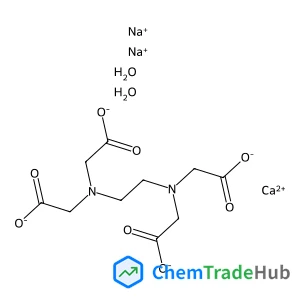
EthylenediaminetetraaceticacidcalciumDisodiumsalthydrate
CAS Number:
23411-34-9
Molecular Formula:
C10H16CaN2Na2O10

Recommended Suppliers







Disclaimer
This page provides academic journal information for reference and research purposes only. We are not affiliated with any journal publishers and do not handle publication submissions. For publication-related inquiries, please contact the respective journal publishers directly.
If you notice any inaccuracies in the information displayed, please contact us at support@chemtradehub.com. We will promptly review and address your concerns.