


Fluorescence response of a dipolar organic solute in a dicationic ionic liquid (IL): is the behavior of dicationic IL different from that of usual monocationic IL?
Literature Information
Publication Date
2014-04-11
DOI
10.1039/C4CP01053A
Impact Factor
3.676
Authors
Prabhat Kumar Sahu, Sudhir Kumar Das, Moloy Sarkar
View Original
Abstract
The solvation and rotational relaxation dynamics of coumarin 153 have been investigated in a dicationic ionic liquid (IL), 1,6-bis-(3-methylimidazolium-1-yl)hexane bis-(trifluoromethylsulfonyl)amide ([C6(MIm)2][NTf2]2), for the first time to provide a comprehensive and a quantitative understanding of the nature of the ionic fluid and its influence on the average solvation and rotational relaxation time. On several occasions, the photophysical data obtained in the present dicationic IL have also been compared with the monocationic imidazolium-based ionic liquid so as to find out the difference between their behaviors. The dicationic ionic liquid has been synthesized via a two step process and subsequently characterized by conventional spectroscopic methods. Steady state absorption and fluorescence measurements reveal that the polarity of the ionic liquid is close to that of dichloromethane. Steady state excitation wavelength dependent fluorescence measurement indicates the micro-heterogeneous nature of the ionic liquid. However, the steady state excitation wavelength dependent fluorescence response is found to be similar for both the dicationic and a structurally similar monocationic ionic liquid. In the time-resolved fluorescence studies, contrary to the monocationic imidazolium-based ionic liquid, no missing ultra-fast component of solvation has been observed in the present dicationic IL. Excitation wavelength dependence of the average solvation and rotation times also indicates the micro-heterogeneous nature of these media. When viscosity dependence (η) of the measured average solvation 〈τs〉 and rotation 〈τr〉 times are verified by the relation: 〈τx〉 ∝ (η/T)p (where ‘x’ is solvation or rotation, p is the exponent and T is the temperature), the fractional dependence of both average solvation and rotational times with the medium viscosity have been observed. The recent findings (J. Chem. Phys., 2012, 136, 174503; Chem. Phys. Lett., 2011, 517, 180; ChemPhysChem, 2012, 13, 2761) and the outcome of the present study suggest that the observed viscosity–diffusion (η–D) decoupling for the present dicationic ionic liquid is due to the dynamic heterogeneity of the medium.
Recommended Journals

Current Pharmaceutical Biotechnology

Contact Lens & Anterior Eye

Photochemical & Photobiological Sciences

Nature Reviews Drug Discovery

Faraday Discussions

Environmental Toxicology and Pharmacology

Coloration Technology

Journal of Medical Biochemistry

Molecular Diversity

Angewandte Chemie International Edition
Related Literature
Time-resolved spectroscopy of the ensembled photoluminescence of nitrogen- and boron/nitrogen-doped carbon dots
Sunghu Kim, Byung-Kuk Yoo, Yuri Choi, Oh-Hoon Kwon
2018-04-11
Paper
DOI: 10.1039/C8CP01619D
Effects of crystal structure and composition on the photocatalytic performance of Ta–O–N functional materials
Qing-Lu Liu, Zong-Yan Zhao, Jian-Hong Yi
2018-03-27
Paper
DOI: 10.1039/C8CP00432C
An Sn-induced resonant level in β-As2Te3
Bartlomiej Wiendlocha, Jean-Baptiste Vaney, Christophe Candolfi, Anne Dauscher, Bertrand Lenoir, Janusz Tobola
2018-04-27
Paper
DOI: 10.1039/C8CP00431E
Dissociative electron attachment and electronic excitation in Fe(CO)5
M. Allan, M. Lacko, P. Papp, Š. Matejčík, M. Zlatar, I. I. Fabrikant, J. Kočišek, J. Fedor
2018-04-03
Paper
DOI: 10.1039/C8CP01387J
Dependence of hot electron transfer on surface coverage and adsorbate species at semiconductor–molecule interfaces
Lesheng Li, Yosuke Kanai
2018-04-12
Paper
DOI: 10.1039/C7CP07247C
Optimal control of orientation and entanglement for two dipole–dipole coupled quantum planar rotors
Tak-San Ho, Herschel Rabitz
2018-04-23
Paper
DOI: 10.1039/C8CP00231B
QM/MM studies on the excited-state relaxation mechanism of a semisynthetic dTPT3 base
Wei-Wei Guo, Teng-Shuo Zhang, Wei-Hai Fang, Ganglong Cui
2018-01-15
Paper
DOI: 10.1039/C7CP08696B
You might also like
Compound Q&A
What are the main uses of 1-(3-Aminophenyl)-3-[(3R)-1-(3,3-dimethyl-2-oxobutyl)-2-oxo-5-(2-pyridinyl)-2,3-dihydro-1H-1,4-benzodiazepin-3-yl]urea (CAS: 155412-88-7)?
This compound is mainly used as an intermediate in the synthesis of antipsychoti...
155412-88-71-(3-Aminophenyl)-3-...
Compound Q&A
How should waste containing 1-(D-Ribofuranosyl)-1,4-dihydro-3-pyridinecarboxamide (CAS: 19132-12-8) be handled?
Waste containing 1-(D-Ribofuranosyl)-1,4-dihydro-3-pyridinecarboxamide (CAS: 191...
19132-12-81-(D-Ribofuranosyl)-...
Compound Q&A
What regulatory guidelines apply to 2-Methyl-2-propanyl 3-bromo-3-(hydroxymethyl)-1-azetidinecarboxylate (CAS: 2007919-81-3)?
2-Methyl-2-propanyl 3-bromo-3-(hydroxymethyl)-1-azetidinecarboxylate (CAS: 20079...
2007919-81-32-Methyl-2-propanyl ...
Compound Q&A
What is N-(4-Chloro-2-pyridinyl)acetamide (CAS: 245056-66-0)?
N-(4-Chloro-2-pyridinyl)acetamide (CAS: 245056-66-0) is a chemical compound with...
245056-66-0N-(4-Chloro-2-pyridi...
Compound Q&A
What is 5-Chloro-2-hydroxybenzoic acid (CAS: 321-14-2)?
5-Chloro-2-hydroxybenzoic acid, also known as 5-chlorosalicylic acid, is an arom...
321-14-25-Chloro-2-hydroxybe...
Compound Q&A
What precautions should be taken when handling 1,1-Dichloro-1-fluoroethane (CAS: 1717-00-6)?
When handling 1,1-Dichloro-1-fluoroethane (CAS: 1717-00-6), it is important to u...
1717-00-61,1-Dichloro-1-fluor...
Compound Q&A
What are the physical and chemical properties of Fmoc-(2S,3R)-3-phenylpyrrolidine-2-carboxylic acid (CAS: 281655-32-1)?
Fmoc-(2S,3R)-3-phenylpyrrolidine-2-carboxylic acid is a white crystalline solid ...
281655-32-1Fmoc-(2S,3R)-3-pheny...
Compound Q&A
What are the main uses of 4-Amino-5-bromo-2-pyridinecarboxylic acid (CAS: 1363381-01-4)?
4-Amino-5-bromo-2-pyridinecarboxylic acid is primarily used as a precursor in th...
1363381-01-44-Amino-5-bromo-2-py...
Compound Q&A
What precautions should be taken when handling (S)-tert-butyl 2-((2-(4-bromophenyl)-2-oxoethyl)carbamoyl)pyrrolidine-1-carboxylate (CAS: 1007881-98-2)?
Handling this compound should be done with personal protective equipment (PPE) i...
1007881-98-2(S)-tert-butyl 2-((2...
Compound Q&A
What precautions should be taken when handling 8-bromo-2,2-dimethyl-3,4-dihydro-2H-1,4-benzoxazin-3-one (CAS: 688363-73-7)?
When handling 8-bromo-2,2-dimethyl-3,4-dihydro-2H-1,4-benzoxazin-3-one, use prop...
688363-73-78-bromo-2,2-dimethyl...
Source Journal
Physical Chemistry Chemical Physics

CiteScore:
5.5
Self-citation Rate:
10.3%
Articles per Year:
3036
Physical Chemistry Chemical Physics (PCCP) is an international journal co-owned by 19 physical chemistry and physics societies from around the world. This journal publishes original, cutting-edge research in physical chemistry, chemical physics and biophysical chemistry. To be suitable for publication in PCCP, articles must include significant innovation and/or insight into physical chemistry; this is the most important criterion that reviewers and Editors will judge against when evaluating submissions. The journal has a broad scope and welcomes contributions spanning experiment, theory, computation and data science. Topical coverage includes spectroscopy, dynamics, kinetics, statistical mechanics, thermodynamics, electrochemistry, catalysis, surface science, quantum mechanics, quantum computing and machine learning. Interdisciplinary research areas such as polymers and soft matter, materials, nanoscience, energy, surfaces/interfaces, and biophysical chemistry are welcomed if they demonstrate significant innovation and/or insight into physical chemistry. Joined experimental/theoretical studies are particularly appreciated when complementary and based on up-to-date approaches.
Recommended Compounds
![Methyl 4-({[(2-methyl-2-propanyl)oxy]carbonyl}amino)bicyclo[2.2.2]octane-1-carboxylate structure](https://static.chemtradehub.com/structs/943/943845-74-7-b7e5.webp "Methyl 4-({[(2-methyl-2-propanyl)oxy]carbonyl}amino)bicyclo[2.2.2]octane-1-carboxylate structure")
Methyl 4-({[(2-methyl-2-propanyl)oxy]carbonyl}amino)bicyclo[2.2.2]octane-1-carboxylate
CAS Number:
943845-74-7
Molecular Formula:
C15H25NO4
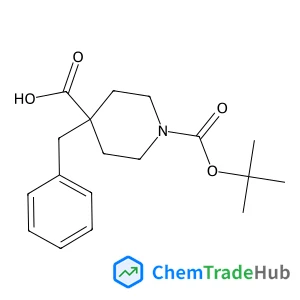
4-Benzyl-1-(tert-butoxycarbonyl)piperidine-4-carboxylic acid
CAS Number:
170838-87-6
Molecular Formula:
C18H25NO4

Recommended Suppliers




Disclaimer
This page provides academic journal information for reference and research purposes only. We are not affiliated with any journal publishers and do not handle publication submissions. For publication-related inquiries, please contact the respective journal publishers directly.
If you notice any inaccuracies in the information displayed, please contact us at support@chemtradehub.com. We will promptly review and address your concerns.