


Plasmonic rod-in-shell nanoparticles for photothermal therapy
Literature Information
Publication Date
2014-04-28
DOI
10.1039/C4CP00902A
Impact Factor
3.676
Authors
Shanshan Wang, Hong Xu, Jian Ye
View Original
Abstract
The plasmonic gold nanoparticles are promising candidates for photothermal therapy (PTT) application. The optical properties of various gold nanoparticles have been widely investigated for PTT application in the first near-infrared (NIR) window (650–950 nm). However, few studies have been reported on the nanoparticles employed in the second NIR window (1000–1350 nm) where light penetrates deeper through the tissue. Recently, a new type of plasmonic rod-in-shell (RIS) nanoparticle that can be optically responsive in the second NIR window has been reported (ACS Nano, 2013, 7, 5330). In this article, we employed an extensive numerical exploration of the optical absorption properties of the RIS particles by tuning their dimensional parameters including the core length, gap size and shell thickness. A number of favorable optical properties of the RIS nanoparticles potentially for the better PTT effect have been observed including: (1) the strong and highly tunable optical absorption in the second NIR window with a particle size less than 100 nm; (2) a larger absorption cross-section both in the first and second NIR windows over a nanorod with the same gold mass; and (3) orientation-insensitive light absorption by particles in the first NIR window due to the overlapping of the longitudinal and transverse modes. These unique optical properties imply that the RIS nanoparticles could become promising candidates for the PTT application in the first and second NIR windows.
Recommended Journals

Journal of Medical Biochemistry

European Journal of Organic Chemistry

Green Chemistry

Journal of Enzyme inhibition and Medicinal Chemistry

Lab on a Chip

Angewandte Chemie International Edition

Coloration Technology

Nature Reviews Drug Discovery

Photochemical & Photobiological Sciences

Current Pharmaceutical Biotechnology
Related Literature
Quantum anomalous/valley Hall effect and tunable quantum state in hydrogenated arsenene decorated with a transition metal
Jian-Zhou Zhao, Cui-E Hu, Xiang-Rong Chen, Xiao-Lin Zhou
2018-04-23
Paper
DOI: 10.1039/C8CP00005K
Electron-density distributions in selected ferrocenyl-pyrazolyl late transition-metal complexes
M. A. Peck, G. R. Hearne, C. Obuah, J. Darkwa
2018-03-27
Paper
DOI: 10.1039/C8CP01135D
Alloy-composition-dependent oxygen reduction reaction activity and electrochemical stability of Pt-based bimetallic systems: a model electrocatalyst study of Pt/PtxNi100−x(111)
Naoto Todoroki, Ryutaro Kawamura, Masato Asano, Ren Sasakawa, Shuntaro Takahashi, Toshimasa Wadayama
2018-04-03
Paper
DOI: 10.1039/C8CP01217B
Unifying theoretical framework for deciphering the oxygen reduction reaction on platinum
Michael Eikerling
2018-04-05
Paper
DOI: 10.1039/C8CP01315B
Exotic species with explicit noble metal–noble gas–noble metal linkages
Norberto Moreno, Albeiro Restrepo, C. Z. Hadad
2018-01-18
Paper
DOI: 10.1039/C7CP08085A
Multi-fuel surrogate chemical kinetic mechanisms for real world applications
Charles K. Westbrook, Marco Mehl, William J. Pitz, Goutham Kukkadapu, Scott Wagnon, Kuiwen Zhang
2018-01-24
Perspective
DOI: 10.1039/C7CP07901J
Understanding the hydrogen transfer mechanism for the biodegradation of 2,4,6-trinitrotoluene catalyzed by pentaerythritol tetranitrate reductase: molecular dynamics simulations
Zhilin Yang, Yang Zhou, Hui Huang, Dingguo Xu, Chaoyang Zhang
2018-04-06
Paper
DOI: 10.1039/C8CP00345A
Coexistence of distinct intramolecular electron transfer pathways in polyoxometalate based molecular triads
Maria Wächtler
2018-03-26
Paper
DOI: 10.1039/C8CP01007B
Fluorescence imaging of antibiotic clofazimine encapsulated within mesoporous silica particle carriers: relevance to drug delivery and the effect on its release kinetics
Lorenzo Angiolini, Boiko Cohen, Abderrazzak Douhal
2018-03-26
Paper
DOI: 10.1039/C7CP08328A
You might also like
Compound Q&A
What are the main uses of 1-(3-Aminophenyl)-3-[(3R)-1-(3,3-dimethyl-2-oxobutyl)-2-oxo-5-(2-pyridinyl)-2,3-dihydro-1H-1,4-benzodiazepin-3-yl]urea (CAS: 155412-88-7)?
This compound is mainly used as an intermediate in the synthesis of antipsychoti...
155412-88-71-(3-Aminophenyl)-3-...
Compound Q&A
How should waste containing 1-(D-Ribofuranosyl)-1,4-dihydro-3-pyridinecarboxamide (CAS: 19132-12-8) be handled?
Waste containing 1-(D-Ribofuranosyl)-1,4-dihydro-3-pyridinecarboxamide (CAS: 191...
19132-12-81-(D-Ribofuranosyl)-...
Compound Q&A
What regulatory guidelines apply to 2-Methyl-2-propanyl 3-bromo-3-(hydroxymethyl)-1-azetidinecarboxylate (CAS: 2007919-81-3)?
2-Methyl-2-propanyl 3-bromo-3-(hydroxymethyl)-1-azetidinecarboxylate (CAS: 20079...
2007919-81-32-Methyl-2-propanyl ...
Compound Q&A
What is N-(4-Chloro-2-pyridinyl)acetamide (CAS: 245056-66-0)?
N-(4-Chloro-2-pyridinyl)acetamide (CAS: 245056-66-0) is a chemical compound with...
245056-66-0N-(4-Chloro-2-pyridi...
Compound Q&A
What is 5-Chloro-2-hydroxybenzoic acid (CAS: 321-14-2)?
5-Chloro-2-hydroxybenzoic acid, also known as 5-chlorosalicylic acid, is an arom...
321-14-25-Chloro-2-hydroxybe...
Compound Q&A
What precautions should be taken when handling 1,1-Dichloro-1-fluoroethane (CAS: 1717-00-6)?
When handling 1,1-Dichloro-1-fluoroethane (CAS: 1717-00-6), it is important to u...
1717-00-61,1-Dichloro-1-fluor...
Compound Q&A
What are the physical and chemical properties of Fmoc-(2S,3R)-3-phenylpyrrolidine-2-carboxylic acid (CAS: 281655-32-1)?
Fmoc-(2S,3R)-3-phenylpyrrolidine-2-carboxylic acid is a white crystalline solid ...
281655-32-1Fmoc-(2S,3R)-3-pheny...
Compound Q&A
What are the main uses of 4-Amino-5-bromo-2-pyridinecarboxylic acid (CAS: 1363381-01-4)?
4-Amino-5-bromo-2-pyridinecarboxylic acid is primarily used as a precursor in th...
1363381-01-44-Amino-5-bromo-2-py...
Compound Q&A
What precautions should be taken when handling (S)-tert-butyl 2-((2-(4-bromophenyl)-2-oxoethyl)carbamoyl)pyrrolidine-1-carboxylate (CAS: 1007881-98-2)?
Handling this compound should be done with personal protective equipment (PPE) i...
1007881-98-2(S)-tert-butyl 2-((2...
Compound Q&A
What precautions should be taken when handling 8-bromo-2,2-dimethyl-3,4-dihydro-2H-1,4-benzoxazin-3-one (CAS: 688363-73-7)?
When handling 8-bromo-2,2-dimethyl-3,4-dihydro-2H-1,4-benzoxazin-3-one, use prop...
688363-73-78-bromo-2,2-dimethyl...
Source Journal
Physical Chemistry Chemical Physics

CiteScore:
5.5
Self-citation Rate:
10.3%
Articles per Year:
3036
Physical Chemistry Chemical Physics (PCCP) is an international journal co-owned by 19 physical chemistry and physics societies from around the world. This journal publishes original, cutting-edge research in physical chemistry, chemical physics and biophysical chemistry. To be suitable for publication in PCCP, articles must include significant innovation and/or insight into physical chemistry; this is the most important criterion that reviewers and Editors will judge against when evaluating submissions. The journal has a broad scope and welcomes contributions spanning experiment, theory, computation and data science. Topical coverage includes spectroscopy, dynamics, kinetics, statistical mechanics, thermodynamics, electrochemistry, catalysis, surface science, quantum mechanics, quantum computing and machine learning. Interdisciplinary research areas such as polymers and soft matter, materials, nanoscience, energy, surfaces/interfaces, and biophysical chemistry are welcomed if they demonstrate significant innovation and/or insight into physical chemistry. Joined experimental/theoretical studies are particularly appreciated when complementary and based on up-to-date approaches.
Recommended Compounds
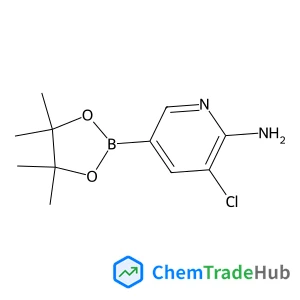
3-Chloro-5-(4,4,5,5-tetramethyl-1,3,2-dioxaborolan-2-yl)-2-pyridinamine
CAS Number:
1032758-99-8
Molecular Formula:
C11H16BClN2O2

N,N-Diethyl-4-(4,4,5,5-tetramethyl-1,3,2-dioxaborolan-2-yl)benzamide
CAS Number:
325142-99-2
Molecular Formula:
C17H26BNO3
Recommended Suppliers





Disclaimer
This page provides academic journal information for reference and research purposes only. We are not affiliated with any journal publishers and do not handle publication submissions. For publication-related inquiries, please contact the respective journal publishers directly.
If you notice any inaccuracies in the information displayed, please contact us at support@chemtradehub.com. We will promptly review and address your concerns.