


Molecular dynamics in azobenzene liquid crystal polymer films measured by time-resolved techniques
Literature Information
Publication Date
2014-02-28
DOI
10.1039/C4CP00457D
Impact Factor
3.676
Authors
T. Fujii, S. Kuwahara, K. Katayama, T. Ube, T. Ikeda
View Original
Abstract
Photo-induced molecular motion in a liquid crystal polymer film including azobenzene was studied by the heterodyne transient grating method. The film was confined in a liquid crystal cell, where it is a photomobile film under free-standing conditions. By observation of the refractive index change induced by a laser pulse, contraction of the film was observed on the order of several hundreds of nanoseconds, and the subsequent reorientation and molecular rotation dynamics were observed from a few microseconds to a hundred milliseconds. Finally, the cis isomer of azobenzene was thermally returned back to the trans isomer in about ten seconds because the film could not be bent in the liquid crystal cell. Since the contraction, reorientation and molecular rotation took place before the cis to trans back-transformation, these processes correspond to the preliminary molecular motion preceding the macroscopic bending of the film.
Recommended Journals

Journal of Organometallic Chemistry

Molecular Pharmacology

Pharmacological Reviews

Science

Planta Medica

Journal of Physics and Chemistry of Solids

European Journal of Wood and Wood Products

Fibre Chemistry

Proceedings of the National Academy of Sciences of the United States of America

Israel Journal of Chemistry
Related Literature
Self-oriented pseudoisocyanine J-aggregates in solution
Ken Takazawa, Yasutaka Kitahama, Yasuyuki Kimura
2004-09-07
Communication
DOI: 10.1039/B409690H
Cyclopeptide alkaloids: chemistry and biology
Madeleine M. Joullié, David J. Richard
2004-08-31
Feature Article
DOI: 10.1039/B400334A
Secondary coordination sphere controlled reversible geometry reorganisations in copper(ii) complexes
John Fielden, De-Liang Long, Leroy Cronin
2004-08-20
Communication
DOI: 10.1039/B407229D
Synthesis and reactivity of triethylborane adduct of N-heterocyclic carbene: versatile synthons for synthesis of N-heterocyclic carbene complexes
Yoshitaka Yamaguchi, Taigo Kashiwabara, Kenichi Ogata, Yumiko Miura, Yoshiyuki Nakamura, Kimiko Kobayashi, Takashi Ito
2004-08-20
Communication
DOI: 10.1039/B405459H
Donor–acceptor nanoensembles of soluble carbon nanotubes
G. N. A. Rahman, Jeff Ramey, Massimo Marcaccio, Demis Paolucci, Francesco Paolucci, Shuhui Qin, Warren T. Ford, Domenico Balbinot, Norbert Jux, Nikos Tagmatarchis, Maurizio Prato
2004-08-10
Communication
DOI: 10.1039/B406933A
Low-temperature synthetic method for size-controlled CdSe nanocrystals: utilization of boron selenide
Nora Iancu, Renu Sharma, Dong-Kyun Seo
2004-09-01
Communication
DOI: 10.1039/B408702J
New Pb–Pb bonds: syntheses and molecular structures of hexabiphenyldiplumbane and tri(trisbiphenylplumbyl)plumbate
Yuzhong Wang, Brandon Quillian, Pingrong Wei, Xiao-Juan Yang, Gregory H. Robinson
2004-08-20
Communication
DOI: 10.1039/B408860N
The mechanism of polyleucine catalysed asymmetric epoxidation
David R. Kelly, Stanley M. Roberts
2004-08-25
Communication
DOI: 10.1039/B404390C
Single-walled carbon nanotubes acquire a specific lectin-affinity through supramolecular wrapping with lactose-appended schizophyllan
Teruaki Hasegawa, Tomohisa Fujisawa, Munenori Numata, Mariko Umeda, Takahiro Matsumoto, Taro Kimura, Shiro Okumura, Kazuo Sakurai, Seiji Shinkai
2004-08-20
Communication
DOI: 10.1039/B407409B
A C3-symmetric molecular scaffold for the construction of large receptors
Gebhard Haberhauer, Thomas Oeser, Frank Rominger
2004-08-06
Communication
DOI: 10.1039/B406335J
You might also like
Compound Q&A
What is the market or research trend for N-(4-Methoxybenzyl)-2-pyridinamine (CAS: 52818-63-0)?
N-(4-Methoxybenzyl)-2-pyridinamine (CAS: 52818-63-0) is increasingly being used ...
52818-63-0N-(4-Methoxybenzyl)-...
Compound Q&A
What precautions should be taken when handling Ethyl 4-(2-chlorophenyl)-1,3-thiazole-2-carboxylate (CAS: 1050507-06-6)?
When handling Ethyl 4-(2-chlorophenyl)-1,3-thiazole-2-carboxylate, appropriate p...
1050507-06-6Ethyl 4-(2-chlorophe...
Compound Q&A
What regulatory guidelines apply to diethyldiselane (CAS: 628-39-7)?
Diethyldiselane (CAS: 628-39-7) is classified under the Globally Harmonized Syst...
628-39-7Diethyldiselane
Compound Q&A
What is the market or research trend for oxocopper (CAS: 12053-18-8)?
The market for oxocopper (CAS: 12053-18-8) is primarily driven by its use in cat...
12053-18-8oxocopper; oxo-(oxoc...
Compound Q&A
What is the market or research trend for 5-{[(2-Methyl-2-propanyl)oxy]carbonyl}-5-azaspiro[2.4]heptane-7-carboxylic acid?
The market for 5-{[(2-Methyl-2-propanyl)oxy]carbonyl}-5-azaspiro[2.4]heptane-7-c...
1268519-54-55-{[(2-Methyl-2-prop...
Compound Q&A
What is 2-(1-Pyrrolidinyl)-4-pyridinamine (CAS: 35981-63-6)?
2-(1-Pyrrolidinyl)-4-pyridinamine is a chemical compound with the CAS number 359...
35981-63-62-(1-Pyrrolidinyl)-4...
Compound Q&A
What are the physical and chemical properties of 2-(3-Pyridinyl)-1-azabicyclo[2.2.2]octane (CAS: 91556-75-1)?
2-(3-Pyridinyl)-1-azabicyclo[2.2.2]octane (CAS: 91556-75-1) is a crystalline sol...
91556-75-12-(3-Pyridinyl)-1-az...
Compound Q&A
How is (S)-Alpha-allyl-proline hydrochloride (CAS: 129704-91-2) typically synthesized?
(S)-Alpha-allyl-proline hydrochloride is usually synthesized via a Wittig reacti...
129704-91-2(S)-Alpha-allyl-prol...
Compound Q&A
What is 3-Methyl-1,2-oxazole-5-carboxylic acid (CAS: 4857-42-5)?
3-Methyl-1,2-oxazole-5-carboxylic acid (CAS: 4857-42-5) is an organic compound w...
4857-42-53-Methyl-1,2-oxazole...
Compound Q&A
How is Lys-SMCC-DM1 (CAS: 1281816-04-3) typically synthesized?
Lys-SMCC-DM1 is synthesized via a multi-step process involving the coupling of S...
1281816-04-3Lys-SMCC-DM1
Source Journal
Physical Chemistry Chemical Physics

CiteScore:
5.5
Self-citation Rate:
10.3%
Articles per Year:
3036
Physical Chemistry Chemical Physics (PCCP) is an international journal co-owned by 19 physical chemistry and physics societies from around the world. This journal publishes original, cutting-edge research in physical chemistry, chemical physics and biophysical chemistry. To be suitable for publication in PCCP, articles must include significant innovation and/or insight into physical chemistry; this is the most important criterion that reviewers and Editors will judge against when evaluating submissions. The journal has a broad scope and welcomes contributions spanning experiment, theory, computation and data science. Topical coverage includes spectroscopy, dynamics, kinetics, statistical mechanics, thermodynamics, electrochemistry, catalysis, surface science, quantum mechanics, quantum computing and machine learning. Interdisciplinary research areas such as polymers and soft matter, materials, nanoscience, energy, surfaces/interfaces, and biophysical chemistry are welcomed if they demonstrate significant innovation and/or insight into physical chemistry. Joined experimental/theoretical studies are particularly appreciated when complementary and based on up-to-date approaches.
Recommended Compounds
![(2R,6S)-6-[(Benzyloxy)methyl]-4-{[(2-methyl-2-propanyl)oxy]carbonyl}-2-morpholinecarboxylic acid structure](https://static.chemtradehub.com/structs/109/1093085-91-6-3382.webp "(2R,6S)-6-[(Benzyloxy)methyl]-4-{[(2-methyl-2-propanyl)oxy]carbonyl}-2-morpholinecarboxylic acid structure")
(2R,6S)-6-[(Benzyloxy)methyl]-4-{[(2-methyl-2-propanyl)oxy]carbonyl}-2-morpholinecarboxylic acid
CAS Number:
1093085-91-6
Molecular Formula:
C18H25NO6
![1-(1-Benzyl-1,2,3,6-tetrahydropyridin-4-yl)-1H-benzo[d]imidazol-2(3H)-one structure](https://static.chemtradehub.com/structs/603/60373-71-9-7dfb.webp "1-(1-Benzyl-1,2,3,6-tetrahydropyridin-4-yl)-1H-benzo[d]imidazol-2(3H)-one structure")
1-(1-Benzyl-1,2,3,6-tetrahydropyridin-4-yl)-1H-benzo[d]imidazol-2(3H)-one
CAS Number:
60373-71-9
Molecular Formula:
C19H19N3O
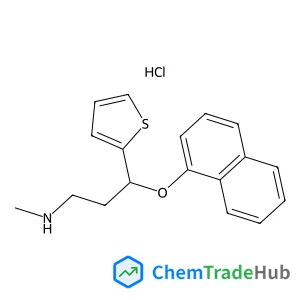
N-Methyl-3-(1-naphthyloxy)-3-(2-thienyl)-1-propanamine hydrochloride (1:1)
CAS Number:
1188266-11-6
Molecular Formula:
C18H20ClNOS
Recommended Suppliers






Disclaimer
This page provides academic journal information for reference and research purposes only. We are not affiliated with any journal publishers and do not handle publication submissions. For publication-related inquiries, please contact the respective journal publishers directly.
If you notice any inaccuracies in the information displayed, please contact us at support@chemtradehub.com. We will promptly review and address your concerns.