













Viscosity scaling of the self-diffusion and velocity cross-correlation coefficients of two functionalised ionic liquids and of their non-functionalized analogues
Literature Information
Publication Date
2014-03-31
DOI
10.1039/C4CP00435C
Impact Factor
3.676
Authors
Kenneth R. Harris, Takashi Makino, Mitsuhiro Kanakubo
View Original
Abstract
Ion self-diffusion coefficients have been measured for ionic liquids based on the cations N-acetoxyethyl-N,N-dimethyl-N-ethylammonium ([N112,2OCO1]+) and its non-functionalised analogue, N,N-dimethyl-N-ethyl-N-pentylammonium ([N1125]+), and N,N-dimethyl-N-ethyl-N-methoxyethoxyethylammonium ([N112,2O2O1]+), and its analogue, N,N-dimethyl-N-ethyl-N-heptylammonium ([N1127]+) and the bis(trifluoromethanesulfonyl)amide anion. The functionalised chain on an ammonium cation has the same length, in terms of the number of atoms, as the non-functionalised chain of the corresponding analogue. For [N112,2OCO1][Tf2N] and [N1127][Tf2N], the cation and anion self-diffusion coefficients are equal, within experimental error, whereas for [N1125][Tf2N], the cation diffuses more quickly, and for [N112,2O2O1][Tf2N], it is the anion that diffuses more quickly than the ether-functionalised cation. But these differences are relatively small, just beyond experimental error. The data are used to calculate velocity cross-correlation coefficients (VCC or fij) and distinct diffusion coefficients (Ddij). Both the self-diffusion and distinct diffusion coefficients are analysed in terms of (fractional) Stokes–Einstein–Sutherland equations. Though the self-diffusion coefficients, as with the conductivity and viscosity, show marked differences in absolute terms between the functionalised and non-functionalised forms, being higher for the ethoxy-substituted IL and lower for the acetoxy-substituted IL, these are largely removed by scaling with the viscosity. Thus the transport properties are better understood as functions of the viscosity rather than the temperature and density, per se. The presence of the alkoxy-substituted side chains is known to change the local mesoscopic liquid structure, but it appears once this is done, the transport properties scale correspondingly. In the case of the acetoxy-substituted IL, this is also largely the case, but the Nernst–Einstein deviation parameter, Δ, which depends on the difference between the anion–cation VCC and the mean of the cation–cation and anion–anion VCCs, is smaller than that of its analogue salt, and also temperature dependent.
Recommended Journals
Related Literature
Composition-tailored ZnMgO nanoparticles for electron transport layers of highly efficient and bright InP-based quantum dot light emitting diodes
Hyungsuk Moon, Woosuk Lee, Jungwoo Kim, Daehee Lee, Soonmin Cha, Sangyeon Shin
2019-10-16
Communication
DOI: 10.1039/C9CC06882A
An electrostatic self-assembly route to prepare C-dots/gold nanoclusters for dual-emission ratiometric optical thermometry in living cells
Xiaojie Zhang, Chunxia Yin, Xun Zhang, Jiaping Zhang, Xinwai Wang, Jingwei Xin
2019-07-26
Paper
DOI: 10.1039/C9AY01115C
A new analytical method for the determination of beta-blockers and one metabolite in the influents and effluents of three urban wastewater treatment plants
Gabriel-Lucian Radu, Roxana Scutariu
2019-08-13
Paper
DOI: 10.1039/C9AY01597C
Correction: Fluorescence of a chiral pentaphene derivative derived from the hexabenzocoronene Motif
Philipp Rietsch, Jan Soyka, Steffen Brülls, Jasmin Er, Katrin Hoffmann, Julia Beerhues, Biprajit Sarkar, Ute Resch-Genger, Siegfried Eigler
2019-10-14
Correction
DOI: 10.1039/C9CC90456E
Homopropargyl as a new recognition moiety of a fluorescent probe for detection of palladium in living cells
Miao Chen, Xianhui Wang, Nannan Wang, Xin Ji, Jinling He, Jian Zhang
2019-07-15
Paper
DOI: 10.1039/C9AY00844F
Uncovering alternate charge transfer mechanisms in Escherichia coli chemically functionalized with conjugated oligoelectrolytes
Qichun Zhang
2014-06-02
Communication
DOI: 10.1039/C4CC02784A
A differential extended gate-AlGaN/GaN HEMT sensor for real-time detection of ionic pollutants
Bin Miao, Jian Zhang, Bin Zeng, Jiadong Li
2019-07-16
Paper
DOI: 10.1039/C9AY01019J
A novel Mn–Cu bimetallic complex for enhanced chemodynamic therapy with simultaneous glutathione depletion
Jiangli Fan, Wen Sun, Fahui Li, Kaoxue Li, Xishi Tai, Xiaojun Peng
2019-10-02
Communication
DOI: 10.1039/C9CC06040E
Preparation and application of molecularly imprinted polymers for the selective extraction of naringin and genistein from herbal medicines
Zhimin Luo, Aiping Xiao, Guoning Chen, Qi Guo, Chun Chang, Aiguo Zeng, Qiang Fu
2019-08-28
Paper
DOI: 10.1039/C9AY01503E
A ternary system for delayed curing inverse vulcanisation
Bowen Zhang, Samuel Petcher, Tom Hasell
2019-08-14
Communication
DOI: 10.1039/C9CC04380B
You might also like
Compound Q&A
What are the main uses of 1H-Indazole-6-carbonitrile (CAS: 141290-59-7)?
1H-Indazole-6-carbonitrile finds applications in pharmaceuticals, where it serve...
141290-59-71H-Indazole-6-carbon...
Compound Q&A
How should waste containing Dioctyl (2E)-2-butenedioate (CAS: 2997-85-5) be handled?
Waste containing Dioctyl (2E)-2-butenedioate (CAS: 2997-85-5) should be collecte...
2997-85-5Dioctyl (2E)-2-buten...
Compound Q&A
What industries use Sodium [(1,2-benzoxazol-3-ylmethyl)sulfonyl]azanide (CAS: 68291-98-5)?
Sodium [(1,2-benzoxazol-3-ylmethyl)sulfonyl]azanide is primarily used in pharmac...
68291-98-5Sodium [(1,2-benzoxa...
Compound Q&A
Are there alternatives to Dimethyl 4-(4,4,5,5-tetramethyl-1,3,2-dioxaborolan-2-yl)-2,6-pyridinedicarboxylate (CAS: 741709-66-0) in synthesis?
Dimethyl 4-(4,4,5,5-tetramethyl-1,3,2-dioxaborolan-2-yl)-2,6-pyridinedicarboxyla...
741709-66-0Dimethyl 4-(4,4,5,5-...
Compound Q&A
How should waste containing 2-Fluoro-6-hydrazinopyridine (CAS: 80714-39-2) be handled?
Waste containing 2-Fluoro-6-hydrazinopyridine (CAS: 80714-39-2) should be manage...
80714-39-22-Fluoro-6-hydrazino...
Compound Q&A
What is 6-Formyl-2-pyridinecarboxylic acid (CAS: 499214-11-8)?
6-Formyl-2-pyridinecarboxylic acid is an organic compound with the molecular for...
499214-11-86-Formyl-2-pyridinec...
Compound Q&A
What is the market or research trend for 3-(3,4-dimethoxyphenyl)-2,5-dimethyl-N-(2-morpholin-4-ylethyl)pyrazolo[1,5-a]pyrimidin-7-amine (CAS: 900874-91-1)?
Research trends for this compound indicate a focus on its potential applications...
900874-91-13-(3,4-dimethoxyphen...
Compound Q&A
How is 9H-Tribenzo[b,d,f]azepine (CAS: 29875-73-8) typically synthesized?
9H-Tribenzo[b,d,f]azepine is typically synthesized via a multi-step process invo...
29875-73-89H-Tribenzo[b,d,f]az...
Compound Q&A
How is 1-Cyclopropyl-7-ethoxy-6-fluoro-8-methoxy-4-oxo-1,4-dihydro-3-quinolinecarboxylic acid (CAS: 1797982-51-4) typically synthesized?
1-Cyclopropyl-7-ethoxy-6-fluoro-8-methoxy-4-oxo-1,4-dihydro-3-quinolinecarboxyli...
1797982-51-41-Cyclopropyl-7-etho...
Compound Q&A
How should waste containing Methyl 3-oxo-1,2,3,4-tetrahydro-6-quinoxalinecarboxylate (CAS: 671820-52-3) be handled?
Waste containing Methyl 3-oxo-1,2,3,4-tetrahydro-6-quinoxalinecarboxylate (CAS: ...
671820-52-3Methyl 3-oxo-1,2,3,4...
Source Journal
Physical Chemistry Chemical Physics

CiteScore:
5.5
Self-citation Rate:
10.3%
Articles per Year:
3036
Physical Chemistry Chemical Physics (PCCP) is an international journal co-owned by 19 physical chemistry and physics societies from around the world. This journal publishes original, cutting-edge research in physical chemistry, chemical physics and biophysical chemistry. To be suitable for publication in PCCP, articles must include significant innovation and/or insight into physical chemistry; this is the most important criterion that reviewers and Editors will judge against when evaluating submissions. The journal has a broad scope and welcomes contributions spanning experiment, theory, computation and data science. Topical coverage includes spectroscopy, dynamics, kinetics, statistical mechanics, thermodynamics, electrochemistry, catalysis, surface science, quantum mechanics, quantum computing and machine learning. Interdisciplinary research areas such as polymers and soft matter, materials, nanoscience, energy, surfaces/interfaces, and biophysical chemistry are welcomed if they demonstrate significant innovation and/or insight into physical chemistry. Joined experimental/theoretical studies are particularly appreciated when complementary and based on up-to-date approaches.
Recommended Compounds

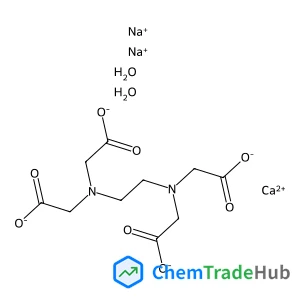
EthylenediaminetetraaceticacidcalciumDisodiumsalthydrate
CAS Number:
23411-34-9
Molecular Formula:
C10H16CaN2Na2O10
![N-[(9H-Fluoren-9-ylmethoxy)carbonyl]serine structure](https://static.chemtradehub.com/structs/737/73724-45-5-b0dc.webp "N-[(9H-Fluoren-9-ylmethoxy)carbonyl]serine structure")
Recommended Suppliers



Disclaimer
This page provides academic journal information for reference and research purposes only. We are not affiliated with any journal publishers and do not handle publication submissions. For publication-related inquiries, please contact the respective journal publishers directly.
If you notice any inaccuracies in the information displayed, please contact us at support@chemtradehub.com. We will promptly review and address your concerns.