












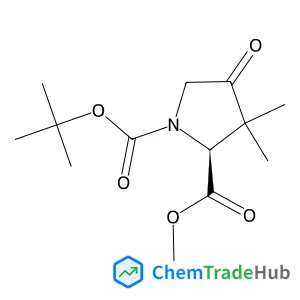
2-Methyl 1-(2-methyl-2-propanyl) (2S)-3,3-dimethyl-4-oxo-1,2-pyrrolidinedicarboxylate
CAS Number:
478698-30-5
Molecular Formula:
C13H21NO5
Ying Zhu, Hong Xu, Kaimin Chen, Jianping Fu, Hongchen Gu
A new encoding strategy based on the host–guest structure was developed, where encoding is achieved by combinational use of a set of guest particles with different fluorescence intensity levels at various ratios. This system was proven to be well-defined and highly controllable.
Aizhu Miao, Qi Fan, Yi Lu
DOI: 10.1039/C5AN00101C
Zhong-Yue Wang, Rui Zheng, Wen-Jun Li, Yu-Jie Ma, Ke-Han Yu, Peng Lv, Wei Wei
DOI: 10.1039/D0SE00347F
Yang Zhou, Xili Duan
DOI: 10.1039/D0SE00753F
Jianrui Sun, Saisai Li, Qiaoqiao Zhang, Jingqi Guan
DOI: 10.1039/D0SE00694G
Mau-Shiun Li, Pradip Kumar Roy, C. T. Wu
DOI: 10.1039/C5AN00546A
Simon Fleischmann
DOI: 10.1039/C6SE00062B
Rodolfo L. Coppo, Byron H. Farnum, Benjamin D. Sherman, Neyde Y. Murakami Iha, Thomas J. Meyer
DOI: 10.1039/C6SE00022C
Hao Hu, Yuhua Xie, Farhad M. D. Kazim, Konggang Qu, Min Li, Zehui Yang
DOI: 10.1039/D0SE01023E
Susanne Lahdenperä, Anni Spangar, Anna-Maija Lempainen, Laura Joki, Tero Soukka
DOI: 10.1039/C5AN00253B
2-(2-Chloroacetamido)-3-phenylpropanoic acid (CAS: 7765-11-9) is generally consi...
2-(Benzyloxy)-5-bromobenzoic acid can be handled safely if appropriate precautio...
(4-Methyl-1,2,5-oxadiazol-3-yl)methanamine hydrochloride is a chemical compound ...
2-(5-Hexylthiophen-2-yl)-4,4,5,5-tetramethyl-1,3,2-dioxaborolane (CAS: 917985-54...
While 4-(8-Methyl-9H-1,3-dioxolo[4,5-h][2,3]benzodiazepin-5-yl)benzenamine (CAS:...
The market for tert-butyl 3-hydroxy-4,5,7,8-tetrahydro-2H-pyrazolo[3,4-d]azepine...
Waste containing 3,5-Diamino-1H-pyrazole-4-carbonitrile (CAS: 6844-58-2) should ...
(6-Fluoro-3-pyridinyl)boronic acid can be synthesized through the reaction of 6-...
Dibenzyl carbonimidoylbiscarbamate (CAS: 10065-79-9) finds applications in vario...
The market for (beta,beta,2,3,4,5,6-~2~H_7_)Phenylalanine (CAS: 74228-83-4) is g...

ChemComm publishes urgent research which is of outstanding significance and interest to experts in the field, while also appealing to the journal’s broad chemistry readership. Our communication format is ideally suited to short, urgent studies that are of such importance that they require accelerated publication. Our scope covers all topics in chemistry, and research at the interface of chemistry and other disciplines (such as materials science, nanoscience, physics, engineering and biology) where there is a significant novelty in the chemistry aspects. Major topic areas covered include: Analytical Chemistry Catalysis Chemical Biology and medicinal chemistry Computational Chemistry and Machine Learning Energy and sustainable chemistry Environmental Chemistry Green Chemistry Inorganic Chemistry Materials Chemistry Nanoscience Organic Chemistry Physical Chemistry Polymer Chemistry Supramolecular Chemistry
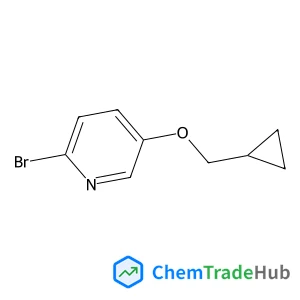
![2-Azaspiro[4.5]decane-3,8-dione structure](https://static.chemtradehub.com/structs/914/914780-96-4-e94b.webp "2-Azaspiro[4.5]decane-3,8-dione structure")
![4,10-Dihydroxy-3H-pyrano[3,4,5-kl]xanthen-3-one structure](https://static.chemtradehub.com/structs/125/1259330-61-4-de48.webp "4,10-Dihydroxy-3H-pyrano[3,4,5-kl]xanthen-3-one structure")
![2-Methyl-2-propanyl 4-oxo-3,9-diazabicyclo[4.2.1]nonane-9-carboxylate structure](https://static.chemtradehub.com/structs/131/1312456-05-5-9a15.webp "2-Methyl-2-propanyl 4-oxo-3,9-diazabicyclo[4.2.1]nonane-9-carboxylate structure")




