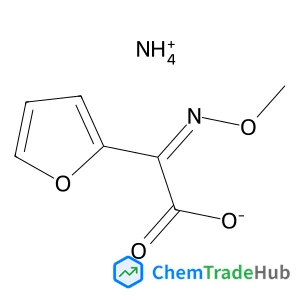
Ammonium (Z)-2-(furan-2-yl)-2-(methoxyimino)acetate
CAS Number:
97148-39-5
Molecular Formula:
C7H10N2O4
Serge Kokot
Flos Chrysanthemum tea contains flavonoids, essential oils and caffeoylquinic acids. These substances are pharmacologically active but this activity is cultivar dependent. Seventy-six Flos Chrysanthemum samples collected from four cultivars (Hangju, Taiju, Gongju and Boju) were discriminated with the use of results from high performance liquid chromatography (HPLC) and gas chromatography-mass spectrometry (GC-MS). A two-dimensional chromatographic fingerprint dataset of the four kinds of Flos Chrysanthemum cultivar was built from the combined GC/HPLC profiles and thirty variables were selected. Principal component analysis (PCA) and kernel – PCA (KPCA) were used for feature extraction. The score mapping graph indicated that these two PCA methods effectively extracted most information from the samples, and the four Flos Chrysanthemum cultivars were qualitatively differentiated. Furthermore, four supervised pattern recognition techniques, radial basis function-neural network analysis (RBF-NN), least squares support vector machines (LS-SVM), linear discriminant analysis (LDA) and K-nearest neighbors (KNN), successfully predicted the validation of the samples.
Yina Salamanca Blanco, Önder Topel, Éva G. Bajnóczi, Olle Björneholm, Ingmar Persson
DOI: 10.1039/C9CP02449B
Hua Jiang, A. Mulero
DOI: 10.1039/C9CP02033K
J. Halter, T. Gloor, B. Amoroso, F. N. Büchi
DOI: 10.1039/C9CP02149C
Sungwon Lee, Sungsik Lee, Duygu Gerceker, Mrunmayi D. Kumbhalkar, Kamila M. Wiaderek, Madelyn R. Ball, Manos Mavrikakis, James A. Dumesic, Randall E. Winans
DOI: 10.1039/C9CP00347A
Cheng-Xin Wang, Jian-Le Chen, Chen-Hui Shu, Ke-Ji Shi, Pei-Nian Liu
DOI: 10.1039/C9CP01843C
Pablo Álvarez-Zapatero, Andrés Aguado
DOI: 10.1039/C9CP01814J
Sheng-Jie Lu, Li-Shun Wu, Bao-Hua Yin, Feng Lin, Ming-Yong Chao
DOI: 10.1039/C9CP01752F
Ksenia A. Ivanichkina
DOI: 10.1039/C9CP01571J
Bo Yang, Maodong Li, Jiye Wang, Jingchao Zhang, Dongmei Liao, Yanan Yue
DOI: 10.1039/C9CP01605H
1H-Indazole-6-carbonitrile finds applications in pharmaceuticals, where it serve...
Waste containing Dioctyl (2E)-2-butenedioate (CAS: 2997-85-5) should be collecte...
Sodium [(1,2-benzoxazol-3-ylmethyl)sulfonyl]azanide is primarily used in pharmac...
Dimethyl 4-(4,4,5,5-tetramethyl-1,3,2-dioxaborolan-2-yl)-2,6-pyridinedicarboxyla...
Waste containing 2-Fluoro-6-hydrazinopyridine (CAS: 80714-39-2) should be manage...
6-Formyl-2-pyridinecarboxylic acid is an organic compound with the molecular for...
Research trends for this compound indicate a focus on its potential applications...
9H-Tribenzo[b,d,f]azepine is typically synthesized via a multi-step process invo...
1-Cyclopropyl-7-ethoxy-6-fluoro-8-methoxy-4-oxo-1,4-dihydro-3-quinolinecarboxyli...
Waste containing Methyl 3-oxo-1,2,3,4-tetrahydro-6-quinoxalinecarboxylate (CAS: ...
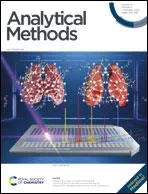
Analytical Methods welcomes early applications of new analytical and bioanalytical methods and technology demonstrating the potential for societal impact. We require that methods and technology reported in the journal are sufficiently innovative, robust, accurate, and compared to other available methods for the intended application. Developments with interdisciplinary approaches are particularly welcome. Systems should be proven with suitably complex and analytically challenging samples. We encourage developments within, but not limited to, the following technologies and applications: global health, point-of-care and molecular diagnostics biosensors and bioengineering drug development and pharmaceutical analysis applied microfluidics and nanotechnology omics studies, such as proteomics, metabolomics or glycomics environmental, agricultural and food science neuroscience biochemical and clinical analysis forensic analysis industrial process and method development