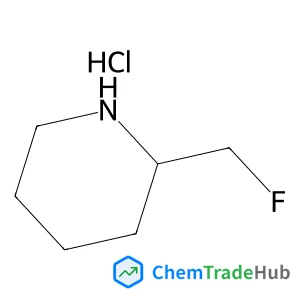
(2S)-2-(Fluoromethyl)piperidine hydrochloride (1:1)
CAS Number:
886216-73-5
Molecular Formula:
C6H13ClFN
Xiaoyan Yuan, Yijia Zhang, Lu Yang, Wenfang Deng, Yueming Tan, Ming Ma, Qingji Xie
We report here that three-dimensional activated graphene networks (3DAGNs) are a better matrix to prepare graphene–polymer nanocomposites for sensitive electroanalysis than two-dimensional graphene nanosheets (2DGNs). 3DAGNs were synthesized in advance by the direct carbonization and simultaneous chemical activation of a cobalt ion-impregnated D113-type ion exchange resin, which showed an interconnected network structure and a large specific surface area. Then, the 3DAGN–sulfonate-terminated polymer (STP) nanocomposite was prepared via the in situ chemical co-polymerization of m-aminobenzene sulfonic acid and aniline in the presence of 3DAGNs. The 3DAGN–STP nanocomposite can adsorb dopamine (DA) and heavy metal ions, which was confirmed by quartz crystal microbalance studies. The 3DAGN–STP modified glassy carbon electrode (GCE) was used for the electrochemical detection of DA in the presence of ascorbic acid and uric acid, with a linear response range of 0.1–32 μM and a limit of detection of 10 nM. In addition, differential pulse voltammetry was used for the simultaneous determination of Cd2+ and Pb2+ at the 3DAGN–STP/GCE further modified with a bismuth film, exhibiting linear response ranges of 1–70 μg L−1 for Cd2+ and 1–80 μg L−1 for Pb2+ with limits of detection of 0.1 μg L−1 for Cd2+ and 0.2 μg L−1 for Pb2+. Because the 3DAGN–STP can integrate the advantages of 3DAGNs with STPs, the 3DAGN–STP/GCE was more sensitive than the bare GCE, 3DAGN/GCE, and 2DGN–STP/GCE for the determination of DA and heavy metal ions.
Maurilio Galletta, Sebastiano Campagna, Manuel Quesada, Gilles Ulrich, Raymond Ziessel
DOI: 10.1039/B507196H
Patrick J. Hrdlicka, T. Santhosh Kumar, Jesper Wengel
DOI: 10.1039/B506986F
Jeane Bordini, Peter C. Ford, Elia Tfouni
DOI: 10.1039/B507407J
Patrik Västilä, Jenny Wettergren, Hans Adolfsson
DOI: 10.1039/B505516D
Young Sin You, Jung Hee Yoon, Hyoung Chan Kim, Chang Seop Hong
DOI: 10.1039/B507051A
Nicolai Dieltiens, Diederica D. Claeys, Bart Allaert, Francis Verpoort, Christian V. Stevens
DOI: 10.1039/B508663A
Gavin D. Jones, Chris McFarland, Thomas J. Anderson, David A. Vicic
DOI: 10.1039/B504996B
Gaku Fukuhara, Tadashi Mori
DOI: 10.1039/B504948B
Waste containing N-Methoxy-N-methyl-1,3-thiazole-5-carboxamide (CAS: 898825-89-3...
N-(4-Biphenylyl)dibenzo[b,d]furan-4-amine should be stored in a tightly sealed c...
The market for 3-Acetamido-5-amino-2,4,6-triiodobenzoic acid (CAS: 1713-07-1) is...
Benzyl 2-O-acetyl-3,4,6-tri-O-benzyl-beta-D-galactopyranoside (CAS: 61820-03-9) ...
2-Ethylpiperazine dihydrochloride (CAS: 438050-52-3) is regulated under the Glob...
1,1'-[1,3-Phenylenebis(methylene)]bis(3-methyl-1H-pyrrole-2,5-dione) (CAS: 11946...
Several alternatives can be used in the synthesis of 5-Fluoro-2-(1-pyrrolidinyl)...
Proper personal protective equipment (PPE) must be worn when handling this compo...
When handling 6-Bromoimidazo[1,2-a]pyridin-8-amine, it is important to wear appr...
Alternatives to (2S,4R)-4-(4-Nitrobenzyl)pyrrolidine-2-carboxylic acid hydrochlo...

Analyst publishes analytical and bioanalytical research that reports premier fundamental discoveries and inventions, and the applications of those discoveries, unconfined by traditional discipline barriers.
![tert-Butyl 6-chloro-4-oxospiro[chroman-2,4'-piperidine]-1'-carboxylate structure](https://static.chemtradehub.com/structs/101/1011482-37-3-88a5.webp "tert-Butyl 6-chloro-4-oxospiro[chroman-2,4'-piperidine]-1'-carboxylate structure")