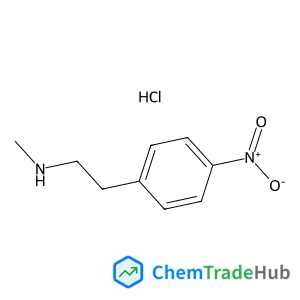
N-Methyl-2-(4-nitrophenyl)ethanamine hydrochloride (1:1)
CAS Number:
166943-39-1
Molecular Formula:
C9H13ClN2O2
Christine L. Bailey, Erhard Kemnitz, Sanghamitra Mukhopadhyay, Adrian Wander, Barry G. Searle
High surface area (HS) AlF3 samples have been examined by X-ray photoelectron spectroscopy (XPS). The experimentally observed binding energy (BE) shifts were analysed by reference to core level BEs obtained from ab initio total energy calculations on a range of different, clean and hydroxylated α- and β-AlF3 surfaces. Examination of the two components visible in the Al 2p emission indicates that surface Al3+ sites can, depending on the local geometric structure, contribute to both a high BE peak at 77.0 eV and a low BE peak at 76.1 eV. Consequently, the areas under the peaks do not quantitatively correlate with surface area or Lewis acidity. However, a significant correlation between the number of surface Al centres with dangling F or OH groups and the appearance of an Al 2p emission component at a BE lower than in the α-AlF3 bulk is predicted. The experimental F 1s emission data indicate that dangling F species are essentially absent. Examination of the O 1s emission suggests that HS AlF3 handled at room temperature under any practical laboratory conditions, including glovebox environments, probably contains intrinsically a significant amount of OH groups and adsorbed water, which results in the covering of AlF3 surfaces by dangling or bridging OH groups. These Brønsted acid species must be removed by treatment at higher temperature before HS AlF3 reagents can fully develop their Lewis acidity.
H. Mendil-Jakani, I. Zamanillo Lopez, P. M. Legrand, V. H. Mareau, L. Gonon
DOI: 10.1039/C4CP00710G
Quan Gu, Jinlin Long, Huaqiang Zhuang, Chaoqiang Zhang, Yangen Zhou, Xuxu Wang
DOI: 10.1039/C4CP01496K
Zhansheng Lu, Dongwei Ma, Lin Yang, Xiaobing Wang, Guoliang Xu, Zongxian Yang
DOI: 10.1039/C4CP00540F
Kikujiro Ishii, Hideyuki Nakayama
DOI: 10.1039/C4CP00458B
DOI: 10.1039/C4CP00285G
Stefania Perticaroli, Marco Paolantoni, Paola Sassi, Silvia Corezzi, Assunta Morresi
DOI: 10.1039/C4CP00840E
I. Izquierdo-Lorenzo, S. Sanchez-Cortes
DOI: 10.1039/C4CP00424H
Wenjie Wang, Ivan Kuzmenko, David Vaknin
DOI: 10.1039/C4CP00657G
Marco Ferretti, Vladimir I. Novoderezhkin, Elisabet Romero, Ramunas Augulis, Anjali Pandit, Donatas Zigmantas, Rienk van Grondelle
DOI: 10.1039/C3CP54634A
W. Calvet, E. Murugasen, J. Klett, B. Kaiser, W. Jaegermann, F. Finger, S. Hoch, M. Blug, J. Busse
DOI: 10.1039/C3CP55198A
When handling 2-Chloro-1,2-bis(4-methylphenyl)ethanone (CAS: 71193-32-3), it is ...
4-Ethoxy-3-(5-methyl-4-oxo-7-propyl-1,4-dihydroimidazo[5,1-f][1,2,4]triazin-2-yl...
Methyl 3-Oxo-4-Androsten-17-Carboxylate (CAS: 2681-55-2) should be stored in a c...
(R)-3-Amino-4-(3-hexylphenylamino)-4-oxobutylphosphonic acid is primarily used i...
2-Methyl-2-propanyl 3-amino-3-carbamoyl-1-azetidinecarboxylate (CAS: 1254120-14-...
There are alternative reagents that can be used in synthesis instead of (E)-4-(t...
[2-(3-Chlorophenyl)-1,3-thiazol-4-yl]methanol (CAS: 121202-20-8) is a crystallin...
The market and research trends for Methyl (2S)-[(4S)-2,2-dimethyl-1,3-dioxolan-4...
The market for 1-Bromo-2-isocyanatoethane (CAS: 42865-19-0) is driven by its use...
4-Nitro-D-phenylalanine hydrochloride (CAS: 147065-06-3) is primarily used in re...

Physical Chemistry Chemical Physics (PCCP) is an international journal co-owned by 19 physical chemistry and physics societies from around the world. This journal publishes original, cutting-edge research in physical chemistry, chemical physics and biophysical chemistry. To be suitable for publication in PCCP, articles must include significant innovation and/or insight into physical chemistry; this is the most important criterion that reviewers and Editors will judge against when evaluating submissions. The journal has a broad scope and welcomes contributions spanning experiment, theory, computation and data science. Topical coverage includes spectroscopy, dynamics, kinetics, statistical mechanics, thermodynamics, electrochemistry, catalysis, surface science, quantum mechanics, quantum computing and machine learning. Interdisciplinary research areas such as polymers and soft matter, materials, nanoscience, energy, surfaces/interfaces, and biophysical chemistry are welcomed if they demonstrate significant innovation and/or insight into physical chemistry. Joined experimental/theoretical studies are particularly appreciated when complementary and based on up-to-date approaches.