













Surface photochemistry: alloxazine within nanochannels of Na+ and H+ ZSM-5 zeolites
Literature Information
Publication Date
2009-05-13
DOI
10.1039/B903013A
Impact Factor
3.676
Authors
L. F. Vieira Ferreira, A. M. Botelho do Rego, E. Sikorska, M. Sikorski
View Original
Abstract
This work reports the surface photochemistry study of alloxazine adsorbed within nanochannels of MFI zeolites, namely in a series of Na+ and H+ ZSM-5 zeolites where the hydrophobic and hydrophilic character of the host varies systematically. Laser-induced room temperature and 77 K luminescence of air-equilibrated solid powdered samples of alloxazine adsorbed onto the two sets of zeolites, which we will name NaZSM-5 and HZSM-5, revealed the existence of a single emission of alloxazine as a broad band centred at about 450 nm in some cases, while in others an emission with a maximum at about 510 nm was detected. The decay times of the alloxazine emission vary greatly going from solution to entrapment within the nanochannels of the ZSM-5 zeolites. In the latter case a lifetime distribution analysis has shown that the longest lifetime for the alloxazine fluorescence emission exists in the case where an isoalloxazine-type emission was detected, i.e. whenever the hydrophobic character of the host increases. Alloxazine entrapped in the more acidic zeolites exists in the form of emissive monomers. However, alloxazine emits both from monomeric and aggregated emissive forms in the case of the hydrophobic zeolites. These data indicate the formation of planar dimers of alloxazine whenever the number of active sites in the zeolite decreases. These dimers have to be formed at the intersections of the zig–zag and linear nanochannels of the zeolite since there is no space available for their formation inside the zeolite channels. The isoalloxazine tautomers are formed due to the existence of alloxazine dimers which may undergo double proton transfer in the excited state, following laser excitation. Delayed fluorescence of alloxazine was also detected for the HZSM-5 and NaZSM-5 entrapment both at room temperature and at 77 K. The present study is paradigmatic as regards the host influence on the photochemistry of the guest.
Related Literature
Computer simulation studies on passive recruitment dynamics of lipids induced by the adsorption of charged nanoparticles
2014-05-07
Paper
DOI: 10.1039/C4CP00553H
Carbon dioxide interaction with isolated imidazole or attached on gold clusters and surface: competition between σ H-bond and π stacking interaction
Muthuramalingam Prakash, Kévin Mathivon, David M. Benoit, Gilberte Chambaud, Majdi Hochlaf
2014-05-07
Paper
DOI: 10.1039/C4CP01292E
Improving BiVO4 photoanodes for solar water splitting through surface passivation
Yongqi Liang, Johannes Messinger
2014-05-01
Paper
DOI: 10.1039/C4CP00674G
Non-innocent side-chains with dipole moments in organic solar cells improve charge separation
Hilde D. de Gier, Ria Broer
2014-05-06
Paper
DOI: 10.1039/C4CP01070A
A quasi-classical trajectory study of the OH + SO reaction: the role of ro-vibrational energy
W. A. D. Pires, J. D. Garrido, M. A. C. Nascimento, M. Y. Ballester
2014-05-02
Paper
DOI: 10.1039/C4CP01363H
Synergistic contributions by decreasing overpotential and enhancing charge-transfer in α-Fe2O3/Mn3O4/graphene catalysts with heterostructures for photocatalytic water oxidation
Shunli Yin, Xiaomei Wang, Zhigang Mou, Yijie Wu, Hui Huang, Mingshan Zhu, Yukou Du, Ping Yang
2014-03-11
Paper
DOI: 10.1039/C4CP00384E
Conformation of the neurotransmitter γ-aminobutyric acid in liquid water
N. Ottosson, M. Pastorczak, Sietse T. van der Post, Huib J. Bakker
2014-04-10
Communication
DOI: 10.1039/C4CP00671B
Artificial photosynthesis – functional devices for light driven water splitting with photoactive anodes based on molecular catalysts
Yan Gao, Linlin Zhang, Xin Ding
2014-03-07
Paper
DOI: 10.1039/C3CP55204G
Selective oxidation of alcohols in aqueous suspensions of rhodium ion-modified TiO2 photocatalysts under irradiation of visible light
Sho Kitano, Atsuhiro Tanaka, Keiji Hashimoto, Hiroshi Kominami
2014-05-08
Paper
DOI: 10.1039/C4CP00863D
Computer modeling of the complexes of Chlorin e6 with amphiphilic polymers
Anna B. Solov'eva, Nickolay S. Melik-Nubarov
2014-04-14
Paper
DOI: 10.1039/C3CP55510K
You might also like
Compound Q&A
What precautions should be taken when handling 2-Chloro-1,2-bis(4-methylphenyl)ethanone (CAS: 71193-32-3)?
When handling 2-Chloro-1,2-bis(4-methylphenyl)ethanone (CAS: 71193-32-3), it is ...
71193-32-32-Chloro-1,2-bis(4-m...
Compound Q&A
What industries use 4-Ethoxy-3-(5-methyl-4-oxo-7-propyl-1,4-dihydroimidazo[5,1-f][1,2,4]triazin-2-yl)benzenesulfonyl chloride (CAS: 224789-26-8)?
4-Ethoxy-3-(5-methyl-4-oxo-7-propyl-1,4-dihydroimidazo[5,1-f][1,2,4]triazin-2-yl...
224789-26-84-Ethoxy-3-(5-methyl...
Compound Q&A
How should Methyl 3-Oxo-4-Androsten-17-Carboxylate (CAS: 2681-55-2) be stored?
Methyl 3-Oxo-4-Androsten-17-Carboxylate (CAS: 2681-55-2) should be stored in a c...
2681-55-2Methyl 3-Oxo-4-Andro...
Compound Q&A
What are the main uses of (R)-3-Amino-4-(3-hexylphenylamino)-4-oxobutylphosphonic acid (CAS: 909725-61-7)?
(R)-3-Amino-4-(3-hexylphenylamino)-4-oxobutylphosphonic acid is primarily used i...
909725-61-7(R)-3-Amino-4-(3-hex...
Compound Q&A
What regulatory guidelines apply to 2-Methyl-2-propanyl 3-amino-3-carbamoyl-1-azetidinecarboxylate (CAS: 1254120-14-3)?
2-Methyl-2-propanyl 3-amino-3-carbamoyl-1-azetidinecarboxylate (CAS: 1254120-14-...
1254120-14-32-Methyl-2-propanyl ...
Compound Q&A
Are there alternatives to (E)-4-(tert-Butoxy)-4-oxobut-2-enoic acid (CAS: 135355-96-3) in synthesis?
There are alternative reagents that can be used in synthesis instead of (E)-4-(t...
135355-96-3(E)-4-(tert-Butoxy)-...
Compound Q&A
What are the physical and chemical properties of [2-(3-Chlorophenyl)-1,3-thiazol-4-yl]methanol (CAS: 121202-20-8)?
[2-(3-Chlorophenyl)-1,3-thiazol-4-yl]methanol (CAS: 121202-20-8) is a crystallin...
121202-20-8[2-(3-Chlorophenyl)-...
Compound Q&A
What is the market or research trend for Methyl (2S)-[(4S)-2,2-dimethyl-1,3-dioxolan-4-yl]{[(4-methylphenyl)sulfonyl]oxy}acetate (CAS: 166249-17-8)?
The market and research trends for Methyl (2S)-[(4S)-2,2-dimethyl-1,3-dioxolan-4...
166249-17-8Methyl (2S)-[(4S)-2,...
Compound Q&A
What is the market or research trend for 1-Bromo-2-isocyanatoethane (CAS: 42865-19-0)?
The market for 1-Bromo-2-isocyanatoethane (CAS: 42865-19-0) is driven by its use...
42865-19-01-Bromo-2-isocyanato...
Compound Q&A
What are the main uses of 4-Nitro-D-phenylalanine hydrochloride (CAS: 147065-06-3)?
4-Nitro-D-phenylalanine hydrochloride (CAS: 147065-06-3) is primarily used in re...
147065-06-34-Nitro-D-phenylalan...
Source Journal
Physical Chemistry Chemical Physics

CiteScore:
5.5
Self-citation Rate:
10.3%
Articles per Year:
3036
Physical Chemistry Chemical Physics (PCCP) is an international journal co-owned by 19 physical chemistry and physics societies from around the world. This journal publishes original, cutting-edge research in physical chemistry, chemical physics and biophysical chemistry. To be suitable for publication in PCCP, articles must include significant innovation and/or insight into physical chemistry; this is the most important criterion that reviewers and Editors will judge against when evaluating submissions. The journal has a broad scope and welcomes contributions spanning experiment, theory, computation and data science. Topical coverage includes spectroscopy, dynamics, kinetics, statistical mechanics, thermodynamics, electrochemistry, catalysis, surface science, quantum mechanics, quantum computing and machine learning. Interdisciplinary research areas such as polymers and soft matter, materials, nanoscience, energy, surfaces/interfaces, and biophysical chemistry are welcomed if they demonstrate significant innovation and/or insight into physical chemistry. Joined experimental/theoretical studies are particularly appreciated when complementary and based on up-to-date approaches.
Recommended Compounds
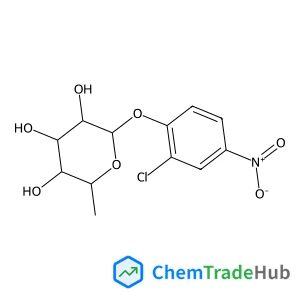
2-Chloro-4-nitrophenyl 6-deoxy-alpha-L-galactopyranoside
CAS Number:
157843-41-9
Molecular Formula:
C12H14ClNO7
Recommended Suppliers





Disclaimer
This page provides academic journal information for reference and research purposes only. We are not affiliated with any journal publishers and do not handle publication submissions. For publication-related inquiries, please contact the respective journal publishers directly.
If you notice any inaccuracies in the information displayed, please contact us at support@chemtradehub.com. We will promptly review and address your concerns.