












Striking influence of Fe2O3 on the “catalytic carbonization” of chlorinated poly(vinyl chloride) into carbon microspheres with high performance in the photo-degradation of Congo red
Literature Information
Publication Date
2013-02-26
DOI
10.1039/C3TA10316A
Impact Factor
12.732
Authors
Jie Liu, Zhiwei Jiang, Xuecheng Chen, Xin Wen, Ewa Mijowska, Nana Tian, Tao Tang
View Original
Abstract
A one-pot approach was demonstrated to effectively synthesize carbon microspheres through “catalytic carbonization” of commercial chlorinated poly(vinyl chloride) (CPVC) microspheres by Fe2O3 at 700 °C. Without Fe2O3, a “sponge-like” carbon lump was obtained. However, after adding Fe2O3 (even 0.5 g per 100 g CPVC) into CPVC, carbon microspheres with octahedral Fe3O4 microcrystals uniformly embedded on the surface (Fe/CMS) were synthesized. The influence of Fe2O3 on the carbonization of CPVC microspheres was investigated. It was found that Fe2O3 significantly accelerated the dehydrochlorination of CPVC into polyene before the melting of the CPVC microsphere surface. As a result, the microspheres of raw CPVC showed a “shape-duplicate” carbonization behaviour. The resultant Fe/CMS showed high photo-degradation efficiency of Congo red under UV irradiation via a heterogeneous photo-Fenton process with high recyclablity, reusability and long-term stability. This indicated that the resultant Fe/CMS has a potential application in wastewater treatment. Therefore, the initial catalytic substance could be effectively used as a catalyst twice in the carbonization of CPVC microspheres and in the subsequent application of Fe/CMS. More importantly, the strategy of “catalytic carbonization” offers a new potential way to largely convert charring polymers into functional carbon and carbon-based materials with various morphologies.
Related Literature
Synthesis of α-aminoketones from N-sulfonyl-1,2,3-triazoles via N-sulfinyl imines generated by intramolecular oxygen transfer
Ze-Feng Xu, Lihong Shan, Wan Zhang, Mengjie Cen, Chuan-Ying Li
2019-03-05
Research Article
DOI: 10.1039/C9QO00126C
Synthesis of β-hydroxysulfones through a copper(ii)-catalyzed multicomponent reaction with the insertion of sulfur dioxide
Wenlin Xie, Shengqing Ye
2019-05-06
Research Article
DOI: 10.1039/C9QO00520J
2H NMR reveals liquid state-like dynamics of arene guests inside hexameric pyrogallol[4]arene capsules in the solid state‡
Irazema J. Islas, Dillan Stengel, Cesar A. Garcia, J. Bennett Addison, George N. Samaan, Gregory P. Holland
2019-04-01
Research Article
DOI: 10.1039/C9QO00232D
Ir/BiphPHOX-catalyzed asymmetric hydrogenation of 3-substituted 2,5-dihydropyrroles and 2,5-dihydrothiophene 1,1-dioxides
Ke Meng, Jingzhao Xia, Yanzhao Wang, Xinghua Zhang, Guoqiang Yang
2017-05-11
Research Article
DOI: 10.1039/C7QO00248C
N-Heterocyclic carbene-catalyzed formal [3 + 3] annulation of alkynoic acid esters with indolin-3-ones: access to functionalized pyrano[3,2-b]indol-2-ones
Kewen Sun, Shiyi Jin, Shuaishuai Fang, Rui Ma, Xinmiao Zhang, Maoyu Gao, Wanqi Zhang, Tao Lu, Ding Du
2019-05-13
Research Article
DOI: 10.1039/C9QO00468H
Oxalamide-based bisdiamidophosphites: synthesis, coordination, and application in asymmetric metallocatalysis
Konstantin N. Gavrilov, Igor S. Mikhel, Sergey V. Zheglov, Vladislav K. Gavrilov, Ilya V. Chuchelkin, Ilya D. Firsin, Kirill P. Birin, Ivan S. Pytskii, Ksenia A. Paseshnichenko, Victor A. Tafeenko, Alexei A. Shiryaev
2019-03-28
Research Article
DOI: 10.1039/C9QO00237E
Formates plus triazabicyclodecene (TBD): an efficient platform for non-gaseous carbonylation and unexpected hydrogenation
Jinzhong Yao, Linlin Chen, Linfeng Hu, Xiaofang Li, Hongwei Zhou
2019-03-08
Research Article
DOI: 10.1039/C9QO00028C
Correction: The absolute configurations of hyperilongenols A–C: rare 12,13-seco-spirocyclic polycyclic polyprenylated acylphloroglucinols with enolizable β,β′-tricarbonyl systems from Hypericum longistylum Oliv.
Na Zhang, Zhengyi Shi, Yi Guo, Shuangshuang Xie, Yuben Qiao, Xiao-Nian Li, Yongbo Xue, Zengwei Luo, Hucheng Zhu, Chunmei Chen, Yonghui Zhang
2019-04-30
Correction
DOI: 10.1039/C9QO90045D
You might also like
Compound Q&A
Are there alternatives to 1-(4-Chlorophenyl)-N-hydroxymethanimine (CAS: 3848-36-0) in synthesis?
When considering alternatives to 1-(4-Chlorophenyl)-N-hydroxymethanimine (CAS: 3...
3848-36-01-(4-Chlorophenyl)-N...
Compound Q&A
How should (1R,9S,10S,12S,14E,16S,19R,20R,21S,22R)-3,9,21-Trihydroxy-5,10,12,14,16,20,22-heptamethyl-23,24-dioxatetracyclo[17.3.1.1~6,9~.0~2,7~]tetracosa-2,5,7,14-tetraen-4-one (CAS: 183202-73-5) be stored?
This compound should be stored in a cool, dry place away from direct sunlight. I...
183202-73-5(1R,9S,10S,12S,14E,1...
Compound Q&A
How is 3-(4-Bromophenyl)-5-(2-fluorophenyl)-1,2,4-oxadiazole (CAS: 419553-16-5) typically synthesized?
3-(4-Bromophenyl)-5-(2-fluorophenyl)-1,2,4-oxadiazole is synthesized through a m...
419553-16-53-(4-Bromophenyl)-5-...
Compound Q&A
How is 5-Chloro-2-(4-chlorophenyl)-4-methyl-6-[3-(1-piperidinyl)propoxy]pyrimidine (CAS: 1639220-19-1) typically synthesized?
5-Chloro-2-(4-chlorophenyl)-4-methyl-6-[3-(1-piperidinyl)propoxy]pyrimidine (CAS...
1639220-19-15-Chloro-2-(4-chloro...
Compound Q&A
What industries use 2-Chloro-4-(difluoromethoxy)pyridine (CAS: 1206978-15-5)?
2-Chloro-4-(difluoromethoxy)pyridine is used in the pharmaceutical industry for ...
1206978-15-52-Chloro-4-(difluoro...
Compound Q&A
What regulatory guidelines apply to 3-Chloro-6-methylpyridazine (CAS: 1121-79-5)?
3-Chloro-6-methylpyridazine (CAS: 1121-79-5) is classified under the Globally Ha...
1121-79-53-Chloro-6-methylpyr...
Compound Q&A
Are there alternatives to Methyl 4,5-dimethyl-2-nitrobenzoate in synthesis?
Several alternatives can be used in the synthesis of Methyl 4,5-dimethyl-2-nitro...
90922-74-0Methyl 4,5-dimethyl-...
Compound Q&A
Are there alternatives to (2E,2'E)-3,3'-(1,4-Phenylene)bisacrylaldehyde in synthesis?
Alternatives to (2E,2'E)-3,3'-(1,4-Phenylene)bisacrylaldehyde include other acry...
63405-68-5(2E,2'E)-3,3'-(1,4-P...
Compound Q&A
What is 3-Amino-5-chloropyridin-2-ol hydrochloride (CAS: 1261906-29-9)?
3-Amino-5-chloropyridin-2-ol hydrochloride is an organic compound with the CAS n...
1261906-29-93-Amino-5-chloropyri...
Compound Q&A
What precautions should be taken when handling 6,7-Difluoro-2,3-dihydro-4H-chromen-4-one (CAS: 1092349-93-3)?
When handling 6,7-Difluoro-2,3-dihydro-4H-chromen-4-one, it is essential to wear...
1092349-93-36,7-Difluoro-2,3-dih...
Source Journal
Journal of Materials Chemistry A

CiteScore:
19.5
Self-citation Rate:
4.7%
Articles per Year:
2211
Journal of Materials Chemistry A, B & C cover high quality studies across all fields of materials chemistry. The journals focus on those theoretical or experimental studies that report new understanding, applications, properties and synthesis of materials. The journals have a strong history of publishing quality reports of interest to interdisciplinary communities and providing an efficient and rigorous service through peer review and publication. The journals are led by an international team of Editors-in-Chief and Associate Editors who are all active researchers in their fields. Journal of Materials Chemistry A, B & C are separated by the intended application of the material studied. Broadly, applications in energy and sustainability are of interest to Journal of Materials Chemistry A, applications in biology and medicine are of interest to Journal of Materials Chemistry B, and applications in optical, magnetic and electronic devices are of interest to Journal of Materials Chemistry C. More than one Journal of Materials Chemistry journal may be suitable for certain fields and researchers are encouraged to submit their paper to the journal that they feel best fits for their particular article. Example topic areas within the scope of Journal of Materials Chemistry A are listed below. This list is neither exhaustive nor exclusive. Artificial photosynthesis Batteries Carbon dioxide conversion Catalysis Fuel cells Gas capture/separation/storage Green/sustainable materials Hydrogen generation Hydrogen storage Photocatalysis Photovoltaics Self-cleaning materials Self-healing materials Sensors Supercapacitors Thermoelectrics Water splitting Water treatment
Recommended Compounds
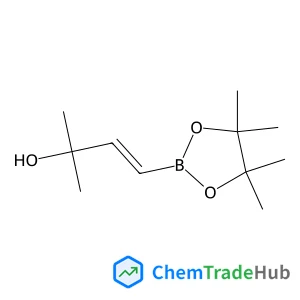
(E)-2-methyl-4-(4,4,5,5-tetramethyl-1,3,2-dioxaborolan-2-yl)but-3-en-2-ol
CAS Number:
581802-26-8
Molecular Formula:
C11H21BO3
Recommended Suppliers




Disclaimer
This page provides academic journal information for reference and research purposes only. We are not affiliated with any journal publishers and do not handle publication submissions. For publication-related inquiries, please contact the respective journal publishers directly.
If you notice any inaccuracies in the information displayed, please contact us at support@chemtradehub.com. We will promptly review and address your concerns.