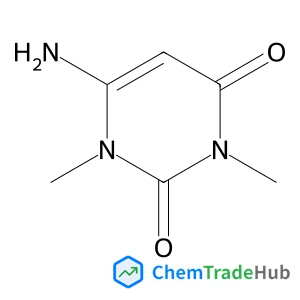
6-amino-1,3-dimethyl-1,2,3,4-tetrahydropyrimidine-2,4-dione
CAS Number:
6642-31-5
Molecular Formula:
C6H9N3O2
Cai-Li Huang, Man-Jie He, Meng Huo, Lan Du, Cong Zhan, Cheng-Jie Fan, Ke-Ke Yang, In-Joo Chin, Yu-Zhong Wang
A facile method to develop electro-induced shape memory polymer composites with good location- and process-controlled shape recovery performance is proposed. The poly(butylene succinate) (PBS)–poly(ethylene glycol) (PEG) multiblock copolymer (PBSEG), which has excellent flexibility, was chosen as the matrix of the composites. The conducting medium, carbon nanotubes (CNTs), was introduced to this copolymer by in situ polycondensation. The fine dispersion of CNTs in the PBSEG matrix, which was confirmed by scanning electron microscopy (SEM) and transmission electron microscopy (TEM) observations, enabled it to form a percolation network when only 0.5 wt% filler was loaded. DSC analysis revealed another important role played by CNTs in this system, as a nucleating agent for both PBS and PEG segments, and it caused an increase in crystallization temperature and crystallinity of both segments. The tensile properties test showed that the nanocomposite still exhibits good ductility with the addition of no more than 1 wt% CNTs, which allows it to undergo large deformation during shape programming. The electrical actuation shape memory performance was evaluated by a bending test, and the recovery process was recorded with a camera and an infrared video camera. The effect of CNTs loading, segment content and chain length upon the fixity ratio, recovery ratio and speed was studied, and the temporary shape control and localized shape memory response were also investigated. The results showed that the PBSEG/CNTs nanocomposites possess good shape memory performance with high shape fixity (more than 93.77%) and recovery ratio (more than 97.04%), and the shape recovery process can be adjusted by tailoring the polymer chain structure, the content of CNTs and the mode of how the samples are put in a circuit. In present work, we successfully achieved an electro-induced shape memory device which can be well controlled to remain at any stage during the recovery process and respond at any local position.
Kwan Wook Song, Ho Jun Song, Tae Ho Lee, Soo Won Heo, Doo Kyung Moon
DOI: 10.1039/C3PY00195D
Ryo Tanaka, Yuushou Nakayama, Takeshi Shiono
DOI: 10.1039/C3PY00400G
Zhe Zhang, Jianxun Ding, Xiaofei Chen, Chunsheng Xiao, Chaoliang He, Xiuli Zhuang, Li Chen, Xuesi Chen
DOI: 10.1039/C3PY00141E
Guolin Lu, Yongjun Li, Hao Guo, Weiyuan Du, Xiaoyu Huang
DOI: 10.1039/C3PY00145H
Athina Anastasaki, Christopher Waldron, Paul Wilson, Ronan McHale, David M. Haddleton
DOI: 10.1039/C3PY00270E
Liangjiu Bai, Lifen Zhang, Yuan Liu, Xiangqiang Pan, Zhenping Cheng, Xiulin Zhu
DOI: 10.1039/C3PY00187C
Benoit Gadenne, Carine Alfos
DOI: 10.1039/C3PY00300K
Zsolt Fülöp, Péter Szemesi, Péter Bana, János Éles, István Greiner
DOI: 10.1039/D0RE00273A
Inmaculada Conejos-Sánchez, Aroa Duro-Castano, Alexander Birke, Matthias Barz, María J. Vicent
DOI: 10.1039/C3PY00347G
1-(2,4,6-Trifluorophenyl)ethanol is an organic compound with the CAS number 1250...
1-(2,4-Dimethoxybenzyl)-4-(hydroxymethyl)-2-pyrrolidinone (CAS: 919111-34-5) is ...
(7S,15R)-6β,15-Diacetoxy-7α,20-epoxy-7-hydroxykaura-2,16-dien-1-one is a crystal...
The compound rac-ethyl (1r,4r)-4-hydroxycyclohexane-1-carboxylate, trans (CAS: 3...
The market for 2-(2,4-Difluorophenoxy)-3-nitropyridine (CAS: 175135-62-3) is cur...
The main uses of 6-Diazo-5-oxo-L-norleucine (CAS: 157-03-9) include research in ...
When handling 2-Aminoethyl-mono-amide-DOTA-tris(tBu ester) (CAS: 173308-19-5), i...
5-Methylimidazo[1,2-a]pyridine-3-carbaldehyde (CAS: 178488-37-4) can be synthesi...
There are alternative reagents that can be used in the synthesis of 2,4,6-Trihyd...
(2Z)-3-(5-Fluoro-1H-indol-3-yl)-2-sulfanylacrylic acid is a chemical compound wi...

Polymer Chemistry welcomes submissions in all areas of polymer science that have a strong focus on macromolecular chemistry. Manuscripts may cover a broad range of fields, yet no direct application focus is required.