












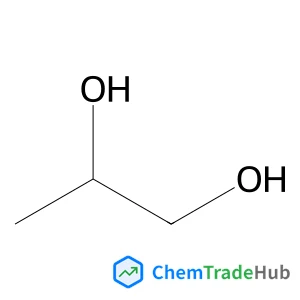
A self-healing supramolecular polymer gel with stimuli-responsiveness constructed by crown ether based molecular recognition
Literature Information
Publication Date
2013-03-12
DOI
10.1039/C3PY00283G
Impact Factor
5.582
Authors
Xuzhou Yan, Donghua Xu, Jianzhuang Chen, Mingming Zhang, Bingjie Hu, Yihua Yu, Feihe Huang
View Original
Abstract
A cross-linked supramolecular polymer network gel was prepared by orthogonal self-assembly of two homoditopic monomers and a metallic cross-linker. The gel is transparent and free-standing, which not only shows an interesting gel–sol transition in response to quadruple-stimuli, but also exhibits self-healing properties, as can be seen by the naked eye and as evidenced by rheological characterization. These unique features are all due to the dynamically reversible host–guest complexation and good mechanical properties of the cross-linked polymer network. Therefore, these fascinating properties make this supramolecular gel an unprecedentedly intelligent material.
Related Literature
Synthesis of degradable poly(ε-caprolactone)-based graft copolymers via a “grafting-from” approach
Panagiotis Bexis, Anthony W. Thomas, Andrew P. Dove
2016-10-31
Paper
DOI: 10.1039/C6PY01674J
ε-Methacryloyl-l-lysine based polypeptides and their thiol–ene click functionalization
Chunsheng Xiao, Shuangjiang Yu, Xuesi Chen
2014-12-18
Paper
DOI: 10.1039/C4PY01523A
Tunable dynamic hydrophobic attachment of guest molecules in amphiphilic core–shell polymers
Jörg Reichenwallner, Anja Thomas, Tobias Johann, Holger Frey, Dariush Hinderberger
2016-08-24
Paper
DOI: 10.1039/C6PY01335J
S-Nitrosothiol-modified hyperbranched polyesters
Lei Yang, Yuan Lu, Robert J. Soto, Anand Shah, Mona Jasmine R. Ahonen, Mark H. Schoenfisch
2016-11-02
Paper
DOI: 10.1039/C6PY01516F
Supramolecular engineering polyesters: endgroup functionalization of glycol modified PET with ureidopyrimidinone
Katelyn R. Houston, Anne-Martine S. Jackson, Ross W. Yost, Howard S. Carman
2016-10-10
Paper
DOI: 10.1039/C6PY01421F
Iron-catalyzed atom transfer radical polymerization
Zhigang Xue, Dan He, Xiaolin Xie
2014-12-23
Review Article
DOI: 10.1039/C4PY01457J
Polymeric carbon Lewis base–acid adducts: poly(NHC–C60)
Miao Hong, Eugene Y.-X. Chen
2015-01-02
Paper
DOI: 10.1039/C4PY01488J
Supramolecular main-chain polycatenanes formed by orthogonal metal ion coordination and pillar[5]arene-based host–guest interaction
Hao Xing, Bingbing Shi
2016-09-23
Communication
DOI: 10.1039/C6PY01617K
You might also like
Compound Q&A
What is 1-(2,4,6-Trifluorophenyl)ethanol (CAS: 1250113-83-7)?
1-(2,4,6-Trifluorophenyl)ethanol is an organic compound with the CAS number 1250...
1250113-83-71-(2,4,6-Trifluoroph...
Compound Q&A
Is 1-(2,4-Dimethoxybenzyl)-4-(hydroxymethyl)-2-pyrrolidinone (CAS: 919111-34-5) safe?
1-(2,4-Dimethoxybenzyl)-4-(hydroxymethyl)-2-pyrrolidinone (CAS: 919111-34-5) is ...
919111-34-51-(2,4-Dimethoxybenz...
Compound Q&A
What are the physical and chemical properties of (7S,15R)-6β,15-Diacetoxy-7α,20-epoxy-7-hydroxykaura-2,16-dien-1-one (CAS: 51419-51-3)?
(7S,15R)-6β,15-Diacetoxy-7α,20-epoxy-7-hydroxykaura-2,16-dien-1-one is a crystal...
51419-51-3(7S,15R)-6β,15-Diace...
Compound Q&A
What regulatory guidelines apply to rac-ethyl (1r,4r)-4-hydroxycyclohexane-1-carboxylate, trans (CAS: 3618-04-0)?
The compound rac-ethyl (1r,4r)-4-hydroxycyclohexane-1-carboxylate, trans (CAS: 3...
3618-04-0rac-ethyl (1r,4r)-4-...
Compound Q&A
What is the market or research trend for 2-(2,4-Difluorophenoxy)-3-nitropyridine (CAS: 175135-62-3)?
The market for 2-(2,4-Difluorophenoxy)-3-nitropyridine (CAS: 175135-62-3) is cur...
175135-62-32-(2,4-Difluoropheno...
Compound Q&A
What are the main uses of 6-Diazo-5-oxo-L-norleucine (CAS: 157-03-9)?
The main uses of 6-Diazo-5-oxo-L-norleucine (CAS: 157-03-9) include research in ...
157-03-96-Diazo-5-oxo-L-norl...
Compound Q&A
What precautions should be taken when handling 2-Aminoethyl-mono-amide-DOTA-tris(tBu ester) (CAS: 173308-19-5)?
When handling 2-Aminoethyl-mono-amide-DOTA-tris(tBu ester) (CAS: 173308-19-5), i...
173308-19-52-Aminoethyl-mono-am...
Compound Q&A
How is 5-Methylimidazo[1,2-a]pyridine-3-carbaldehyde (CAS: 178488-37-4) typically synthesized?
5-Methylimidazo[1,2-a]pyridine-3-carbaldehyde (CAS: 178488-37-4) can be synthesi...
178488-37-45-Methylimidazo[1,2-...
Compound Q&A
Are there alternatives to 2,4,6-Trihydroxyisophthalaldehyde (CAS: 4396-13-8) in synthesis?
There are alternative reagents that can be used in the synthesis of 2,4,6-Trihyd...
4396-13-82,4,6-Trihydroxyisop...
Compound Q&A
What is (2Z)-3-(5-Fluoro-1H-indol-3-yl)-2-sulfanylacrylic acid (CAS: 179461-52-0)?
(2Z)-3-(5-Fluoro-1H-indol-3-yl)-2-sulfanylacrylic acid is a chemical compound wi...
179461-52-0(2Z)-3-(5-Fluoro-1H-...
Source Journal
Polymer Chemistry

CiteScore:
8.6
Self-citation Rate:
7.3%
Articles per Year:
457
Polymer Chemistry welcomes submissions in all areas of polymer science that have a strong focus on macromolecular chemistry. Manuscripts may cover a broad range of fields, yet no direct application focus is required.
Recommended Compounds

Recommended Suppliers






Disclaimer
This page provides academic journal information for reference and research purposes only. We are not affiliated with any journal publishers and do not handle publication submissions. For publication-related inquiries, please contact the respective journal publishers directly.
If you notice any inaccuracies in the information displayed, please contact us at support@chemtradehub.com. We will promptly review and address your concerns.