












A structural study on the excimer state of an isolated benzene dimer using infrared spectroscopy in the skeletal vibration region
Literature Information
Publication Date
2017-07-18
DOI
10.1039/C7CP03480F
Impact Factor
3.676
Authors
Masaaki Fujii
View Original
Abstract
We applied infrared (IR) spectroscopy on electronic excited states of a benzene dimer (Bz2) isolated in a supersonic expansion to investigate the vibrational structure and geometry of the excimer (EXC) state where the electronic excitation is equally shared between the two Bz units. The IR spectrum of an EXC produced via the electronic origin of Bz2 gives a simpler spectral appearance than that in the electronic ground state, in which it has a T-shaped structure. Each band position locates nearly at the average of the corresponding vibrations in the electronic ground and excited states of the Bz monomer. This frequency averaging is explained by an excitation exchange model that takes into account vibrational excitations. From the observed frequency averaging, a highly symmetric parallel stacking structure in the EXC state is concluded with the help of a DFT calculation. This model clarifies that Franck–Condon factors between the S1–S0 transition of the monomer govern not only the magnitude of the EXC interaction, but also the configuration of vibrational states. The IR spectrum of the vibrationally excited EXC state produced by excitation to the 61 level of the stem site, on the other hand, shares the IR features both of the EXC state and the local excited (LE) state in which the excitation localizes on one of the benzene rings, making a T-shape contact. The structural interconversion equilibrium between parallel stacking (EXC) and T-shaped (LE) structures due to the vibrational excess energy has been established.
Related Literature
Local conformation of poly(methyl methacrylate) at nitrogen and water interfaces
Yohei Tateishi, Naoki Kai, Hidenori Noguchi, Kohei Uosaki, Toshihiko Nagamura, Keiji Tanaka
2009-12-21
Paper
DOI: 10.1039/B9PY00227H
Functional polymers for optoelectronic applications by RAFT polymerization
Graeme Moad, Ming Chen, Matthias Häussler, Almar Postma, Ezio Rizzardo, San H. Thang
2010-09-23
Review Article
DOI: 10.1039/C0PY00179A
Novel electrochemical and pH stimulus-responsive supramolecular polymer with disparate pseudorotaxanes as relevant unimers
Xiang Ma, Ruyi Sun, Weifeng Li, He Tian
2011-03-08
Communication
DOI: 10.1039/C0PY00419G
Free radical polymerization of alkyl methacrylates with N,N-dimethylanilinium p-toluenesulfonate at above ambient temperature: a quasi-living system
Atanu Kotal, Tapas K. Paira, Sanjib Banerjee, Chinmoy Bhattacharya, Tarun K. Mandal
2010-09-13
Paper
DOI: 10.1039/C0PY00180E
Characterization of network structure in radiation-cured resins of polyfunctional acrylic ester and N-vinylpyrrolidone by MALDI-MS combined with supercritical methanolysis
Hideki Matsubara, Hiroyasu Kataoka, Hajime Ohtani
2010-05-19
Paper
DOI: 10.1039/C0PY00026D
Polymer–protein conjugates: an enzymatic activity perspective
Marc A. Gauthier, Harm-Anton Klok
2010-06-11
Review Article
DOI: 10.1039/C0PY90001J
The role of responsive branched copolymer composition in controlling pH-triggered aggregation of “engineered” emulsion droplets: towards selective droplet assembly‡
Robert T. Woodward, Jonathan V. M. Weaver
2010-10-20
Paper
DOI: 10.1039/C0PY00277A
Copolymers from benzodithiophene and benzotriazole: synthesis and photovoltaic applications
Zhenhua Zhang, Bo Liu, Chunyue Pan, Yongfang Li, Yuehui He, Kechao Zhou, Yingping Zou
2010-07-07
Paper
DOI: 10.1039/C0PY00136H
You might also like
Compound Q&A
Is 6-(3-Fluorophenyl)picolinic acid (CAS: 887982-40-3) safe?
6-(3-Fluorophenyl)picolinic acid is generally considered safe for laboratory use...
887982-40-36-(3-Fluorophenyl)pi...
Compound Q&A
What industries use (3R)-3-Pyrrolidinol (CAS: 2799-21-5)?
(3R)-3-Pyrrolidinol is used in the pharmaceutical industry as a precursor for dr...
2799-21-5(3R)-3-Pyrrolidinol
Compound Q&A
What precautions should be taken when handling (4R,5R)-4,5-Diethoxycarbonyl-2,2-dimethyldioxolane (CAS: 59779-75-8)?
When handling (4R,5R)-4,5-Diethoxycarbonyl-2,2-dimethyldioxolane (CAS: 59779-75-...
59779-75-8(4R,5R)-4,5-Diethoxy...
Compound Q&A
How is 1-(6-Chloroimidazo[1,2-b]pyridazin-3-yl)ethanone (CAS: 90734-71-7) typically synthesized?
1-(6-Chloroimidazo[1,2-b]pyridazin-3-yl)ethanone is often synthesized via a mult...
90734-71-71-(6-Chloroimidazo[1...
Compound Q&A
What is the market or research trend for N-Ethyl-3,4-dimethylbenzylamine (CAS: 39180-83-1)?
The market for N-Ethyl-3,4-dimethylbenzylamine (CAS: 39180-83-1) remains steady,...
39180-83-1N-Ethyl-3,4-dimethyl...
Compound Q&A
What is Tert-butyl 3-(pyrrolidin-1-yl)azetidine-1-carboxylate (CAS: 1019008-21-9)?
Tert-butyl 3-(pyrrolidin-1-yl)azetidine-1-carboxylate is a chemical compound wit...
1019008-21-9Tert-butyl 3-(pyrrol...
Compound Q&A
What regulatory guidelines apply to 1-Bromo-3-chloro-2,4-dimethoxybenzene (CAS: 1228956-93-1)?
1-Bromo-3-chloro-2,4-dimethoxybenzene (CAS: 1228956-93-1) falls under the classi...
1228956-93-11-Bromo-3-chloro-2,4...
Compound Q&A
Is 8-Bromo-2-methyl-3,4-dihydroisoquinolin-1(2H)-one (CAS: 1368622-07-4) safe?
The safety of 8-Bromo-2-methyl-3,4-dihydroisoquinolin-1(2H)-one (CAS: 1368622-07...
1368622-07-48-Bromo-2-methyl-3,4...
Compound Q&A
Is Benzyl [(3S)-2,6-dioxo-3-piperidinyl]carbamate (CAS: 22785-43-9) safe?
Benzyl [(3S)-2,6-dioxo-3-piperidinyl]carbamate is generally safe when handled wi...
22785-43-9Benzyl [(3S)-2,6-dio...
Compound Q&A
How should 1-{[4-(4,4,5,5-Tetramethyl-1,3,2-dioxaborolan-2-yl)phenyl]sulfonyl}pyrrolidine (CAS: 928657-21-0) be stored?
1-{[4-(4,4,5,5-Tetramethyl-1,3,2-dioxaborolan-2-yl)phenyl]sulfonyl}pyrrolidine s...
928657-21-01-{[4-(4,4,5,5-Tetra...
Source Journal
Physical Chemistry Chemical Physics

CiteScore:
5.5
Self-citation Rate:
10.3%
Articles per Year:
3036
Physical Chemistry Chemical Physics (PCCP) is an international journal co-owned by 19 physical chemistry and physics societies from around the world. This journal publishes original, cutting-edge research in physical chemistry, chemical physics and biophysical chemistry. To be suitable for publication in PCCP, articles must include significant innovation and/or insight into physical chemistry; this is the most important criterion that reviewers and Editors will judge against when evaluating submissions. The journal has a broad scope and welcomes contributions spanning experiment, theory, computation and data science. Topical coverage includes spectroscopy, dynamics, kinetics, statistical mechanics, thermodynamics, electrochemistry, catalysis, surface science, quantum mechanics, quantum computing and machine learning. Interdisciplinary research areas such as polymers and soft matter, materials, nanoscience, energy, surfaces/interfaces, and biophysical chemistry are welcomed if they demonstrate significant innovation and/or insight into physical chemistry. Joined experimental/theoretical studies are particularly appreciated when complementary and based on up-to-date approaches.
Recommended Compounds
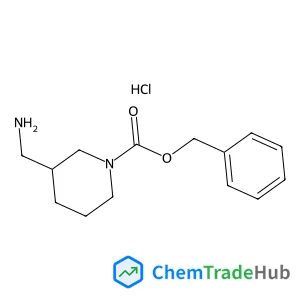
Benzyl 3-(aminomethyl)piperidine-1-carboxylate hydrochloride
CAS Number:
1186663-23-9
Molecular Formula:
C14H21ClN2O2
Recommended Suppliers




Disclaimer
This page provides academic journal information for reference and research purposes only. We are not affiliated with any journal publishers and do not handle publication submissions. For publication-related inquiries, please contact the respective journal publishers directly.
If you notice any inaccuracies in the information displayed, please contact us at support@chemtradehub.com. We will promptly review and address your concerns.