












Efficient and selective nitrile hydration reactions in water catalyzed by an unexpected dimethylsulfinyl anion generated in situ from CsOH and DMSO‡
Literature Information
Publication Date
2014-01-02
DOI
10.1039/C3GC42310G
Impact Factor
10.182
Authors
Haonan Chen, Wujie Dai, Yi Chen, Qing Xu, Jianhui Chen, Yajuan Zhao, Mingde Ye
View Original
Abstract
Unexpected dimethylsulfinyl anions (I), generated in situ from the superbase system CsOH–DMSO, was found to be a highly active catalyst for controllable nitrile hydration reactions in water, which selectively afforded the versatile amides via interesting Cs-activated I-catalyzed direct and indirect hydration mechanisms involving an O-transfer process from DMSO onto the nitriles.
Related Literature
A chip-based potentiometric sensor for a Zika virus diagnostic using 3D surface molecular imprinting
Vincent Ricotta, Yingjie Yu, Nicholas Clayton, Ya-Chen Chuang, Yantian Wang, Steffen Mueller, Kalle Levon, Marcia Simon, Miriam Rafailovich
2019-06-10
Paper
DOI: 10.1039/C9AN00580C
A novel homolateral and dicationic AIEgen for the sensitive detection of casein
Zenghe Li, Lianying Wang, Weijiang Guan, Caifeng Ding, Chao Lu
2019-04-22
Paper
DOI: 10.1039/C9AN00463G
An untargeted lipidomic approach for qualitative determination of latent fingermark glycerides using UPLC-IMS-QToF-MSE
Amanda A. Frick, Céline Weyermann
2019-05-02
Paper
DOI: 10.1039/C9AN00521H
A dual ammonia-responsive sponge sensor: preparation, transition mechanism and sensitivity
Jiahong Guo, Zhiwei Bai, Yonglei Lyu, Jikui Wang, Qiang Wang
2018-05-29
Paper
DOI: 10.1039/C8AN00388B
Determination of cellular vitamin C dynamics by HPLC-DAD
Taiki Miyazawa, Yuji Miyahara
2019-03-19
Communication
DOI: 10.1039/C8AN02240B
Highly sensitive and selective light-up fluorescent probe for monitoring gallium and chromium ions in vitro and in vivo
Xiaojun He, Chenglin Wu, Yuna Qian, Yahui Li, Lilei Zhang, Feng Ding, Hong Chen
2019-05-07
Paper
DOI: 10.1039/C9AN00625G
Fluorescence lifetime-based pH sensing by platinum nanoclusters
Lihua Jin, Lulu Shi, Wenjuan Shi, Zheng Meng, Li Shang, Yehua Shen
2019-04-26
Paper
DOI: 10.1039/C9AN00061E
Early and rapid detection of UCHL1 in the serum of brain-trauma patients: a novel gold nanoparticle-based method for diagnosing the severity of brain injury
Gyaninder Pal Singh, Richa Nigam, Gaurav Singh Tomar, Mohan Monisha, Sanjeev Kumar Bhoi, Arulselvi S, Kangana Sengar, Deepa Akula, Prashanth Panta, Roy Anindya
2018-06-12
Paper
DOI: 10.1039/C8AN00533H
You might also like
Compound Q&A
What is the market or research trend for N-(4-Methoxybenzyl)-2-pyridinamine (CAS: 52818-63-0)?
N-(4-Methoxybenzyl)-2-pyridinamine (CAS: 52818-63-0) is increasingly being used ...
52818-63-0N-(4-Methoxybenzyl)-...
Compound Q&A
What precautions should be taken when handling Ethyl 4-(2-chlorophenyl)-1,3-thiazole-2-carboxylate (CAS: 1050507-06-6)?
When handling Ethyl 4-(2-chlorophenyl)-1,3-thiazole-2-carboxylate, appropriate p...
1050507-06-6Ethyl 4-(2-chlorophe...
Compound Q&A
What regulatory guidelines apply to diethyldiselane (CAS: 628-39-7)?
Diethyldiselane (CAS: 628-39-7) is classified under the Globally Harmonized Syst...
628-39-7Diethyldiselane
Compound Q&A
What is the market or research trend for oxocopper (CAS: 12053-18-8)?
The market for oxocopper (CAS: 12053-18-8) is primarily driven by its use in cat...
12053-18-8oxocopper; oxo-(oxoc...
Compound Q&A
What is the market or research trend for 5-{[(2-Methyl-2-propanyl)oxy]carbonyl}-5-azaspiro[2.4]heptane-7-carboxylic acid?
The market for 5-{[(2-Methyl-2-propanyl)oxy]carbonyl}-5-azaspiro[2.4]heptane-7-c...
1268519-54-55-{[(2-Methyl-2-prop...
Compound Q&A
What is 2-(1-Pyrrolidinyl)-4-pyridinamine (CAS: 35981-63-6)?
2-(1-Pyrrolidinyl)-4-pyridinamine is a chemical compound with the CAS number 359...
35981-63-62-(1-Pyrrolidinyl)-4...
Compound Q&A
What are the physical and chemical properties of 2-(3-Pyridinyl)-1-azabicyclo[2.2.2]octane (CAS: 91556-75-1)?
2-(3-Pyridinyl)-1-azabicyclo[2.2.2]octane (CAS: 91556-75-1) is a crystalline sol...
91556-75-12-(3-Pyridinyl)-1-az...
Compound Q&A
How is (S)-Alpha-allyl-proline hydrochloride (CAS: 129704-91-2) typically synthesized?
(S)-Alpha-allyl-proline hydrochloride is usually synthesized via a Wittig reacti...
129704-91-2(S)-Alpha-allyl-prol...
Compound Q&A
What is 3-Methyl-1,2-oxazole-5-carboxylic acid (CAS: 4857-42-5)?
3-Methyl-1,2-oxazole-5-carboxylic acid (CAS: 4857-42-5) is an organic compound w...
4857-42-53-Methyl-1,2-oxazole...
Compound Q&A
How is Lys-SMCC-DM1 (CAS: 1281816-04-3) typically synthesized?
Lys-SMCC-DM1 is synthesized via a multi-step process involving the coupling of S...
1281816-04-3Lys-SMCC-DM1
Source Journal
Green Chemistry

CiteScore:
16.1
Self-citation Rate:
7.5%
Articles per Year:
944
Green Chemistry provides a unique forum for the publication of innovative research on the development of alternative green and sustainable technologies. The scope of Green Chemistry is based on, but not limited to, the definition proposed by Anastas and Warner (Green Chemistry: Theory and Practice, P T Anastas and J C Warner, Oxford University Press, Oxford, 1998). Green chemistry is the utilisation of a set of principles that reduces or eliminates the use or generation of hazardous substances in the design, manufacture and application of chemical products. Green Chemistry is at the frontiers of this continuously-evolving interdisciplinary science and publishes research that attempts to reduce the environmental impact of the chemical enterprise by developing a technology base that is inherently non-toxic to living things and the environment. Submissions on all aspects of research relating to the endeavour are welcome. The journal publishes original and significant cutting-edge research that is likely to be of wide general appeal. To be published, work must present a significant advance in green chemistry. Papers must contain a comparison with existing methods and demonstrate advantages over those methods before publication can be considered. For more information please see this Editorial. Coverage includes the following, but is not limited to: Design (e.g. biomimicry, design for degradation/recycling/reduced toxicity…) Reagents & Feedstocks (e.g. renewables, CO2, solvents, auxiliary agents, waste utilization…) Synthesis (e.g. organic, inorganic, synthetic biology…) Catalysis (e.g. homogeneous, heterogeneous, enzyme, whole cell…) Process (e.g. process design, intensification, separations, recycling, efficiency…) Energy (e.g. renewable energy, fuels, photovoltaics, fuel cells, energy storage, energy carriers…) Applications (e.g. electronics, dyes, consumer products, coatings, pharmaceuticals, preservatives, building materials, chemicals for industry/agriculture/mining…) Impact (e.g. safety, metrics, LCA, sustainability, (eco)toxicology…) Green chemistry is, by definition, a continuously-evolving frontier. Therefore, the inclusion of a particular material or technology does not, of itself, guarantee that a paper is suitable for the journal. To be suitable, the novel advance should have the potential for reduced environmental impact relative to the state of the art. Green Chemistry does not normally deal with research associated with 'end-of-pipe' or remediation issues.
Recommended Compounds
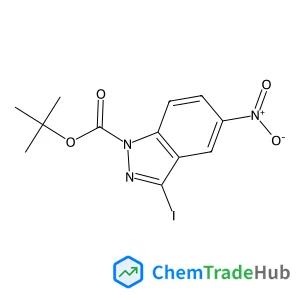
Tert-butyl 3-iodo-5-nitro-1H-indazole-1-carboxylate
CAS Number:
459133-69-8
Molecular Formula:
C12H12IN3O4
Recommended Suppliers


Disclaimer
This page provides academic journal information for reference and research purposes only. We are not affiliated with any journal publishers and do not handle publication submissions. For publication-related inquiries, please contact the respective journal publishers directly.
If you notice any inaccuracies in the information displayed, please contact us at support@chemtradehub.com. We will promptly review and address your concerns.