












Determination of cellular vitamin C dynamics by HPLC-DAD
Literature Information
Publication Date
2019-03-19
DOI
10.1039/C8AN02240B
Impact Factor
4.616
Authors
Taiki Miyazawa, Yuji Miyahara
View Original
Abstract
A redox-sensitive inter-conversion between ascorbic acid (ASC) and its oxidized form dehydroascorbic acid (DHA) in the intracellular environment has been of exceptional interest to recent metabolomics and pharmaceutical research. We developed a chromatographic protocol to instantly determine these vitamers with each identity from cellular extracts, without any labeling and pretreatments. Owing to its simplicity, one can readily continue the assay for hours, an otherwise difficult to cover timescale at which the intracellular DHA–ASC conversion comes into play. The method was validated for the analysis of pancreatic cancer cells, to our knowledge the first-ever study on a nucleated cell type, to trace in detail their kinetics of glucose transporter-dependent DHA uptake and, simultaneously, that for the intracellular ASC conversion. The simplest of all the relevant techniques and yet with the unique ability to provide each vitamer identity on a high-throughput basis, this method should offer the most practical option for VC-involved physiological and pharmaceutical studies including high-dose VC cancer therapy.
Related Literature
Mirror symmetry origin of Dirac cone formation in rectangular two-dimensional materials
Xuming Qin, Yi Liu, Gui Yang, Dongqiu Zhao
2020-03-02
Paper
DOI: 10.1039/D0CP00244E
One-electron oxidation of ds(5′-GGG-3′) and ds(5′-G(8OG)G-3′) and the nature of hole distribution: a density functional theory (DFT) study
Anil Kumar, Amitava Adhikary, Michael D. Sevilla, David M. Close
2020-02-03
Paper
DOI: 10.1039/C9CP06244K
Theoretical study on the stability and aromaticity in silapentafulvenes towards triplet ground state species
Jiashun Wu, Alvi Muhammad Rouf, Yuanyuan Huang, Danling Zhuang, Jun Zhu
2020-02-03
Paper
DOI: 10.1039/C9CP06506G
Effects of local geometry distortion at the Al/Al2Cu interfaces on solute segregation
2020-01-17
Paper
DOI: 10.1039/D0CP00067A
Symmetry and 1H NMR chemical shifts of short hydrogen bonds: impact of electronic and nuclear quantum effects
Shengmin Zhou, Lu Wang
2020-01-08
Paper
DOI: 10.1039/C9CP06840F
Surface plasmon resonance study of the interaction of N-methyl mesoporphyrin IX with G-quadruplex DNA
M. Perenon, H. Bonnet, T. Lavergne, J. Dejeu, E. Defrancq
2020-02-06
Paper
DOI: 10.1039/C9CP06321H
Halogen⋯halogen interactions in decahalo-closo-carboranes: CSD analysis and theoretical study
Maria de las Nieves Piña, Antonio Bauzá, Antonio Frontera
2020-02-21
Paper
DOI: 10.1039/D0CP00114G
Correction: Influence of residual water and cation acidity on the ionic transport mechanism in proton-conducting ionic liquids
Liming Wang, Tatiana Zinkevich, Sylvio Indris
2020-02-19
Correction
DOI: 10.1039/D0CP90046J
Correction: Kinetics and dynamics of the C(3P) + H2O reaction on a full-dimensional accurate triplet state potential energy surface
Jun Li, Changjian Xie, Hua Guo
2020-02-07
Correction
DOI: 10.1039/D0CP90032J
You might also like
Compound Q&A
What is the market or research trend for N-(4-Methoxybenzyl)-2-pyridinamine (CAS: 52818-63-0)?
N-(4-Methoxybenzyl)-2-pyridinamine (CAS: 52818-63-0) is increasingly being used ...
52818-63-0N-(4-Methoxybenzyl)-...
Compound Q&A
What precautions should be taken when handling Ethyl 4-(2-chlorophenyl)-1,3-thiazole-2-carboxylate (CAS: 1050507-06-6)?
When handling Ethyl 4-(2-chlorophenyl)-1,3-thiazole-2-carboxylate, appropriate p...
1050507-06-6Ethyl 4-(2-chlorophe...
Compound Q&A
What regulatory guidelines apply to diethyldiselane (CAS: 628-39-7)?
Diethyldiselane (CAS: 628-39-7) is classified under the Globally Harmonized Syst...
628-39-7Diethyldiselane
Compound Q&A
What is the market or research trend for oxocopper (CAS: 12053-18-8)?
The market for oxocopper (CAS: 12053-18-8) is primarily driven by its use in cat...
12053-18-8oxocopper; oxo-(oxoc...
Compound Q&A
What is the market or research trend for 5-{[(2-Methyl-2-propanyl)oxy]carbonyl}-5-azaspiro[2.4]heptane-7-carboxylic acid?
The market for 5-{[(2-Methyl-2-propanyl)oxy]carbonyl}-5-azaspiro[2.4]heptane-7-c...
1268519-54-55-{[(2-Methyl-2-prop...
Compound Q&A
What is 2-(1-Pyrrolidinyl)-4-pyridinamine (CAS: 35981-63-6)?
2-(1-Pyrrolidinyl)-4-pyridinamine is a chemical compound with the CAS number 359...
35981-63-62-(1-Pyrrolidinyl)-4...
Compound Q&A
What are the physical and chemical properties of 2-(3-Pyridinyl)-1-azabicyclo[2.2.2]octane (CAS: 91556-75-1)?
2-(3-Pyridinyl)-1-azabicyclo[2.2.2]octane (CAS: 91556-75-1) is a crystalline sol...
91556-75-12-(3-Pyridinyl)-1-az...
Compound Q&A
How is (S)-Alpha-allyl-proline hydrochloride (CAS: 129704-91-2) typically synthesized?
(S)-Alpha-allyl-proline hydrochloride is usually synthesized via a Wittig reacti...
129704-91-2(S)-Alpha-allyl-prol...
Compound Q&A
What is 3-Methyl-1,2-oxazole-5-carboxylic acid (CAS: 4857-42-5)?
3-Methyl-1,2-oxazole-5-carboxylic acid (CAS: 4857-42-5) is an organic compound w...
4857-42-53-Methyl-1,2-oxazole...
Compound Q&A
How is Lys-SMCC-DM1 (CAS: 1281816-04-3) typically synthesized?
Lys-SMCC-DM1 is synthesized via a multi-step process involving the coupling of S...
1281816-04-3Lys-SMCC-DM1
Source Journal
Analyst

CiteScore:
7.8
Self-citation Rate:
5.6%
Articles per Year:
653
Analyst publishes analytical and bioanalytical research that reports premier fundamental discoveries and inventions, and the applications of those discoveries, unconfined by traditional discipline barriers.
Recommended Compounds
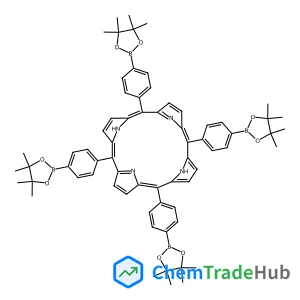
5,10,15,20-tetrakis(4-boronic acid pinacol ester phenyl) porphyrin
CAS Number:
1332748-00-1
Molecular Formula:
C68H74B4N4O8
![6-Bromo-3-ethyl-3H-imidazo[4,5-b]pyridine structure](https://static.chemtradehub.com/structs/103/1033202-59-3-2a8f.webp "6-Bromo-3-ethyl-3H-imidazo[4,5-b]pyridine structure")
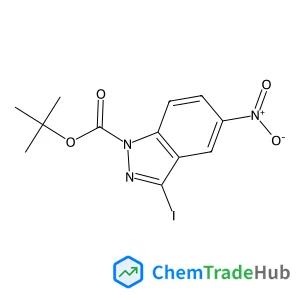
Tert-butyl 3-iodo-5-nitro-1H-indazole-1-carboxylate
CAS Number:
459133-69-8
Molecular Formula:
C12H12IN3O4
Recommended Suppliers



Disclaimer
This page provides academic journal information for reference and research purposes only. We are not affiliated with any journal publishers and do not handle publication submissions. For publication-related inquiries, please contact the respective journal publishers directly.
If you notice any inaccuracies in the information displayed, please contact us at support@chemtradehub.com. We will promptly review and address your concerns.