












![1-[6-(1H-Imidazol-1-yl)-3-pyridinyl]methanamine structure](https://static.chemtradehub.com/structs/914/914637-08-4-8825.webp "1-[6-(1H-Imidazol-1-yl)-3-pyridinyl]methanamine structure")
Graphene/g-C3N4 bilayer: considerable band gap opening and effective band structure engineering
Literature Information
Publication Date
2014-01-06
DOI
10.1039/C3CP54592J
Impact Factor
3.676
Authors
Xinru Li, Ying Dai, Yandong Ma, Shenghao Han, Baibiao Huang
View Original
Abstract
The layered graphene/g-C3N4 composites show high conductivity, electrocatalytic performance and visible light response and have potential applications in microelectronic devices and photocatalytic technology. In the present work, the stacking patterns and the correlations between electronic structures and related properties of graphene/g-C3N4 bilayers are investigated systematically by means of first-principles calculations. Our results indicate that the band gap of graphene/g-C3N4 bilayers can be up to 108.5 meV, which is large enough for the gap opening at room temperature. The calculated charge density difference unravels that the charge redistribution drives the interlayer charge transfer from graphene to g-C3N4. Interestingly, the investigation also shows that external electric field can tune the band gap of graphene/g-C3N4 bilayers effectively. Our research demonstrates that graphene on g-C3N4 with a tunable band gap and high carrier mobility may provide a novel way for fabricating high-performance graphene-based nanodevices.
Related Literature
Vinyl sulfonyl chemistry-driven unidirectional transport of a macrocycle through a [2]rotaxane
Arthur H. G. David, Pablo García–Cerezo, Araceli G. Campaña, Francisco Santoyo–González, Victor Blanco
2021-11-26
Research Article
DOI: 10.1039/D1QO01491A
Synthesis and application of a new chiral monodentate spiro phosphoramidite ligand based on hexamethyl-1,1′-spirobiindane backbone in asymmetric hydroamination/arylation of alkenes
Huanyu Shan, Rihuang Pan, Xufeng Lin
2018-08-16
Communication
DOI: 10.1039/C8OB01785A
Preparation of polysubstituted dihydrofurans through a PhI(OAc)2-promoted haloenolcyclization of olefinic dicarbonyl compounds
Ji Liu, Qing-Yun Liu, Xing-Xiao Fang, Gong-Qing Liu, Yong Ling
2018-09-24
Paper
DOI: 10.1039/C8OB02161A
Rhodium-catalyzed cyclization of acceptor-substituted biphenyl α-diazoketones: a study of the substitution effect on chemoselectivity
Kuo-Hsin Chen, Yi-Jung Chiang, Jia-Liang Zhu
2018-09-04
Paper
DOI: 10.1039/C8OB01489B
A rapid cell-permeating turn-on probe for sensitive and selective detection of sulfite in living cells
Jing Xu, Da-Jun Zheng, Mi-Mi Su, Yan-Chi Chen, Qing-Cai Jiao
2018-08-30
Paper
DOI: 10.1039/C8OB01908H
Ru-Catalyzed dehydrogenative synthesis of antimalarial arylidene oxindoles
Girish Singh Bisht, Akanksha M. Pandey, Moreshwar B. Chaudhari, Sandip G. Agalave, Abhishek Kanyal, Krishanpal Karmodiya, Boopathy Gnanaprakasam
2018-09-18
Paper
DOI: 10.1039/C8OB01852A
Synthesis and evaluation of N,S-compounds as chiral ligands for transfer hydrogenation of acetophenone
Jenny K. Ekegren, Peter Roth, Klas Källström, Tibor Tarnai, Pher G. Andersson
2002-12-09
Paper
DOI: 10.1039/B208907F
Dual function of amino acid ionic liquids (Bmim[AA]) on the degradation of the organophosphorus pesticide, Paraoxon®
Javiera I. Morales, Roberto Figueroa, Mabel Rojas, Daniela Millán, Ricardo A. Tapia, Paulina Pavez
2018-09-18
Paper
DOI: 10.1039/C8OB01928B
Ring forming reactions of imines of 2-aminobenzaldehyde and related compounds
Per Wiklund, Jan Bergman
2002-12-09
Paper
DOI: 10.1039/B209505J
You might also like
Compound Q&A
What is the market or research trend for N-(4-Methoxybenzyl)-2-pyridinamine (CAS: 52818-63-0)?
N-(4-Methoxybenzyl)-2-pyridinamine (CAS: 52818-63-0) is increasingly being used ...
52818-63-0N-(4-Methoxybenzyl)-...
Compound Q&A
What precautions should be taken when handling Ethyl 4-(2-chlorophenyl)-1,3-thiazole-2-carboxylate (CAS: 1050507-06-6)?
When handling Ethyl 4-(2-chlorophenyl)-1,3-thiazole-2-carboxylate, appropriate p...
1050507-06-6Ethyl 4-(2-chlorophe...
Compound Q&A
What regulatory guidelines apply to diethyldiselane (CAS: 628-39-7)?
Diethyldiselane (CAS: 628-39-7) is classified under the Globally Harmonized Syst...
628-39-7Diethyldiselane
Compound Q&A
What is the market or research trend for oxocopper (CAS: 12053-18-8)?
The market for oxocopper (CAS: 12053-18-8) is primarily driven by its use in cat...
12053-18-8oxocopper; oxo-(oxoc...
Compound Q&A
What is the market or research trend for 5-{[(2-Methyl-2-propanyl)oxy]carbonyl}-5-azaspiro[2.4]heptane-7-carboxylic acid?
The market for 5-{[(2-Methyl-2-propanyl)oxy]carbonyl}-5-azaspiro[2.4]heptane-7-c...
1268519-54-55-{[(2-Methyl-2-prop...
Compound Q&A
What is 2-(1-Pyrrolidinyl)-4-pyridinamine (CAS: 35981-63-6)?
2-(1-Pyrrolidinyl)-4-pyridinamine is a chemical compound with the CAS number 359...
35981-63-62-(1-Pyrrolidinyl)-4...
Compound Q&A
What are the physical and chemical properties of 2-(3-Pyridinyl)-1-azabicyclo[2.2.2]octane (CAS: 91556-75-1)?
2-(3-Pyridinyl)-1-azabicyclo[2.2.2]octane (CAS: 91556-75-1) is a crystalline sol...
91556-75-12-(3-Pyridinyl)-1-az...
Compound Q&A
How is (S)-Alpha-allyl-proline hydrochloride (CAS: 129704-91-2) typically synthesized?
(S)-Alpha-allyl-proline hydrochloride is usually synthesized via a Wittig reacti...
129704-91-2(S)-Alpha-allyl-prol...
Compound Q&A
What is 3-Methyl-1,2-oxazole-5-carboxylic acid (CAS: 4857-42-5)?
3-Methyl-1,2-oxazole-5-carboxylic acid (CAS: 4857-42-5) is an organic compound w...
4857-42-53-Methyl-1,2-oxazole...
Compound Q&A
How is Lys-SMCC-DM1 (CAS: 1281816-04-3) typically synthesized?
Lys-SMCC-DM1 is synthesized via a multi-step process involving the coupling of S...
1281816-04-3Lys-SMCC-DM1
Source Journal
Physical Chemistry Chemical Physics

CiteScore:
5.5
Self-citation Rate:
10.3%
Articles per Year:
3036
Physical Chemistry Chemical Physics (PCCP) is an international journal co-owned by 19 physical chemistry and physics societies from around the world. This journal publishes original, cutting-edge research in physical chemistry, chemical physics and biophysical chemistry. To be suitable for publication in PCCP, articles must include significant innovation and/or insight into physical chemistry; this is the most important criterion that reviewers and Editors will judge against when evaluating submissions. The journal has a broad scope and welcomes contributions spanning experiment, theory, computation and data science. Topical coverage includes spectroscopy, dynamics, kinetics, statistical mechanics, thermodynamics, electrochemistry, catalysis, surface science, quantum mechanics, quantum computing and machine learning. Interdisciplinary research areas such as polymers and soft matter, materials, nanoscience, energy, surfaces/interfaces, and biophysical chemistry are welcomed if they demonstrate significant innovation and/or insight into physical chemistry. Joined experimental/theoretical studies are particularly appreciated when complementary and based on up-to-date approaches.
Recommended Compounds
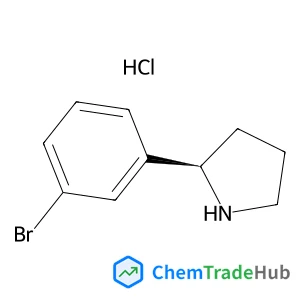
(2R)-2-(3-Bromophenyl)pyrrolidine hydrochloride (1:1)
CAS Number:
1391550-13-2
Molecular Formula:
C10H13BrClN
![1-oxaspiro[4.4]nonan-6-one structure](https://static.chemtradehub.com/structs/134/134179-01-4-e051.webp "1-oxaspiro[4.4]nonan-6-one structure")
![N-{15-[(2,5-Dioxo-1-pyrrolidinyl)oxy]-15-oxo-3,6,9,12-tetraoxapentadec-1-yl}-2-(2-propyn-1-yloxy)acetamide structure](https://static.chemtradehub.com/structs/210/2101206-92-0-2eb5.webp "N-{15-[(2,5-Dioxo-1-pyrrolidinyl)oxy]-15-oxo-3,6,9,12-tetraoxapentadec-1-yl}-2-(2-propyn-1-yloxy)acetamide structure")
N-{15-[(2,5-Dioxo-1-pyrrolidinyl)oxy]-15-oxo-3,6,9,12-tetraoxapentadec-1-yl}-2-(2-propyn-1-yloxy)acetamide
CAS Number:
2101206-92-0
Molecular Formula:
C20H30N2O10
Recommended Suppliers






Disclaimer
This page provides academic journal information for reference and research purposes only. We are not affiliated with any journal publishers and do not handle publication submissions. For publication-related inquiries, please contact the respective journal publishers directly.
If you notice any inaccuracies in the information displayed, please contact us at support@chemtradehub.com. We will promptly review and address your concerns.