



Structure and thermal properties of salicylate-based-protic ionic liquids as new heat storage media. COSMO-RS structure characterization and modeling of heat capacities
Literature Information
Publication Date
2013-12-06
DOI
10.1039/C3CP54533D
Impact Factor
3.676
Authors
Johan Jacquemin, Joanna Feder-Kubis, Michał Zorębski, Katarzyna Grzybowska, Mirosław Chorążewski, Stella Hensel-Bielówka, Edward Zorębski, Marian Paluch, Marzena Dzida
View Original
Abstract
During this research, we present a study on the thermal properties, such as the melting, cold crystallization, and glass transition temperatures as well as heat capacities from 293.15 K to 323.15 K of nine in-house synthesized protic ionic liquids based on the 3-(alkoxymethyl)-1H-imidazol-3-ium salicylate ([H-Im-C1OCn][Sal]) with n = 3–11. The 3D structures, surface charge distributions and COSMO volumes of all investigated ions are obtained by combining DFT calculations and the COSMO-RS methodology. The heat capacity data sets as a function of temperature of the 3-(alkoxymethyl)-1H-imidazol-3-ium salicylate are then predicted using the methodology originally proposed in the case of ionic liquids by Ge et al. 3-(Alkoxymethyl)-1H-imidazol-3-ium salicylate based ionic liquids present specific heat capacities higher in many cases than other ionic liquids that make them suitable as heat storage media and in heat transfer processes. It was found experimentally that the heat capacity increases linearly with increasing alkyl chain length of the alkoxymethyl group of 3-(alkoxymethyl)-1H-imidazol-3-ium salicylate as was expected and predicted using the Ge et al. method with an overall relative absolute deviation close to 3.2% for temperatures up to 323.15 K.
Recommended Journals

Bioorganic & Medicinal Chemistry Letters

Medicinal Chemistry Research

Colloid Journal

Herald of the Russian Academy of Sciences

Journal of Asian Natural Products Research

Critical Reviews in Solid State and Materials Sciences

NDT & E International

Biocatalysis and Biotransformation

Bioorganic & Medicinal Chemistry

Chinese Journal of Chemistry
Related Literature
Synthesis and reactivity of tetrakis(imino)pyracene (TIP) ligands; bifunctional analogues of the BIAN ligand class
Kalyan V. Vasudevan, Michael Findlater, Alan H. Cowley
2008-03-03
Communication
DOI: 10.1039/B719251G
Blue light-emitting and hole-transporting amorphous molecular materials based on diarylaminobiphenyl-functionalized bimesitylenes
Jarugu Narasimha Moorthy, Parthasarathy Venkatakrishnan, Duo-Fong Huang, Tahsin J. Chow
2008-03-05
Communication
DOI: 10.1039/B718250C
Single molecule conformational analysis of the biologically relevant DNA G-quadruplex in the promoter of the proto-oncogene c-MYC
Pravin S. Shirude, Liming Ying, Shankar Balasubramanian
2008-03-20
Communication
DOI: 10.1039/B801465E
One-pot synthesis of reverse type-I In2O3@In2S3 core–shell nanoparticles
Zhaoyong Sun, Amar Kumbhar, Kai Sun, Qingsheng Liu
2008-03-18
Communication
DOI: 10.1039/B719176F
Accelerating charge transfer in a triphenylamine–subphthalocyanine donor–acceptor system
Anaïs Medina, Christian G. Claessens, G. M. Aminur Rahman, Al Mokhtar Lamsabhi, Otilia Mó, Manuel Yáñez, Dirk M. Guldi, Tomás Torres
2008-02-11
Communication
DOI: 10.1039/B719226F
Highly efficient quenching of excimer fluorescence by perylene diimide in DNA
Nicolas Bouquin, Vladimir L. Malinovskii, Robert Häner
2008-03-28
Communication
DOI: 10.1039/B802193G
Chiral dinuclear vanadium(v) catalysts for oxidative coupling of 2-naphthols‡
Shinobu Takizawa, Tomomi Katayama, Chiaki Kameyama, Kiyotaka Onitsuka, Takeyuki Suzuki, Takeshi Yanagida, Tomoji Kawai, Hiroaki Sasai
2008-02-14
Communication
DOI: 10.1039/B717068H
Angle-controlled arrangement of single-walled carbon nanotubes solubilised by 8-quinolinol metal chelate derivatives on mica
Kazuyuki Nobusawa, Atsushi Ikeda, Yasunori Tanaka, Mineo Hashizume, Jun-ichi Kikuchi, Michihiro Shirakawa, Tatsuya Kitahara, Norifumi Fujita, Seiji Shinkai
2008-02-26
Communication
DOI: 10.1039/B715960A
Cobalt promoted copper manganese oxide catalysts for ambient temperature carbon monoxide oxidation
Christopher Jones, Stuart H. Taylor, Andrew Burrows, Mandy J. Crudace, Christopher J. Kiely, Graham J. Hutchings
2008-02-01
Communication
DOI: 10.1039/B800052M
You might also like
Compound Q&A
What is the market or research trend for N-(4-Methoxybenzyl)-2-pyridinamine (CAS: 52818-63-0)?
N-(4-Methoxybenzyl)-2-pyridinamine (CAS: 52818-63-0) is increasingly being used ...
52818-63-0N-(4-Methoxybenzyl)-...
Compound Q&A
What precautions should be taken when handling Ethyl 4-(2-chlorophenyl)-1,3-thiazole-2-carboxylate (CAS: 1050507-06-6)?
When handling Ethyl 4-(2-chlorophenyl)-1,3-thiazole-2-carboxylate, appropriate p...
1050507-06-6Ethyl 4-(2-chlorophe...
Compound Q&A
What regulatory guidelines apply to diethyldiselane (CAS: 628-39-7)?
Diethyldiselane (CAS: 628-39-7) is classified under the Globally Harmonized Syst...
628-39-7Diethyldiselane
Compound Q&A
What is the market or research trend for oxocopper (CAS: 12053-18-8)?
The market for oxocopper (CAS: 12053-18-8) is primarily driven by its use in cat...
12053-18-8oxocopper; oxo-(oxoc...
Compound Q&A
What is the market or research trend for 5-{[(2-Methyl-2-propanyl)oxy]carbonyl}-5-azaspiro[2.4]heptane-7-carboxylic acid?
The market for 5-{[(2-Methyl-2-propanyl)oxy]carbonyl}-5-azaspiro[2.4]heptane-7-c...
1268519-54-55-{[(2-Methyl-2-prop...
Compound Q&A
What is 2-(1-Pyrrolidinyl)-4-pyridinamine (CAS: 35981-63-6)?
2-(1-Pyrrolidinyl)-4-pyridinamine is a chemical compound with the CAS number 359...
35981-63-62-(1-Pyrrolidinyl)-4...
Compound Q&A
What are the physical and chemical properties of 2-(3-Pyridinyl)-1-azabicyclo[2.2.2]octane (CAS: 91556-75-1)?
2-(3-Pyridinyl)-1-azabicyclo[2.2.2]octane (CAS: 91556-75-1) is a crystalline sol...
91556-75-12-(3-Pyridinyl)-1-az...
Compound Q&A
How is (S)-Alpha-allyl-proline hydrochloride (CAS: 129704-91-2) typically synthesized?
(S)-Alpha-allyl-proline hydrochloride is usually synthesized via a Wittig reacti...
129704-91-2(S)-Alpha-allyl-prol...
Compound Q&A
What is 3-Methyl-1,2-oxazole-5-carboxylic acid (CAS: 4857-42-5)?
3-Methyl-1,2-oxazole-5-carboxylic acid (CAS: 4857-42-5) is an organic compound w...
4857-42-53-Methyl-1,2-oxazole...
Compound Q&A
How is Lys-SMCC-DM1 (CAS: 1281816-04-3) typically synthesized?
Lys-SMCC-DM1 is synthesized via a multi-step process involving the coupling of S...
1281816-04-3Lys-SMCC-DM1
Source Journal
Physical Chemistry Chemical Physics

CiteScore:
5.5
Self-citation Rate:
10.3%
Articles per Year:
3036
Physical Chemistry Chemical Physics (PCCP) is an international journal co-owned by 19 physical chemistry and physics societies from around the world. This journal publishes original, cutting-edge research in physical chemistry, chemical physics and biophysical chemistry. To be suitable for publication in PCCP, articles must include significant innovation and/or insight into physical chemistry; this is the most important criterion that reviewers and Editors will judge against when evaluating submissions. The journal has a broad scope and welcomes contributions spanning experiment, theory, computation and data science. Topical coverage includes spectroscopy, dynamics, kinetics, statistical mechanics, thermodynamics, electrochemistry, catalysis, surface science, quantum mechanics, quantum computing and machine learning. Interdisciplinary research areas such as polymers and soft matter, materials, nanoscience, energy, surfaces/interfaces, and biophysical chemistry are welcomed if they demonstrate significant innovation and/or insight into physical chemistry. Joined experimental/theoretical studies are particularly appreciated when complementary and based on up-to-date approaches.
Recommended Compounds
![1-oxaspiro[4.4]nonan-6-one structure](https://static.chemtradehub.com/structs/134/134179-01-4-e051.webp "1-oxaspiro[4.4]nonan-6-one structure")
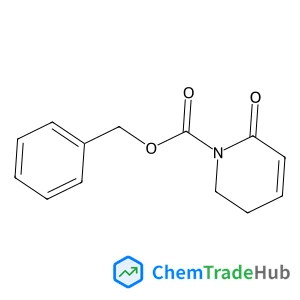
Benzyl 6-oxo-3,6-dihydro-1(2H)-pyridinecarboxylate
CAS Number:
725746-35-0
Molecular Formula:
C13H13NO3
Recommended Suppliers




Disclaimer
This page provides academic journal information for reference and research purposes only. We are not affiliated with any journal publishers and do not handle publication submissions. For publication-related inquiries, please contact the respective journal publishers directly.
If you notice any inaccuracies in the information displayed, please contact us at support@chemtradehub.com. We will promptly review and address your concerns.