












Effect of cations on condensation of a mesogenic amphiphilic molecule at the air–aqueous electrolyte interface
Literature Information
Publication Date
2013-12-03
DOI
10.1039/C3CP53751J
Impact Factor
3.676
Authors
Shilpa Harish T, P. Viswanath
View Original
Abstract
We report the interactions of a mesogenic molecule, 4′-octyl-4-biphenyl-carbonitrile (8CB), with some cations (Na+, Cu2+, Ni2+, La3+ and Al3+) dissolved in the aqueous subphase. Surface manometry studies show that the di- (Ni2+ and Cu2+) and trivalent (La3+) ions promote condensation in the area per molecule and enhance the stability of the monolayer. This is inferred from the increase in the values of collapse pressure and the compression elastic modulus. The specific ion effect is seen between perchlorate and chloride anions with respect to the Al3+ cation. The presence of monovalent ions (Na+) in the subphase does not influence the isotherm of 8CB. However, in this case, with pH (>6), the isotherm shifts to a higher area per molecule. The excess Gibbs free energy calculated for the 8CB monolayer indicates repulsive interaction for monovalent ions and attractive interaction for multivalent ions in the subphase. Kinetic studies of the monolayer in an ion-enriched subphase have yielded an additional characteristic time constant indicative of reorganization of the monolayer. Ellipsometric adsorption isotherm measurements carried out for representative ions show a reduction in the value of the ellipsometric angle with increasing valency. Our studies indicate that the interaction of ions with the 8CB monolayer at the air–electrolyte interface can be promoted by choosing cations of higher valency and anions of larger size, higher polarizability and chaotropic nature. These factors play an important role and can potentially affect the anchoring transition.
Related Literature
Semi-conjugated acceptor-based polyimides as electrets for nonvolatile transistor memory devices
Lei Dong, Yu-Cheng Chiu, Chu-Chen Chueh, An-Dih Yu, Wen-Chang Chen
2014-08-12
Paper
DOI: 10.1039/C4PY00988F
Thiol-Michael “click” chemistry: another efficient tool for head functionalization of giant surfactants
Yiwen Li, Hao Su, Xueyan Feng, Zhao Wang, Kai Guo, Qiang Fu, Stephen Z. D. Cheng
2014-08-21
Paper
DOI: 10.1039/C4PY01103A
One-pot controllable synthesis of oligo(carbonate-ether) triol using a Zn-Co-DMC catalyst: the special role of trimesic acid as an initiation-transfer agent
Yusheng Qin, Xuesi Chen, Xianhong Wang, Fosong Wang
2014-06-30
Paper
DOI: 10.1039/C4PY00578C
Surface modification of silicone via colloidal deposition of amphiphilic block copolymers
Ghislaine Robert-Nicoud, Roberto Donno, Christopher J. Cadman, Morgan R. Alexander
2014-08-07
Paper
DOI: 10.1039/C4PY00941J
The synthesis and tissue adhesiveness of temperature-sensitive hyperbranched poly(amino acid)s with functional side groups
Dedai Lu, Yongyong Zhang, Ting'e Li, Yunfei Li, Hongsen Wang, Zhiqiang Shen, Qiangbing Wei, Ziqiang Lei
2016-02-08
Paper
DOI: 10.1039/C5PY01844G
Synthesis and characterization of half-salen complexes and their application in the polymerization of lactide and ε-caprolactone
Xuan Pang, Ranlong Duan, Xiang Li, Zhiqiang Sun, Han Zhang, Xianhong Wang, Xuesi Chen
2014-09-10
Paper
DOI: 10.1039/C4PY00734D
Base-amplifying silicone resins generating aliphatic secondary amines autocatalytically: synthesis, characterization and application to positive-working photoresists
K. Arimitsu, H. Kobayashi, M. Furutani, T. Gunji, Y. Abe
2014-09-12
Paper
DOI: 10.1039/C4PY01096E
Photodegradable poly(ester amide)s for indirect light-triggered release of paclitaxel
Abdolrasoul Soleimani, Aneta Borecki
2014-09-09
Paper
DOI: 10.1039/C4PY00996G
You might also like
Compound Q&A
How should waste containing (6-Bromo-2-naphthyl)oxy](dimethyl)(2-methyl-2-propanyl)silane be handled?
Waste containing (6-Bromo-2-naphthyl)oxy](dimethyl)(2-methyl-2-propanyl)silane (...
100751-65-3[(6-Bromo-2-naphthyl...
Compound Q&A
How is 7-Fluoro-4-isoquinolinecarboxylic acid (CAS: 1841081-40-0) typically synthesized?
7-Fluoro-4-isoquinolinecarboxylic acid can be synthesized via a multi-step proce...
1841081-40-07-Fluoro-4-isoquinol...
Compound Q&A
What are the physical and chemical properties of 2,3,5,6-Tetrabromothieno[3,2-b]thiophene (CAS: 124638-53-5)?
2,3,5,6-Tetrabromothieno[3,2-b]thiophene is a crystalline compound with a high m...
124638-53-52,3,5,6-Tetrabromoth...
Compound Q&A
Is 1-[4-(Benzylamino)-7,8-dihydro-5H-pyrano[4,3-d]pyrimidin-2-yl]-2-methyl-1H-indole-4-carboxamide (CAS: 1542705-92-9) safe?
1-[4-(Benzylamino)-7,8-dihydro-5H-pyrano[4,3-d]pyrimidin-2-yl]-2-methyl-1H-indol...
1542705-92-91-[4-(Benzylamino)-7...
Compound Q&A
What is the market or research trend for imidazo[5,1-d]-1,2,3,5-tetrazine-8-carboxylic acid, 3,4-dihydro-3-methyl-4-oxo- (CAS: 113942-30-6)?
The market for imidazo[5,1-d]-1,2,3,5-tetrazine-8-carboxylic acid, 3,4-dihydro-3...
113942-30-6Imidazo[5,1-d]-1,2,3...
Compound Q&A
What is 3-(Triisopropylsilyl)propiolaldehyde (CAS: 163271-80-5)?
3-(Triisopropylsilyl)propiolaldehyde is a synthetic organic compound with the CA...
163271-80-53-(Triisopropylsilyl...
Compound Q&A
What regulatory guidelines apply to 6-Nitro-2H-1,4-benzoxazin-3(4H)-one (CAS: 81721-87-1)?
6-Nitro-2H-1,4-benzoxazin-3(4H)-one (CAS: 81721-87-1) is subject to various regu...
81721-87-16-Nitro-2H-1,4-benzo...
Compound Q&A
How should waste containing (3-Fluorophenyl)(4-{[(2-methyl-2-propanyl)oxy]carbonyl}-1-piperazinyl)acetic acid (CAS: 885272-91-3) be handled?
Waste containing (3-Fluorophenyl)(4-{[(2-methyl-2-propanyl)oxy]carbonyl}-1-piper...
885272-91-3(3-Fluorophenyl)(4-{...
Compound Q&A
What are the physical and chemical properties of N,N'-4,4'-Biphenyldiyldiisonicotinamide (CAS: 55119-40-9)?
N,N'-4,4'-Biphenyldiyldiisonicotinamide is a white crystalline solid with a mole...
55119-40-9N,N'-4,4'-Biphenyldi...
Compound Q&A
What industries use 6-Bromo-8-fluoro-2-quinazolinol (CAS: 1036756-15-6)?
6-Bromo-8-fluoro-2-quinazolinol is primarily used in the pharmaceutical industry...
1036756-15-66-Bromo-8-fluoro-2-q...
Source Journal
Physical Chemistry Chemical Physics

CiteScore:
5.5
Self-citation Rate:
10.3%
Articles per Year:
3036
Physical Chemistry Chemical Physics (PCCP) is an international journal co-owned by 19 physical chemistry and physics societies from around the world. This journal publishes original, cutting-edge research in physical chemistry, chemical physics and biophysical chemistry. To be suitable for publication in PCCP, articles must include significant innovation and/or insight into physical chemistry; this is the most important criterion that reviewers and Editors will judge against when evaluating submissions. The journal has a broad scope and welcomes contributions spanning experiment, theory, computation and data science. Topical coverage includes spectroscopy, dynamics, kinetics, statistical mechanics, thermodynamics, electrochemistry, catalysis, surface science, quantum mechanics, quantum computing and machine learning. Interdisciplinary research areas such as polymers and soft matter, materials, nanoscience, energy, surfaces/interfaces, and biophysical chemistry are welcomed if they demonstrate significant innovation and/or insight into physical chemistry. Joined experimental/theoretical studies are particularly appreciated when complementary and based on up-to-date approaches.
Recommended Compounds
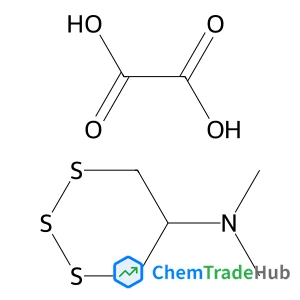
Oxalic acid compound with cyclohexylsulfamothioic O-acid (11)
CAS Number:
31895-22-4
Molecular Formula:
C7H13NO4S3
Recommended Suppliers






Disclaimer
This page provides academic journal information for reference and research purposes only. We are not affiliated with any journal publishers and do not handle publication submissions. For publication-related inquiries, please contact the respective journal publishers directly.
If you notice any inaccuracies in the information displayed, please contact us at support@chemtradehub.com. We will promptly review and address your concerns.